



BRIN Emphasizes Protection for Rare Mangrove Population in Balikpapan Bay
- 24 Mei 2026 22:40 WIB
- Voice of Indonesia
Key Points
- BRIN and UGM are collaborating to protect the rare mangrove species Camptostemon philippinensis in Balikpapan Bay, East Kalimantan.
- The species is listed as endangered on the IUCN Red List and is officially protected by the Indonesian government.
- The population faces high risks of localized extinction due to its narrow habitat and human pressures like land conversion, pollution, and illegal logging.
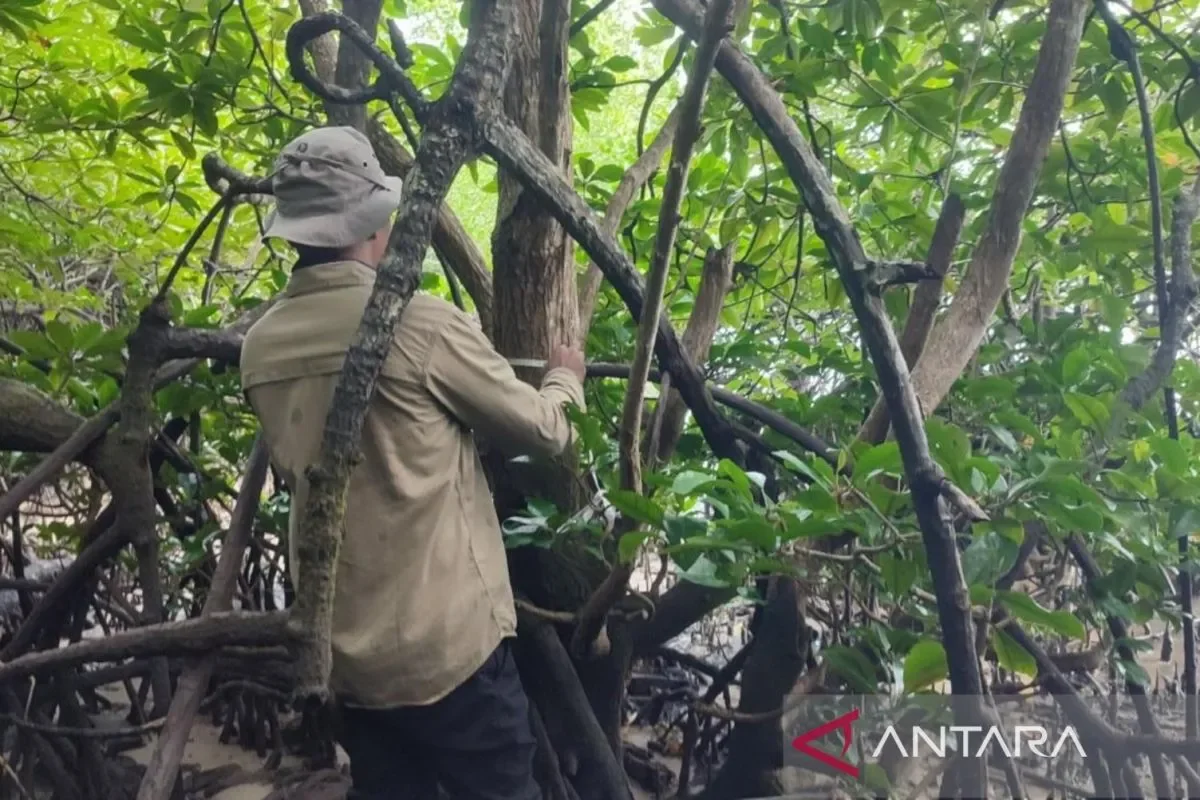
RRI.CO.ID, Jakarta – A research team from the National Innovation and Research Agency (BRIN), in collaboration with Gadjah Mada University (UGM), is pushing for the protection of the rare mangrove population Camptostemon philippinensis. This conservation effort is specifically focused on the Balikpapan Bay area in East Kalimantan.
Camptostemon philippinensis is a mangrove species categorized as endangered on the International Union for Conservation of Nature (IUCN) Red List. In Indonesia, the plant, found along the coasts of Pantai Lango Sub-district and Kowangan Island in North Penajam Paser Utara Regency, East Kalimantan, is classified as a government-protected mangrove species.
A researcher at BRIN’s Applied Botany Research Center, Istiana Prihatini, gave an official statement in Jakarta on Sunday, May 24, 2026. She emphasized that the presence of this rare mangrove species highlights the critical importance of Balikpapan Bay as a coastal biodiversity habitat that must be sustainably preserved.
"The presence of C. philippinensis in Balikpapan Bay demonstrates that this area possesses highly significant biodiversity value, which demands serious attention in conservation efforts," she said, as quoted by Antara.
Istiana noted that the C. philippinensis population faces severe threats from human activities, ranging from the conversion of mangrove land and environmental pollution to illegal logging.
The habitat of this species is located within a relatively narrow and localized mangrove area that sits close to residential settlements. Consequently, even minor environmental degradation could significantly increase the risk of localized extinction.
"The habitat of C. philippinensis is extremely limited. If habitat destruction occurs, the risk of localized extinction for this species will escalate substantially," she warned.
Istiana further explained that the existence of this mangrove is also suspected to share an ecological relationship with the proboscis monkey (Nasalis larvatus), a protected animal endemic to Borneo.
Researchers discovered indications of primate bite marks on the leaves of C. philippinensis in the area. Information regarding the presence of proboscis monkey groups around the mangrove habitat was also reinforced by reports from local fishermen who accompanied the team during their fieldwork in Balikpapan Bay.
The habitat of C. philippinensis in Balikpapan Bay is situated within the second-tier mangrove zone, characterized by predominantly sandy soil textures and water inundation that occurs during high tides.
In this area, the species grows alongside several other mangrove vegetations, including Rhizophora apiculata, Rhizophora mucronata, Sonneratia alba, Avicennia alba, Lumnitzera littorea, and Xylocarpus granatum.
The research team concluded that stronger conservation measures are urgently required to protect this rare mangrove population. Recommended initiatives include safeguarding the natural habitat, restoring degraded mangrove zones, banking genetic material, and developing ex-situ conservation through plant propagation. ***
News Recomendation
Loading latest news.....