



Sumatran Tiger Captured in Agam, Hunt Continues for Second Beast
- 22 Mei 2026 20:43 WIB
- Voice of Indonesia
Key Points
- A joint task force safely captured and evacuated a juvenile Sumatran tiger (under two years old) from a trap cage in Batang Palupuh, Agam Regency, West Sumatra, on May 22, 2026.
- Wildlife monitoring teams will remain deployed for several more days because fresh tracks and camera trap data confirm at least one more critically endangered tiger is still roaming close to local settlements.
RRI.CO.ID, Lubuk Basung - Wildlife monitoring teams will remain deployed in the dense forests of Agam Regency in West Sumatra for several more days. This extension comes after fresh tracks and sightings confirmed that at least one more critically endangered Sumatran tiger (Panthera tigris sumatrae) continues to roam dangerously close to local settlements.
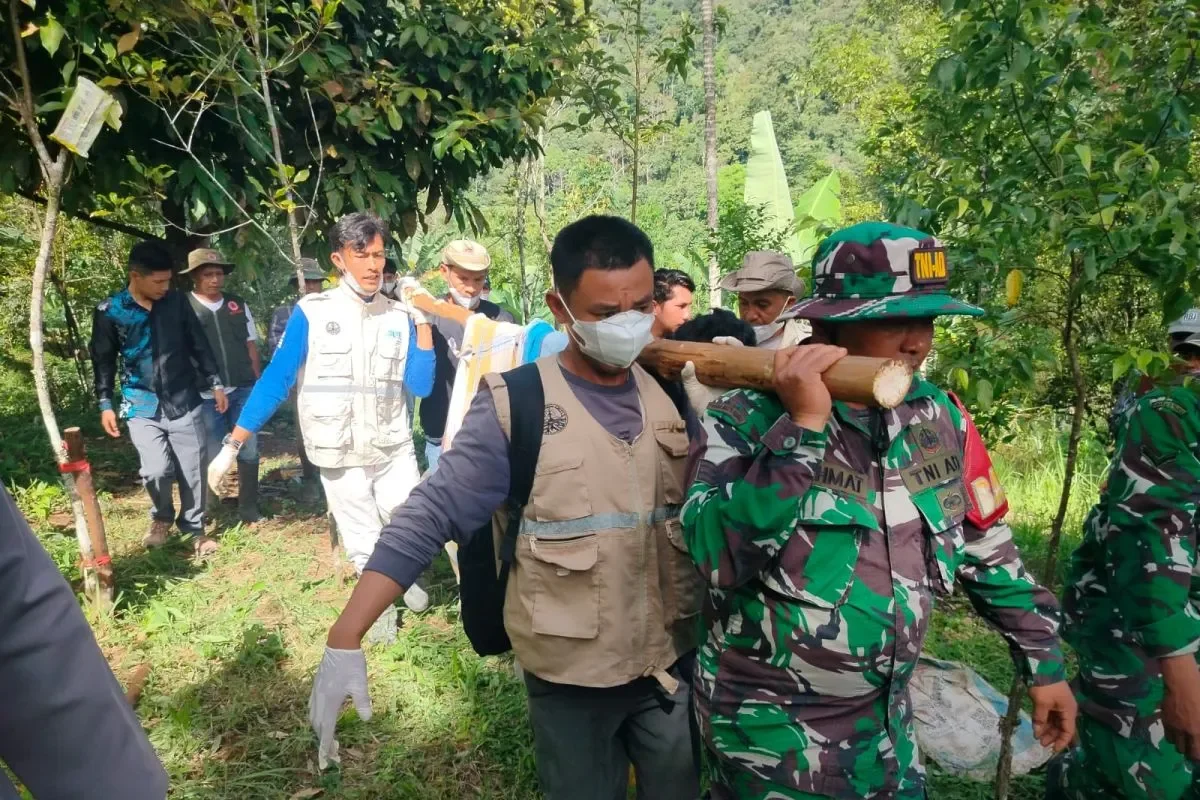
The decision to maintain a high-alert presence comes immediately after a joint task force successfully captured and extracted a juvenile tiger from a custom-built trap cage in Batang Palupuh, Nagari Koto Rantang, Palupuh Subdistrict.
The intensive extraction operation, which concluded around 3 p.m. Jakarta time on Friday, May 22, 2026, required an integrated team comprising the West Sumatra Natural Resources Conservation Agency (BKSDA), the Patroli Anak Nagari (Pagari) community rangers, the Palupuh Sector Police, the Lubuk Basung Military Command, and local villagers. Wildlife authorities resorted to heavy sedation to ensure the safety of both the rescue team and the animal during the high-stakes operation.
Head of BKSDA West Sumatra’s Maninjau Conservation Area Resort II, Ade Putra, detailed the meticulous steps taken by the joint task force to safely pull the young predator out of the jungle terrain.
"We carried out the evacuation after sedating and carrying the victims in sarongs to a residential area about 200 meters away. The evacuation began on Friday afternoon and concluded around 3 p.m. Jakarta time," said Ade Putra in Lubuk Basung, as quoted by Antara.
The captured feline, determined to be under two years old, was immediately transported to the BKSDA West Sumatra Section I Office in Koto Bukittinggi to undergo an intensive medical evaluation. Officials noted that if the juvenile tiger passes the comprehensive health screening, it will be prepared for swift translocation to a highly remote and secure habitat far removed from human agricultural activities.
Despite the successful extraction, BKSDA officials confirmed that the surrounding area cannot yet be declared entirely safe. Field teams discovered unmistakable evidence indicating that the captured tiger was not operating alone, necessitating an extension of the active wildlife management protocol in the area.
"The handling will be carried out over the next few days at the location," he explained, noting that the threat of a secondary encounter with the tiger requires a longer stay.
The captured juvenile had initially triggered the BKSDA-designed trap cage early Friday morning at approximately 2:30 a.m. Jakarta time, as verified by integrated camera trap data. However, responders only discovered the capture at 9:00 a.m. during a routine morning patrol, during which they encountered numerous fresh tiger prints trailing along the path to the enclosure.
"When we arrived at the trap cage, the door was already closed and there was one individual tiger inside the cage, under two years old," said Ade Putra.
The successful capture marks the culmination of a tense multi-day operation that began on Wednesday, May 20, 2026, following a surge in human-wildlife conflicts across the Palembayan, Matur, and Palupuh Subdistricts. Local farmers had repeatedly reported terrifying, close-range encounters with tigers while working in their rice fields and agricultural plantations, prompting wildlife officials to pivot from standard deterrence tactics to absolute extraction.
"We have already taken several measures, and this evacuation is the last option to ensure the safety of the animals and the community," concluded Ade Putra.
He underscoring that physical relocation had become the absolute last line of defense to preserve human lives while protecting the endangered species. ***
News Recomendation
Loading latest news.....