



Papua’s Bisbul Discovery Adds New Subspecies to Indonesia’s Biodiversity Record
- 21 Apr 2026 13:44 WIB
- Voice of Indonesia
Key Points
- Indonesian researchers discovered a new bisbul subspecies in Papua, expanding biodiversity records.
- Morphological and DNA analyses confirm Papuan bisbul’s distinct genetic lineage from Philippine populations.
- Bisbul is valued as a tropical fruit and traditional medicine, underscoring its conservation and economic importance.
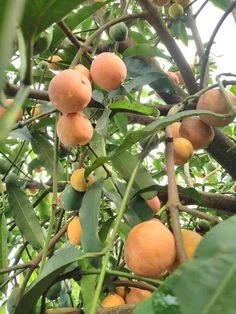
RRI.CO.ID, Jakarta - A team of Indonesian researchers led by Irvan Fadli Wanda of the National Research and Innovation Agency's (BRIN) Research Center for Biosystematics and Evolution has identified a new subspecies of bisbul (Diospyros blancoi), marking a significant addition to the country’s biodiversity records.
The discovery highlights Papua as home to a distinct genetic lineage of the tropical fruit tree, previously known mainly from the Philippines and parts of Southeast Asia.
The study examined 93 morphological traits -- 53 vegetative and 40 generative -- and found notable differences in 32 of them, particularly in fruit and seed characteristics. The Papuan population produces more seeds per fruit (five to ten), with wedge-shaped seeds and less dense hair on the fruit surface compared to the Philippine population.
Beyond morphology, molecular analysis using DNA markers (matK and psbA-trnH) confirmed that the Papuan population forms a separate genetic cluster, strengthening the case for its designation as a new subspecies. “The combination of morphological and molecular data provides strong evidence that the Papuan population has a distinct evolutionary path,” Irvan explained, as quoted on BRIN's official website.
Beyond taxonomy, the finding is notable because bisbul is valued both as a tropical fruit and in traditional medicine.
Quoting the official website of the Public Works Ministry's Directorate General of Water Resources, the fruit is consumed fresh or processed, while its leaves and bark have been used in remedies for ailments such as coughs and digestive issues. This dual role -- nutritional and medicinal -- adds weight to the importance of conserving and studying the species further.
The specimens studied were part of the Bogor Botanical Gardens collection, underscoring its role as a hub for plant conservation and biodiversity research. The finding not only expands the known distribution of Diospyros blancoi within Malesia but also emphasizes the importance of integrating morphology and molecular approaches in taxonomy.
Researchers hope the discovery will support conservation efforts and sustainable use of Indonesia’s rich biological resources. BRIN has pledged to continue advancing biosystematics research and biodiversity exploration to uncover undocumented natural assets and strengthen the scientific basis for preservation. ***
News Recomendation
Loading latest news.....