



North Jakarta Tackles Organic Waste via Circular Economy Model
- 20 Apr 2026 20:15 WIB
- Voice of Indonesia
Key Points
- North Jakarta is transitioning its waste management toward a circular economy model to transform organic waste into valuable resources like livestock feed and maggot cultivation.
- Nearly 50% of North Jakarta’s 1,300 tons of daily waste is organic, identifying it as the region's primary environmental challenge.
- The administration has distributed thousands of sorting tools (buckets, bins, scales) and deployed advanced technology, including bioreactors and shredding machines, to speed up decomposition.
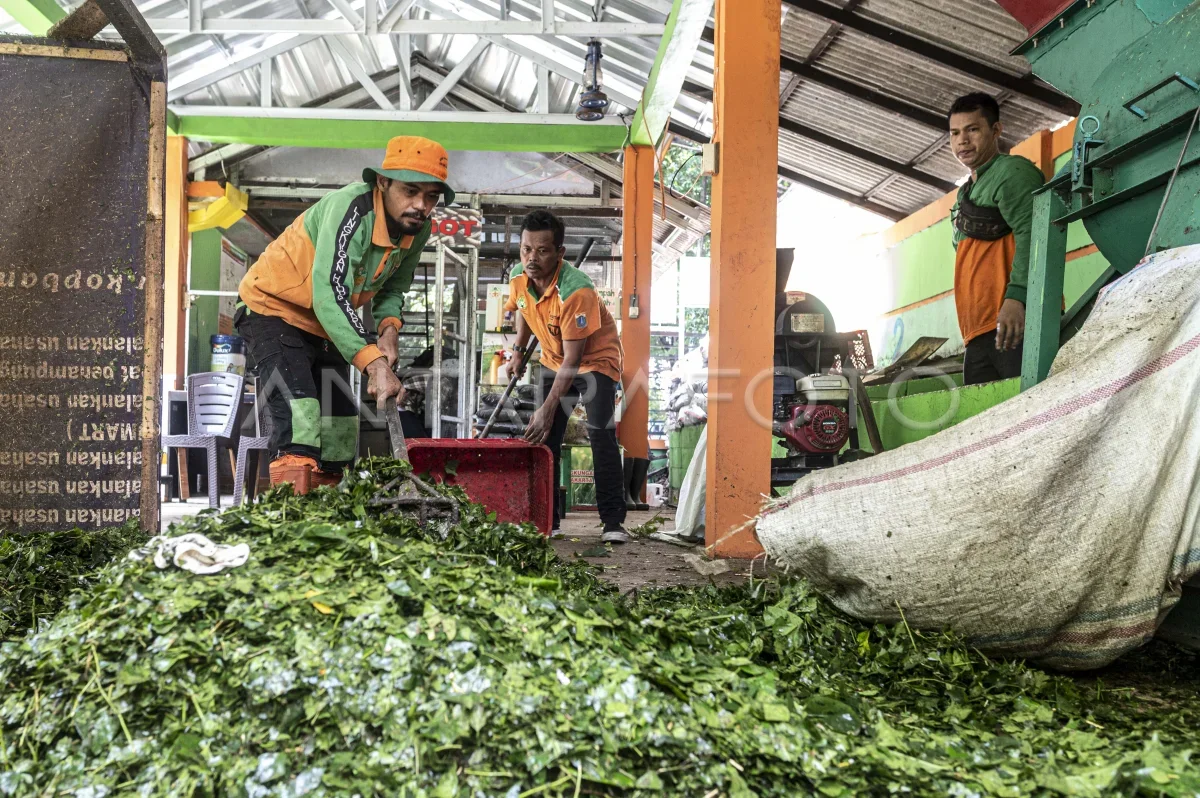
RRI.CO.ID, Jakarta - The North Jakarta City Administration is pivoting its waste management strategy toward a circular economy model to tackle the persistent dominance of organic waste, which currently accounts for nearly half of the region's daily refuse. By integrating grassroots education with high-tech processing tools, the city aims to transform daily waste into valuable resources like livestock feed and maggot cultivation materials.
Speaking in Jakarta on Monday, April 20, 2026, North Jakarta Environment Agency Head, Edy Mulyanto, highlighted organic waste as the region's primary hurdle. He noted that nearly 50% of the approximately 1,300 tons of daily waste is organic material that has historically not been handled optimally.
“The main challenge in waste management in North Jakarta lies in the dominance of organic waste,” said Edy, as quoted by Antara.
To address this, the administration is aggressively distributing specialized infrastructure to the community level. The rollout includes 410 drop-point bins for neighborhoods, 11,982 household sorting buckets, and 93 hanging scales.
Furthermore, the city has deployed 650 units of Lodong Sisa Dapur (kitchen waste tubes) and 12 composter bins. Beyond manual tools, modern technology has been introduced to streamline the process.
"We are also providing waste processing technology support, such as shredding machines and bioreactors, to accelerate the decomposition process of organic waste," explained Edy.
The Rorotan area has become the primary success story for this structured system. Residents there now sort waste at the source before gathering it at designated drop points.
This organic waste is then transported to temporary disposal sites (TPS) to be processed into waste slurry, which serves as high-quality feed for livestock and maggot farming. Edy reported that this system successfully manages 21 to 25 tons of organic waste per month.
“This not only reduces the burden on the Bantar Gebang Integrated Waste Treatment Site but also opens up circular economy opportunities at the community level," added Edy.
The success of the initiative is credited to a multi-stakeholder effort involving the Waste Sorting Movement (GPS) cadres, Public Infrastructure and Facilities Handling (PPSU) officers, and environmental educators.
Corporate Social Responsibility (CSR) programs from the private sector have also played a pivotal role. Given the positive results, the North Jakarta administration plans to replicate the Rorotan model in other districts to ensure sustainable waste management across the city.
"Rorotan serves as an example that with collaboration and behavioral change, waste reduction can be achieved quickly and measurably," remarked Edy.
Local residents have shown strong commitment to the shift. Juju, a 56-year-old GPS cadre from Neighborhood Unit (RW) 06 in Rorotan, confirmed that sorting waste has started to become a daily habit for many. She emphasized that cadres continue to remind and assist neighbors to ensure the workflow remains consistent.
"I hope all residents remain committed. This is not just for a clean environment, but also for the future of our children and grandchildren," said Juju. ***
News Recomendation
Loading latest news.....