



Central Java Builds up Regional Waste Management Collaboration
- 14 Apr 2026 10:18 WIB
- Voice of Indonesia
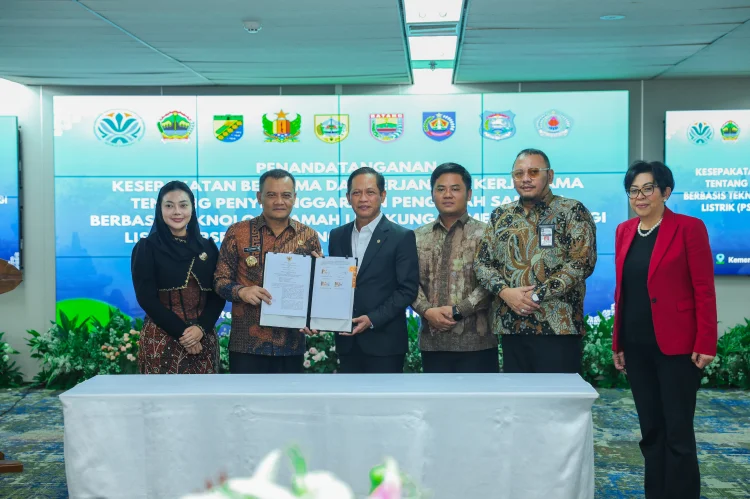
RRI.CO.ID, Jakarta - Central Java Governor signed a joint agreement to strengthen regional-based waste management systems in Jakarta on Monday, April 13, 2026. It reflects Indonesia’s effort to reduce open dumping practices in various regions.
The agreement was signed by Central Java Governor, Ahmad Luthfi, with Minister of Environment Hanif Faisol Nurofiq. It involved seven regional heads from Pekalongan Raya and Tegal Raya areas. The event was held at the Ministry of Environment office in Jakarta with strong central and regional coordination.
Pekalongan Raya consists of Pekalongan City, Pekalongan Regency, Pemalang Regency, and Batang Regency, with the facility in Pekalongan City. Tegal Raya includes Tegal City, Tegal Regency, and Brebes Regency, with the facility in Tegal Regency. This agglomeration system expands similar efforts previously implemented in the Semarang Raya area.
Before delivering his statement, the minister highlighted the expected impact of the initiative. He emphasized its contribution to reducing national waste volumes. He then conveyed his remarks after the signing ceremony.
"This management is expected to directly contribute to reducing national waste by 3,000 tons per day," he said.
Before continuing his remarks, the minister expressed appreciation for the governor’s commitment. He highlighted waste management progress in Central Java, reaching 30 percent with around 17,300 tons of waste daily. He then delivered his next statement.
"Thank you for the enthusiasm and hard work of the Governor, who has been quite quick in addressing the dynamics in Central Java. Especially supported by one of the most agile environmental agency heads in Indonesia," he added.
Central Java Governor, Ahmad Luthfi, expressed hope for immediate implementation after the signing. He emphasized the importance of collaboration from upstream to downstream waste management. He then conveyed his statement on collective action.
"Equally important is how we sort and select waste. This means both upstream and downstream must work together, so this issue can be resolved collectively," he said.
News Recomendation
Loading latest news.....