



House Commission IV Reviews Forestry Extension System in Bogor
- 02 Apr 2026 14:26 WIB
- Voice of Indonesia
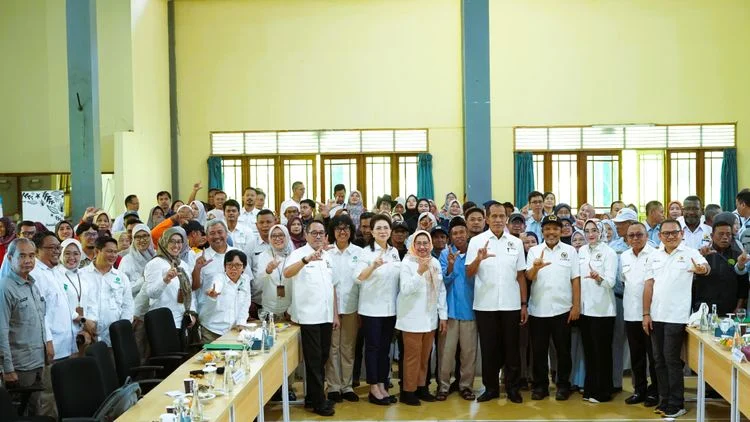
RRI.CO.ID, Bogor - Indonesia’s House Commission IV conducted a specific working visit to review forestry extension services. The visit took place in Rumpin, Bogor, West Java, on Tuesday, March 31, 2026. It aimed to evaluate field performance supporting Forest Farmer Groups across Indonesia.
The delegation visited the Forestry Human Resources Development and Extension Center Region III facilities. They reviewed training forests, honey cultivation plots, mushroom cultivation, and essential oil distillation units. Other training infrastructure was also inspected during the visit.
The visit became a direct evaluation of forestry extension officers working on the ground. These officers assist Forest Farmer Groups in managing forest resources sustainably. Their role is vital in strengthening community-based forestry programs nationwide.
Acting Head of Forestry Human Resources Development and Extension Agency, Indra Exploitasia, outlined key challenges. He said extension services face wide coverage under a centralized system with limited capacity. He also noted low absorption of vocational forestry graduates and persistent rural inequality.
Indonesia currently has 10,227 forestry extension officers across several categories nationwide. These include civil servants, government contract staff, community-based, and private extension officers. In West Java, 499 officers assist 5,282 Forest Farmer Groups from Bogor to Pangandaran.
Before presenting policy directions, Indra explained structural challenges after regional governance reforms. One extension center now serves multiple ministry units, provinces, and thousands of communities. He then stressed the urgency of regulatory support.
“Based on this, a regulation is needed to govern an integrated forestry extension system from central to regional levels,” he said.
The agency set four policy directions to address these challenges comprehensively. These include strengthening community roles, supporting food, energy, and water resilience, preventing forest damage, and advancing digitalization. Implementation targets priority areas such as forest buffer villages, fire-prone regions, social forestry areas, and critical watersheds.
During discussions, House Commission IV highlighted regulatory reform, education revival, and product downstreaming through innovation. They also emphasized long-term human resource development as a strategic investment. Indra closed by stressing synergy between policymakers and field officers.
“This synergy is to ensure 499 extension officers in West Java and 10,227 nationwide can work more effectively in assisting forest communities toward real welfare,” he said.
News Recomendation
Loading latest news.....