



Indonesia Pushes Global Innovative Conservation Partnerships
- 19 Jun 2026 14:37 WIB
- Voice of Indonesia
Key Points
- Deputy Minister of Forestry Rohmat Marzuki hosted top global policy leaders to enhance climate cooperation.
- The Ministry of Forestry introduced the National Park Financing Innovation Task Force to develop sustainable funding.
- State coordinators designated the FOLU Net Sink 2030 targets as Indonesia’s primary climate action cornerstone.
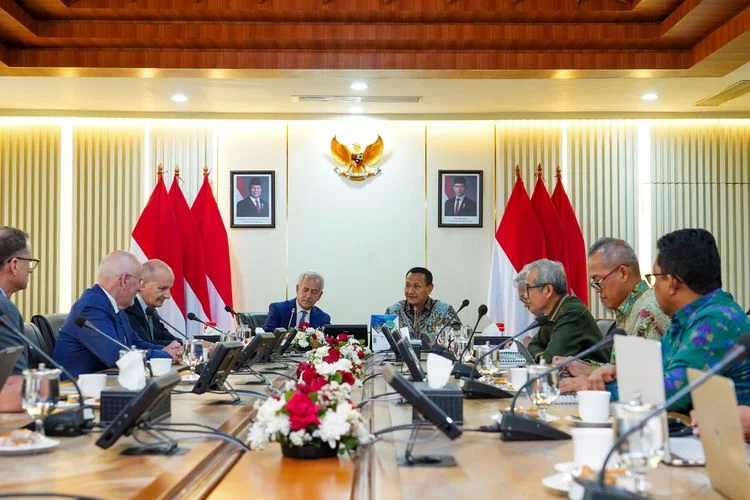
RRI.CO.ID, Jakarta - Indonesia is stepping up efforts to strengthen conservation financing and global partnerships, as Deputy Minister of Forestry Rohmat Marzuki met with leading international figures in public policy and environmental protection at Manggala Wanabakti, Jakarta, on June 17, 2026.
The courtesy call brought together former Costa Rican President José María Figueres, former European Commission Vice President Frans Timmermans, and former U.S. Senator Russ Feingold.
Discussions focused on opportunities for collaboration in national park management, protection of iconic species, and innovative financing models to sustain conservation.
The meeting also served as a platform to exchange experiences on how biodiversity‑rich nations can enhance environmental protection through governance, funding, and global partnerships.
Rohmat Marzuki emphasized Indonesia’s pivotal role in global climate and conservation agendas, noting that the country’s forests are not only national assets but also vital for biodiversity, climate stability, water systems, and community livelihoods.
“Indonesia continues to demonstrate leadership in climate action through forest preservation, conservation areas, species protection, and community benefits,” he said, as quoted on the ministry's official website.
Indonesia currently manages more than 27 million hectares of conservation areas, including 57 national parks that safeguard ecosystems and iconic species while supporting local welfare.
Conservation is also central to Indonesia’s climate strategy, reinforced by carbon value policies and forest‑sector carbon trading. These efforts align with the FOLU Net Sink 2030 agenda, which targets emission reductions through forest protection, rehabilitation, peatland and mangrove management, and community involvement.
To strengthen financing, the government has established a National Park Financing Innovation Task Force under Presidential Decree No. 8/2026, supported by ministerial regulations.
The task force will design frameworks and instruments for innovative financing between 2026 and 2030, focusing on parks such as Komodo, Way Kambas, Ujung Kulon, Tanjung Puting, and Rinjani, as well as species landscapes in Aceh and Jambi.
Potential instruments include carbon‑based financing, wildlife sponsorships, 'one company, one species' schemes, species bonds, payments for ecosystem services, and philanthropic partnerships.
Rohmat Marzuki stressed that financing must reinforce conservation priorities, not commercialize protected areas, with transparency and accountability as guiding principles.
The meeting also explored cooperation in governance, geospatial monitoring, capacity building, and collaboration with local and indigenous communities. International perspectives on blended finance and conservation trust funds were welcomed as Indonesia seeks sustainable models.
“We hope this dialogue enriches Indonesia’s efforts to build credible conservation financing, protect national parks, safeguard iconic species, and ensure fair benefits for surrounding communities,” the deputy minister concluded. ***
News Recomendation
Loading latest news.....