



Derawan Islands Put Local Communities at the Heart of Green Turtle Conservation
- 21 Feb 2026 11:35 WIB
- Voice of Indonesia
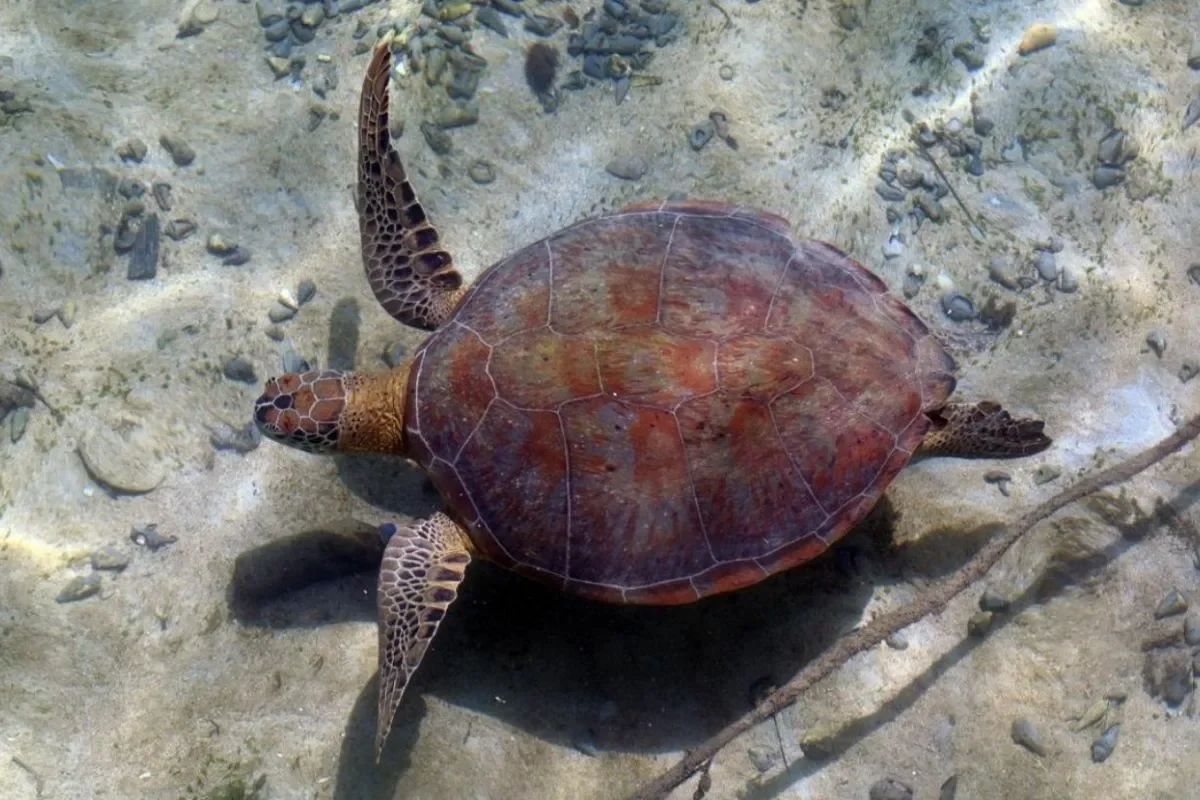
RRI.CO.ID, Jakarta - Berau’s Derawan Islands, home to Southeast Asia’s largest green turtle nesting habitat, are emerging as a focal point in global conservation efforts. Authorities in East Kalimantan are expanding cross-sector partnerships to safeguard the species, with local communities placed at the heart of the initiative.
Head of East Kalimantan’s Marine and Fisheries Agency, Irhan Hukmaidy, emphasized that community participation is essential for long-term success.
“Conservation cannot rely solely on regulations. When people are directly involved and feel a sense of ownership, efforts to protect coastal and marine resources are far more effective,” he said in Samarinda on Saturday, February 21, 2026, as quoted by Antara.
To strengthen local involvement, the Marine and Fisheries Agency has joined forces with the Nusantara Nature Conservation Foundation (YKAN) and the Marine Management Center in Pontianak.
Through the Solutions for Marine and Coastal Resilience in the Coral Triangle (Somacore) program, they conducted a technical training on turtle monitoring from February 3–7, 2026.
Supported by Germany’s Federal Ministry for the Environment under the International Climate Initiative (IKI), Somacore brings together a consortium of 10 organizations across six Coral Triangle countries.
The training targeted residents of the Derawan Islands Coastal and Small Islands Conservation Area (KKP3K KDPS), equipping around 60 participants -mostly fishers and coastal villagers - with knowledge of turtle biology, species identification, life cycles, threats, and monitoring techniques.
Participants also practiced field methods, including identifying turtle tracks, recording nests, and using Android-based applications to collect and organize data. According to YKAN Coral Reef Specialist Rizya Ardiwijaya, the citizen science approach is designed to build local capacity and ensure communities can play a direct role in protecting nesting beaches.
Surveys show that several beaches in the conservation area host year-round turtle landings, with peak nesting activity between June and August. Yet human activity along the coast often disrupts the turtles’ ability to nest safely.
“Green turtles are highly sensitive to disturbance. Even minor disruptions can cause nesting failure, which is why community involvement in protecting these beaches is critical,” Rizya explained. ***
News Recomendation
Loading latest news.....