



ITB Student Leads Breakthrough in Global Chemistry Collaboration
- 08 Jun 2026 21:13 WIB
- Voice of Indonesia
Key Points
- ITB student Deryl Limawan co-authors global chemistry paper with Nobel Laureate Ben Feringa’s team.
- Research uses Indonesian natural compounds to develop photoresponsive molecular materials.
- Collaboration boosts ITB’s capacity in advanced synthesis and global-level research standards.
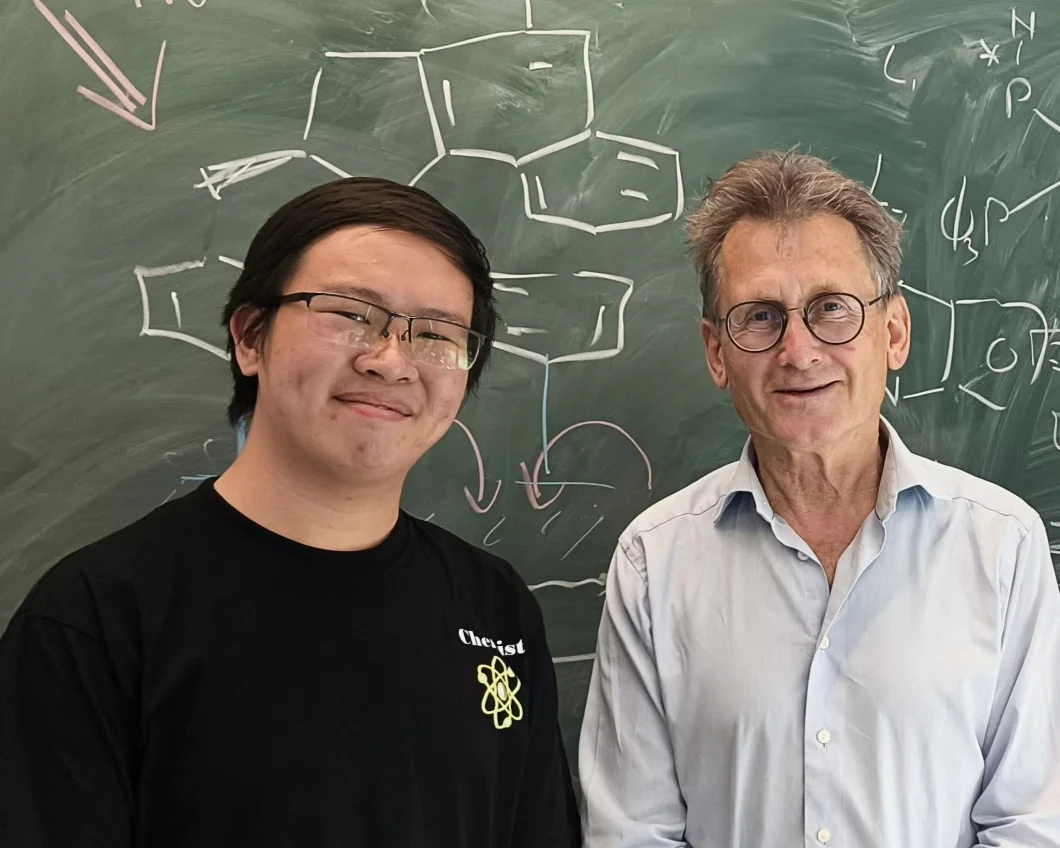
RRI.CO.ID, Bandung - Indonesia’s scientific community is once again making its mark on the global stage, with a breakthrough led by Bandung Institute of Technology (ITB) student Deryl Hendson Limawan.
The chemistry major from the 2020 cohort, currently pursuing a fast-track master’s program, has been named first author in a paper published by Chemistry - A European Journal, ITB's official website reported.
The research was conducted in collaboration with Nobel Laureate Ben L. Feringa’s group at the University of Groningen, Netherlands, underscoring ITB’s growing presence in international research networks.
The partnership traces back to ITB’s Organic Chemistry expertise and the academic bond between Robby Roswanda of ITB and Feringa, his doctoral supervisor in Groningen from 2008 to 2012.
That relationship deepened after Feringa’s Nobel Prize win in 2016, culminating in his Nobel Lecture at ITB’s Sabuga in March 2020. The visit sparked discussions, led by the late Prof. Yana Maolana Syah, that evolved into a sustained research collaboration bridging Indonesian natural product chemistry and Feringa’s pioneering work on molecular motors.
The project unfolded as a relay of student contributions. Anthony Bongso (Chemistry 2018) began by isolating natural compounds from Tephrosia vogelii, a plant native to Indonesia, to serve as building blocks for molecular switches.
Bayu Dwiputra (2019) advanced the work, which was later refined by Deryl (2020). To deepen the study, ITB sent students to Groningen: Anthony in early 2023 and Deryl in early 2025. Their combined efforts formed the backbone of the published paper.
The late Prof. Yana’s vision was central: he recognized the untapped potential of chiral centers in Indonesian natural compounds. This insight guided the team to isolate pure derivatives from Tephrosia vogelii pods, which became the foundation for synthesizing photoresponsive molecules.
These molecules change shape when exposed to light, retaining specific geometric configurations. While the current version achieves only a single transformation rather than a full reversible switch, it represents a crucial first step toward advanced molecular devices.
Deryl emphasized that the research highlights Indonesia’s biodiversity as more than a source of traditional medicine. “Unique natural frameworks can serve as building blocks for complex molecules, opening new opportunities for functional materials in the future,” he explained.
Robby noted that the achievement demonstrates Indonesia’s ability to contribute to cutting-edge material science. “We have shown that Indonesian natural compounds can be used as building blocks for photoresponsive materials, despite the challenges,” he said.
The collaboration has also strengthened ITB’s capacity in advanced organic synthesis and molecular computation, raising the standard of domestic laboratories to compete globally.
Beyond the scientific results, the project reflects the importance of quality-driven research culture. Deryl observed that in Europe, strong ecosystems are built on a cycle of funding, rigorous research, and impactful publications.
The team’s paper underwent over six months of revisions, including additional experiments and computational recalculations, to meet international standards.
The synthesized molecules could eventually support smart materials for high-tech applications, from optoelectronic components to medical sensors. More broadly, the collaboration illustrates how Indonesian researchers can thrive in global environments despite gaps in technical background.
“The key is to keep reading, discussing, and asking questions. With strong motivation, Indonesian students can compete and contribute at the highest levels,” Deryl reflected.
This achievement is more than a publication; it is a testament to perseverance, mentorship, and the power of academic networks. By leveraging Indonesia’s biodiversity and fostering international collaboration, ITB students are proving that the nation’s young scientists can shape the future of global research. ***
News Recomendation
Loading latest news.....