



Indonesia Advances Education with Smart Classroom Technology
- 27 Mei 2026 00:57 WIB
- Voice of Indonesia
Key Points
- Interactive Flat Panels make teaching more engaging and explanations more interactive.
- Elementary and Secondary Education Ministry accelerates digitalization in schools to strengthen learning nationwide.
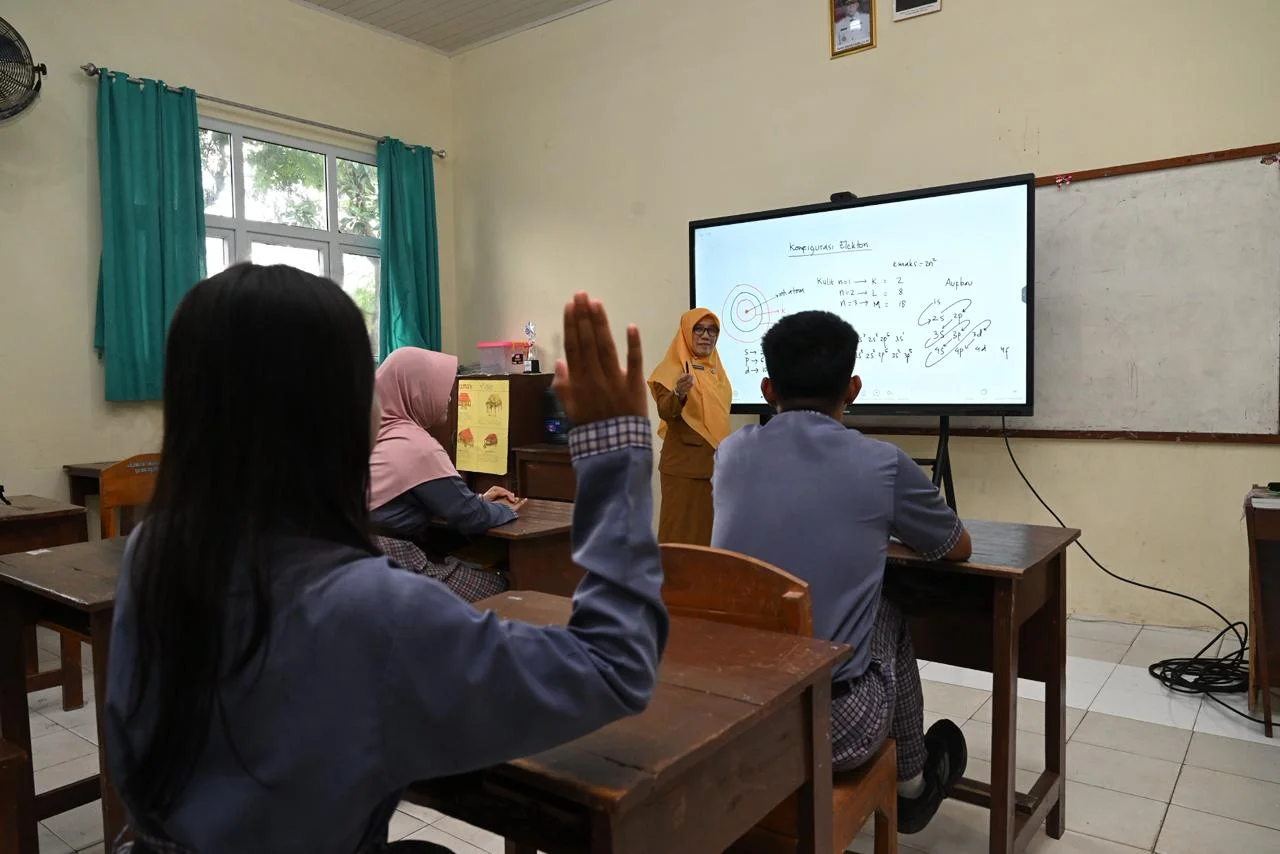
RRI.CO.ID, Jakarta - The Ministry of Elementary and Secondary Education is accelerating the digitalization of Indonesia’s schools, with Interactive Flat Panels (IFPs) emerging as effective, engaging tools that are already benefiting classrooms, including at state-run high school SMAN 14 in Lampung City.
IFPs have transformed the learning environment, offering faster synchronization than projectors and functioning as large smart devices with internet access and educational apps. Teachers can easily access materials and deliver lessons more interactively.
“The presence of IFPs in schools greatly facilitates teaching and makes explanations more engaging. Teachers can write on the digital board, play educational videos, and open PowerPoint presentations simultaneously,” said Romiyati, a chemistry teacher at SMAN 14 Bandar Lampung, as quoted on the ministry’s official website.
Educators are required to use Learning.id accounts, which allow them to store materials on Google Drive and access government platforms such as Rumah Pendidikan. These platforms provide free interactive tools and spaces for teachers and students.
Students also feel the benefits. Naysiffa Aiera Yustika Putri, an 11th-grade student at SMAN 14 Bandar Lampung, said the visual and interactive methods, including educational games on the IFP, make learning more enjoyable.
“With the games in the IFP, the learning process becomes more engaging, effective, and fun. There’s no boredom,” she said.
The school hopes to expand IFP use across all grade levels and provide training for teachers to create offline educational content, ensuring the devices can be used even without internet access.
“Adding IFPs to every classroom will help students learn independently. Training is also needed so teachers can prepare quality materials that work offline,” Romiyati added.
Naysiffa hopes that IFPs will be distributed evenly across schools nationwide, so all students can benefit. With the right technological collaboration, she said, students will be more motivated to learn, strengthening the future of Indonesian education and its global competitiveness. ***
News Recomendation
Loading latest news.....