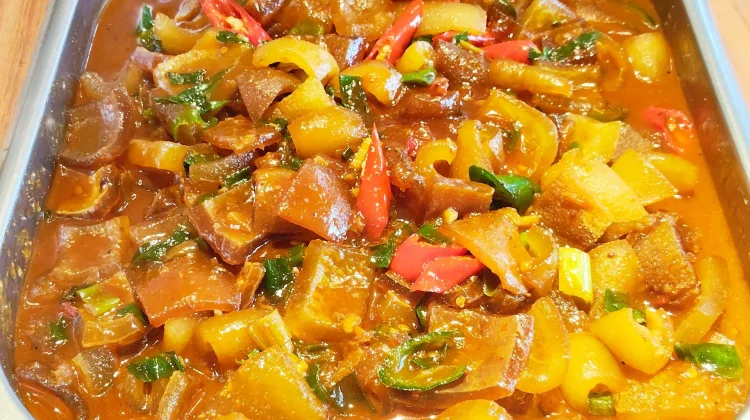
An illustration of kikil, an Indonesian typical menu with beef cartilage as the main ingrediens (Photo: Canva/ginanperdana)
RRI.CO.ID, Bogor - Beef cartilage, or known as kikil or tunjang in Indonesia, is widely recognized as a collagen-rich food source. The food comes from connective tissue cartilage covering bones and toes of cattle without hair.
A livestock nutrition and food technology expert from IPB University's Animal Science Faculty Dr. Astari Apriantini said beef cartilage contains significant protein. However, consumption should remain limited despite its relatively lower fat content compared with several beef cuts.
“Kikil has a savory taste and contains quite high nutrients, especially protein,” Dr Astari Apriantini stated. She added that protein found in beef cartilage mostly appears in the form of collagen.
On IPB University's website on Tuesday, March 10, 2026, Dr Astari explained that approximately thirty percent collagen can be found in mammal connective tissues. These include cattle, goats, and buffalo commonly consumed as food sources in several regions.
In one hundred grams of beef cartilage, protein content may reach around ninety-six percent composition. The food contains no carbohydrates and approximately four percent fat according to nutritional explanation.
Beef cartilage also contains fewer calories than beef because its composition mainly consists of water. Dr Astari explained beef cartilage contains around 146 calories per one hundred grams.
Meanwhile, beef generally contains approximately 174 to 273 calories per one hundred grams portion. The difference occurs because beef includes more fat and muscle tissue compared with cartilage.
Besides protein, beef cartilage contains several important minerals including sodium, selenium, iron, potassium, and calcium. These minerals support immune function, nerve activity, muscle contraction, and bone health.
However, the expert reminded that beef cartilage also contains moderate levels of cholesterol and purines. She advised limiting consumption, especially for adults, gout patients, or individuals with metabolic disease history.