



Through Cuisine, Indonesia and China Forge Friendship
- 10 Jul 2025 11:24 WIB
- Voice of Indonesia
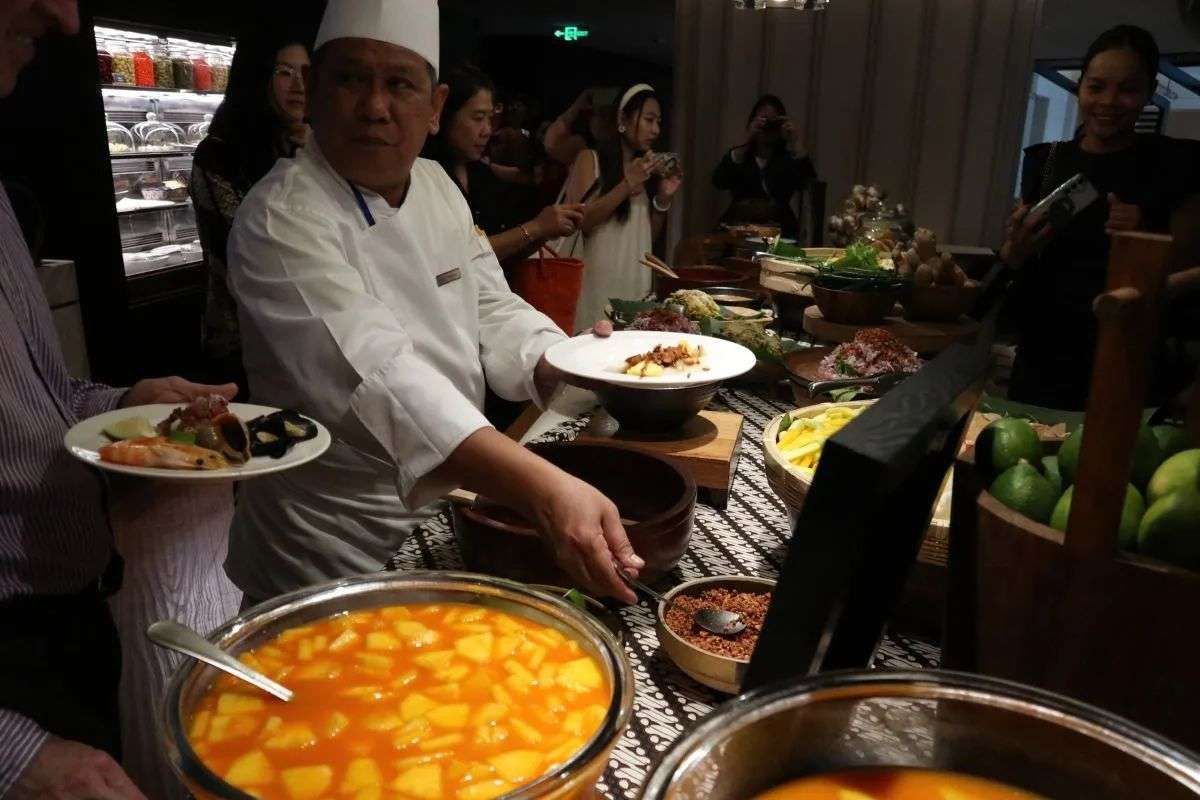
KBRN, Beijing: In Indonesia, people can easily find Chinese cuisine in every city. But for the next two weeks, people in China can find delicious Indonesian cuisine at Grand Hyatt Beijing hotel.
A variety of Indonesian dishes prepared by two Nusantara chefs will be served for two weeks at a culinary festival at the Grand Hyatt Beijing hotel, running from July 9 to 23, 2025.
"Today, we are not only celebrating flavors, but more importantly, celebrating friendship and the hope that in a world that sometimes seems fragmented, we can still find common ground through food and taste. Thank you once again to the Grand Hyatt team for this extraordinary initiative," said Nur Evi Rahmawati, Coordinator for Tourism, Creative Economy, and Public Diplomacy at the opening of the event in Beijing, China, on Wednesday July 9, 2025 as reported by antaranews.com.
The opening in the Grand Hyatt Beijing hotel lobby was attended by about 50 people, including the wife of the Indonesian Ambassador to China and Mongolia, Wiwik Oratmangun, staff and diplomats from the Embassy of the Republic of Indonesia (KBRI), diplomats from friendly nations, Indonesian citizens, and Beijing residents.
A gamelan performance by Central Conservatory of Music Beijing lecturer Risnandar was also featured. The Grand Hyatt Beijing is located in the Wangfujing area, close to the Forbidden City and Tiananmen Square in downtown Beijing.
"If China is famous for its silk road, Indonesia also has a legendary spice route. The Indonesian archipelago is rich in nutmeg, cloves, galangal, pomegranates, and other spices, making it a cornerstone of the world's spice trade for a long time," Evi added.
These spices, Evi revealed, are not just ingredients, but an identity.
"Spices give character to our food and tell stories about our homeland, our people, and our history. Rendang, which we will all enjoy tonight, is one of the most famous dishes originating from the highlands of West Sumatra, cooked slowly in coconut milk for hours, even overnight," she explained.
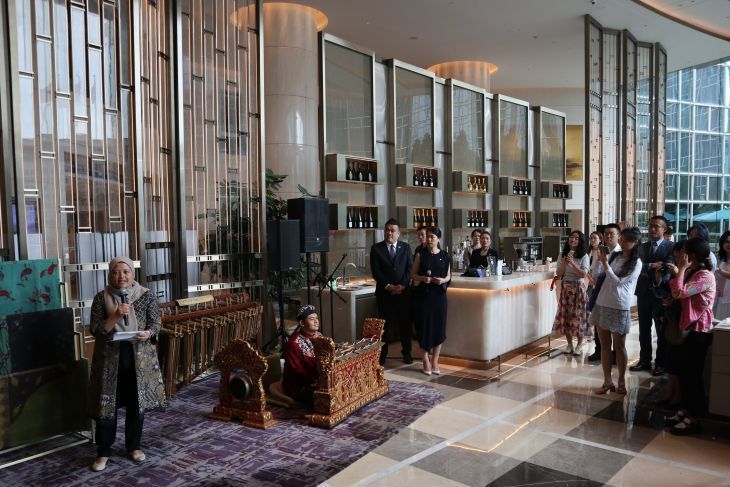
Coordinator for Tourism, Creative Economy, and Public Diplomacy at the Indonesian Embassy in Beijing, Nur Evi Rahmawati (wearing hijab/veil), at the opening of the event in Beijing, China, on Wednesday July 9, 2025. (Photo: Antara/Desca Lidya Natalia)
According to Evi, rendang became a prominent dish because Indonesia was an agrarian society where cows were used as working animals.
"So, when this working beef was cooked, our ancestors developed methods not only to tenderize but also to preserve the meat, allowing rendang to last long journeys across the archipelago as members of the Minangkabau diaspora traveled. Rendang thus became both a food and a culinary expression of resilience, migration, and sharing," she added.
The relationship between Indonesia and China, Evi noted, is not only woven through spices but also through the spread of culinary heritage. Some Indonesian dishes have strong Chinese flavor influences, ranging from bakpao (steamed buns) and cakwe (fried dough) to siomai (dumplings) and capcay (stir-fried vegetables).
"Friends who have been to Indonesia would surely be familiar with them, and this is the hidden magic of culture where differences do not divide, but enrich. Let's enjoy today's festival as a reminder of our close bond of friendship," Evi concluded.
At the opening of the culinary festival on July 9, 2025, the Indonesian dishes available included gado-gado, rendang, gulai kapau, nasi goreng kampung (village fried rice), ayam woke, sop buntut (oxtail soup), ikan panggang Jimbaran (Jimbaran grilled fish), rujak buah (fruit salad with spicy dressing), and asinan buah (pickled fruit salad).
"We intentionally came from Jakarta to serve Indonesian cuisine," said Chef Deni Hamdani, one of the chefs who flew directly from Jakarta to Beijing.
Deni personally ground and prepared the peanut sauce for the gado-gado stall, which attracted many visitors, though the peanut sauce was certainly less spicy than what is typically enjoyed in Indonesia.
"There was indeed a slight adjustment to the taste here, as we also consulted first. I also didn't bring fried shallots from Indonesia; these fried shallots are from China," Deni revealed, pointing to larger and brighter fried shallot pieces compared to Indonesian ones.
Meanwhile, at the rendang stall, Chef Candra Yehezkiel was also busy serving queues of visitors eager to taste Indonesian-flavored side dishes.
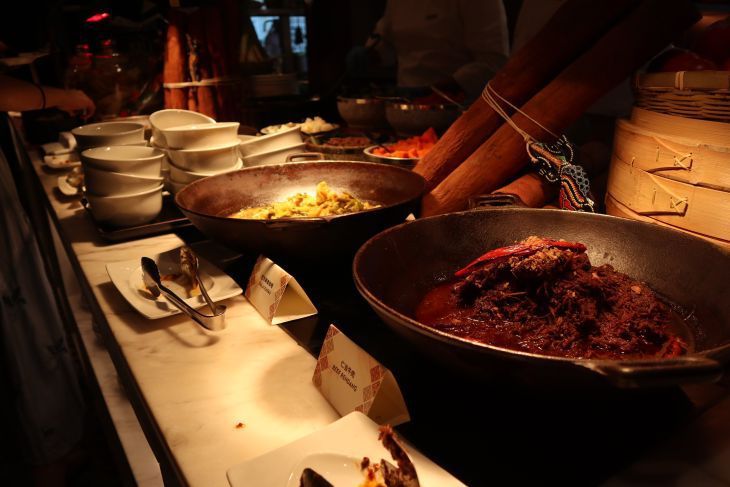
Rendang and ayam kapau at the Indonesian culinary festival at the Grand Hyatt Beijing hotel on Wednesday July 9, 2025 (Photo: Antara/Desca Lidya Natalia)
"We did bring rendang spices from Indonesia, but for other ingredients, we could source them here. There are indeed some differences; for example, the chilies here are larger and spicier, so there was a prior taste adjustment," Candra said.
Candra also mentioned that the menu served at the restaurant would change every two days. "Tomorrow, we will be serving nasi goreng kecombrang (ginger torch fried rice), soto ayam (chicken soup), and semur daging (beef stew)," Candra added.
In addition to main dishes, various sambals were also available, such as sambal matah, sambal dabu, sambal ijo, and other Indonesian sambals and flavors. The Indonesian dishes were available at the restaurant from 11.00 AM to 9.00 PM local time.
Through cuisine, Indonesia and China forge friendship. ***
News Recomendation
Loading latest news.....