



Indonesia’s Floriculture Exports Reach USD 197 Million in 2026
- 21 Sep 2026 19:34 WIB
- Voice of Indonesia
Key Points
- Indonesia’s ornamental plant exports reached IDR 3.51 trillion, spanning shipments to 96 countries.
- Strict adherence to quarantine requirements remains essential for expanding access to global markets.
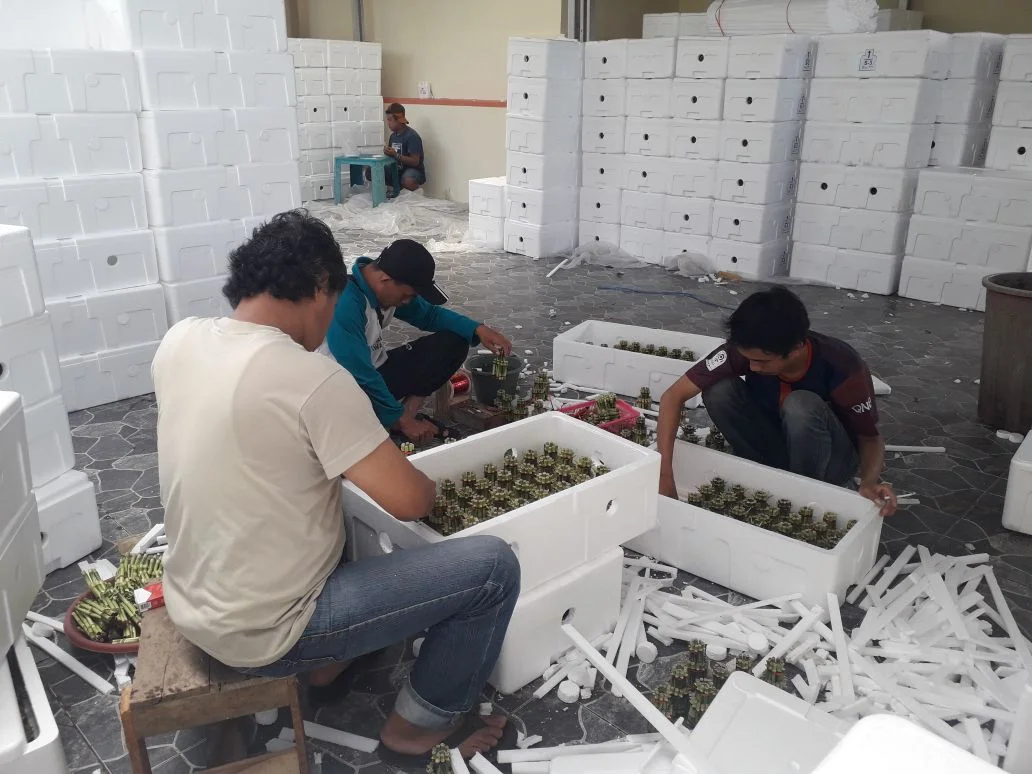
RRI.CO.ID, Jakarta – Indonesia’s ornamental plant exports continue to demonstrate strong potential in international markets, with floriculture export value reaching IDR 3.51 trillion from January to September 2026.
The Indonesian Quarantine Agency (Barantin) reported that the exports comprised 59.6 million plant commodities shipped to 96 countries, including chrysanthemum seedlings, Saintpaulia, lilies, aquarium plants, and various ornamental plant seedlings.
Director of Operations for Barantin’s Plant Quarantine Division, Abdul Rahman, said Indonesia’s export‑oriented ornamental plant varieties are highly diverse. He noted that anthurium remains one of the most sought‑after high‑value plants in foreign markets.
He added that Indonesia’s ornamental plant community--dominated by young enthusiasts--is spread across several regions, particularly West Java, East Java, North Sumatra, and Lampung.
To support export readiness, Barantin provides guidance from the cultivation stage through to meeting destination‑country requirements. This includes using screenhouse facilities to ensure plants grow in healthy condition before being shipped abroad.
“We provide guidance starting from cultivation in the screenhouse, and then ensure the plants meet the requirements of the destination country,” Abdul said on Sunday, September 20, 2026.
Barantin ensures that exported ornamental plants are free from pests and diseases of concern to importing countries. Quarantine requirements vary by country, as organisms considered common in Indonesia may not be permitted elsewhere.
Indonesia’s floriculture exports include chrysanthemum seedlings and flowers, orchids, and anthurium seedlings. The development of new varieties through hybridization also offers opportunities to strengthen the competitiveness of Indonesian ornamental plants in global markets.
Understanding quarantine regulations is essential for growers and exporters before shipping plants overseas. Barantin regularly provides education on destination‑country requirements through its network of quarantine service offices nationwide.
“Japan will not accept shipments containing nematodes, while the United States will not tolerate even a single insect. Therefore, we consistently educate exporters and farmers--in collaboration with the Ministry of Agriculture--to ensure their plants are accepted in destination countries,” Abdul said.
Barantin also issues Plant Health Certificates for ornamental plants entering foreign markets. These certificates are issued once commodities are confirmed to meet the plant health requirements set by the importing country.
Inspections begin when plants arrive at the quarantine facility, including laboratory testing, before shipment. This process helps expedite checks at airports or ports because primary inspections have already been completed.
During the export process, Barantin coordinates with quarantine authorities in destination countries to ensure all requirements are met. The number of plants shipped must match the certificate, as discrepancies may trigger a Notification of Non‑Compliance (NNC).
“Don’t let the certificate list 10 stems and suddenly the shipment contains 11. The quantity must remain exactly as stated in the certificate,” Abdul said.
He added that even one additional stem may be considered a commodity that has not undergone quarantine inspection. If an NNC is issued, the goods may be returned or destroyed by the destination country.
Abdul emphasized that NNCs for ornamental plants have become increasingly rare. “This shows exporters better understand the requirements, but oversight is still needed to maintain smooth trade and plant health,” he said. (Gusti Panji)
News Recomendation
Loading latest news.....