



Indonesia Expands Electric Vehicle Supply Chain Through SMEs
- 12 Jun 2026 10:32 WIB
- Voice of Indonesia
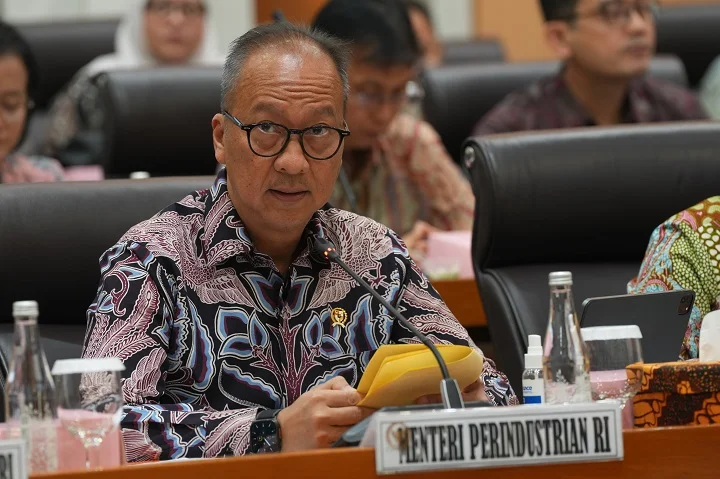
RRI.CO.ID, Jakarta - The Ministry of Industry is accelerating the development of Indonesia’s Battery Electric Vehicle (BEV) ecosystem by increasing the involvement of small and medium industries (SMIs) in the electric vehicle supply chain. This initiative is part of the government’s strategy to speed up the energy transition, increase the use of domestic components, and strengthen a competitive and sustainable national manufacturing industry.
Indonesia's Minister of Industry, Agus Gumiwang Kartasasmita, affirmed that the development of Indonesia’s electric vehicle industry should not rely solely on large-scale industrial investments, but also create broader opportunities for SMIs to participate as an integral part of the industrial supply chain.
“The development of the national electric vehicle ecosystem must provide broad benefits for domestic industries. Therefore, we continue to strengthen partnerships between automotive component SMIs and electric vehicle manufacturers so that more locally made products and components can be absorbed into Indonesia’s electric vehicle production process,” the Minister said in a statement in Jakarta on Thursday, June 11, 2026.
According to the Minister, the rapid growth of the electric vehicle industry must be accompanied by stronger domestic supply chains to support higher Local Content Requirement (TKDN) targets while enhancing national industrial self-reliance.
“The growth of Indonesia’s electric vehicle industry must be followed by stronger domestic supply chains to support the transition to cleaner energy. This is also part of efforts to increase value-added production and domestic industrial content,” he said.
As part of this effort, the Ministry of Industry, through the Directorate General of Small, Medium, and Miscellaneous Industries (IKMA), brought together electric vehicle brand holders and automotive component SMIs through business-matching activities involving manufacturers of two-wheel, three-wheel, and four-wheel electric vehicles, as well as electric buses and trucks.
Through these activities, SMI players gained opportunities to better understand industry needs, required quality standards, and product development opportunities aligned with the demands of the electric vehicle market.
“To achieve higher local content targets in electric vehicles, broader participation from local component manufacturers, including SMIs, is essential. Collaboration between large industries and SMIs is a key factor in building a strong and sustainable electric vehicle industry,” Agus said.
Director General of IKMA, Reni Yanita, stated that the rapid development of electric vehicles in Indonesia presents major opportunities for automotive component SMIs to expand their business capacity and market reach.
“The rapid growth of the electric vehicle industry must be leveraged by national SMIs. Therefore, the Directorate General of IKMA is facilitating direct meetings between SMI players and electric vehicle brand holders to create more concrete and sustainable partnership opportunities,” Reni said.
According to data from the Association of Indonesian Automotive Industries (Gaikindo), battery electric vehicle sales reached 33,150 units in the first quarter of 2026, an increase of 95.9 percent compared with the same period last year. In addition, the number of electric buses reached 798 units as of April 2026, while the number of electric motorcycles stood at 236,451 units in February 2026, accounting for approximately 65 percent of Indonesia’s total electric vehicle population.
This growth has also been supported by the expansion of charging infrastructure. As of April 2026, PT PLN (Persero) has operated 4,769 Public Electric Vehicle Charging Stations (SPKLU) across 3,097 locations throughout Indonesia.
News Recomendation
Loading latest news.....