



Indonesia Issues Regulations on Carbon Trading Governance
- 16 Apr 2026 10:06 WIB
- Voice of Indonesia
Key Points
- The Ministry of Forestry has issued Ministerial Regulation No. 6/2026 on GHG emissions offsets, following Presidential Regulation No. 110/2025 on carbon’s economic value.
- Forestry Minister Raja Juli Antoni said the policy provides a clearer roadmap, from emission‑reduction targets to implementation strategies, aligning with national climate commitments.
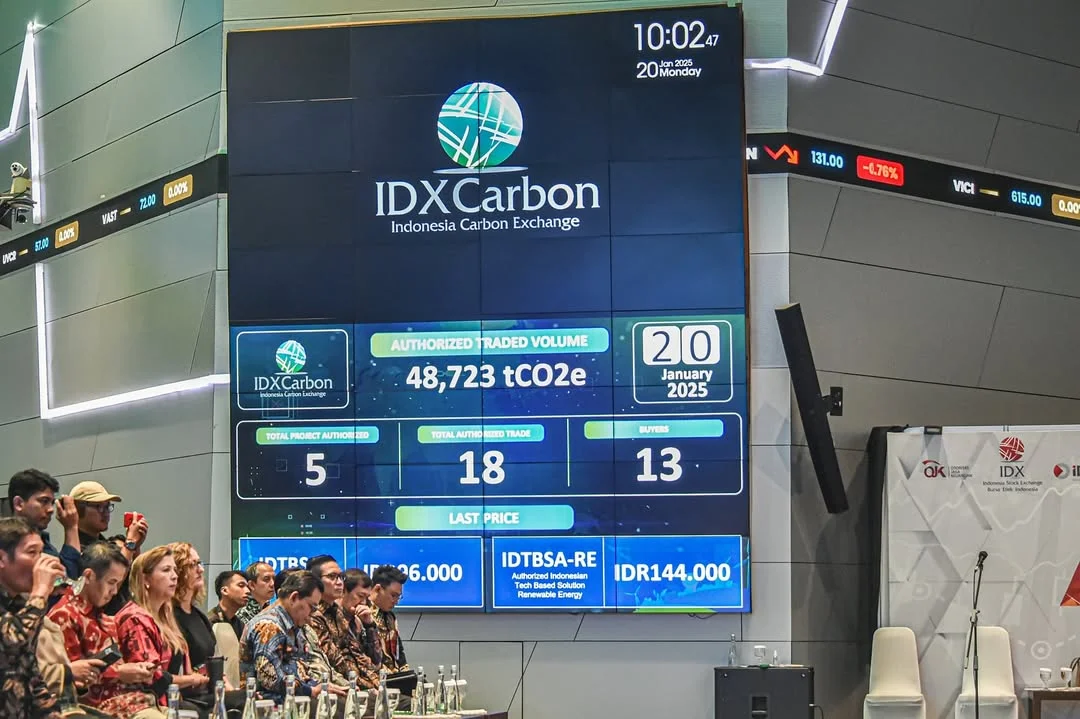
RRI.CO.ID, Jakarta – The Indonesian government is tightening regulations on carbon trading in the forestry sector as part of efforts to strengthen the green economy and support national emission‑reduction targets.
The Ministry of Forestry has issued Ministerial Regulation No. 6/2026 on greenhouse gas (GHG) emissions offset schemes, following up on Presidential Regulation No. 110/2025 on the economic value of carbon.
Forestry Minister Raja Juli Antoni said the regulation was designed to improve governance of carbon trading. “Making it more credible, transparent, and inclusive,” he stated in Jakarta on Thursday, April 16, 2026, as quoted by Antara.
He explained that the policy provides a clearer roadmap, from emission‑reduction targets to implementation strategies, ensuring alignment with Indonesia’s national climate commitments.
Participation in carbon trading has now been expanded beyond companies to include social forestry groups, indigenous communities, community forest owners, and carbon environmental service providers.
“We want to ensure that the economic benefits of carbon not only contribute to achieving national climate targets but also have a tangible impact on communities and Indonesian forest sustainability,” Minister Raja Juli said.
From a regulatory perspective, every carbon unit must undergo validation and verification by an independent institution, with all transactions recorded in the national system to prevent double‑counting. The government is also streamlining business processes through an electronic system, standardizing submission, assessment, and certificate issuance timelines.
The regulation also covers international carbon trading. All cross‑border transactions must be approved by the government to ensure consistency with national emission‑reduction goals.
Businesses are required to consider environmental and social aspects in implementation. Carbon trading activities must involve local communities, protect indigenous rights, and preserve forest conservation and biodiversity.
Conservation areas spanning 1.27 million hectares hold significant potential for carbon trading through ecosystem restoration in deforested and degraded lands. Carbon sequestration in these areas ranges from 4.5 to 50 tons of CO2 equivalent (tCO2e) per hectare per year. “This potential opens opportunities for innovative financing through private sector involvement while creating sustainable economic value,” said Minister Raja Juli. ***
News Recomendation
Loading latest news.....