



JCI Opens Lower Early This Week on US-Iran Negotiation Deadlock
- 13 Apr 2026 12:08 WIB
- Voice of Indonesia
Key Points
- The Jakarta Composite Index (JCI) opened down 1.32 percent at 7,359.97 on Monday, April 13, 2026, after briefly rising to 7,458.50 on Friday, April 10.
- The index is projected to test resistance at 7,500–7,550, while support lies in the 7,308–7,346 gap area.
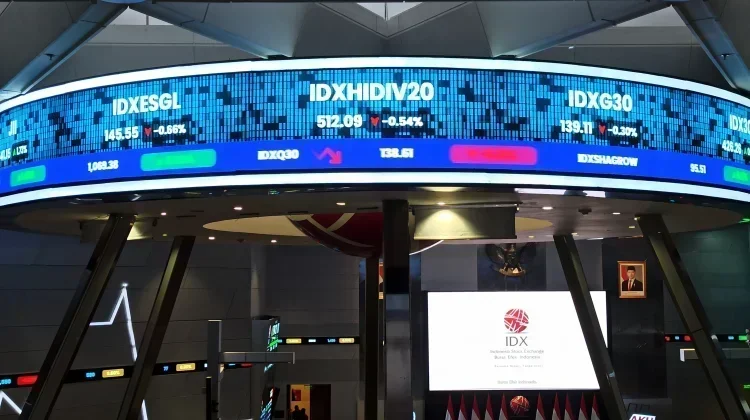
RRI.CO.ID, Jakarta - The Jakarta Composite Index (JCI) opened down 1.32 percent at 7,359.97 on Monday, April 13, 2026, after briefly rising to 7,458.50 on Friday, April 10. The decline was driven by selling pressure amid rising global uncertainty.
Capital market analyst and Founder of Republik Investor, Hendra Wardana, said current market conditions are being shaped by geopolitical factors, particularly the failure of negotiations between the United States and Iran.
The deadlock has heightened global risks, including for Indonesia, prompting investors to reduce exposure to risky assets and shift toward safe-haven investments.
“While the market had previously enjoyed a calm phase, the breakdown of those negotiations has reignited uncertainty,” Hendra said in Jakarta on Monday. He noted that the Middle East’s role as a global energy hub means tensions in the region could disrupt oil trade routes, adding to investor concerns.
“When geopolitical risks rise, market participants tend to cut back on risky assets such as stocks. As a result, the stock market could face pressure, volatility may increase, and foreign capital flows could become more unstable,” he explained.
In the short term, the JCI is expected to move in a consolidative pattern but with heightened volatility. “Technically, the JCI has the potential to test the resistance zone in the 7,500 to 7,550 range,” Hendra said.
On the downside, he added, the index could retest the gap area at 7,308–7,346, which serves as a key short-term support zone. In a negative scenario, the JCI could correct further to the 7,300–7,200 range if geopolitical tensions escalate.
Conversely, the JCI could strengthen to 7,550–7,600 if global sentiment improves. However, any rally is expected to remain limited and insufficient to establish a long-term trend.
Hendra advised investors to remain selective and disciplined in managing risk. He said a “buy-on-weakness” strategy and gradual accumulation are relevant in the current environment. Investors should maintain cash allocations to navigate potential volatility and diversify across sectors such as energy and commodities to mitigate uncertainty.
“Overall, the market remains in a phase that is highly sensitive to external sentiment,” Hendra said. The key for investors is to remain rational, avoid reactive decisions, and focus on opportunities with a measured risk-reward balance. (Gusti Panji/Lasti Martina)
News Recomendation
Loading latest news.....