


Indonesia’s Textile and Footwear Industries Ready for Ramadan–Eid Demand Surge
- 11 Mar 2026 08:58 WIB
- Voice of Indonesia
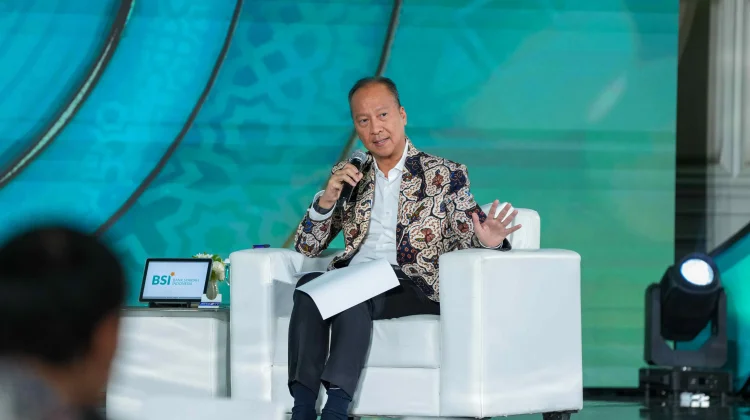
RRI.CO.ID, Jakarta - Indoneisa's Minister of Industry, Agus Gumiwang Kartasasmita, stated that Indonesia’s textile and textile products (TPT) as well as footwear industries continue to show stable performance and maintain sufficient production capacity to meet domestic market demand, which historically increases during the Ramadan and Eid al-Fitr period.
“Every year, the Ramadan and Eid momentum is always followed by a rise in public consumption of textile and footwear products. Based on our coordination with business players and industry associations, national production capacity is currently in optimal condition and ready to meet the demand,” Agus said in a statement in Jakarta on Tuesday, 10 March 2026.
The textile and textile products as well as footwear industries are among the priority manufacturing sectors that are labor-intensive and contribute significantly to the national economy. In 2025, the textile and textile products industry recorded GDP growth of 3.55 percent (year-on-year) with a contribution of 0.97 percent to Indonesia’s national GDP.
Director of Textile, Leather, and Footwear Industries at the Ministry of Industry, Rizky Aditya Wijaya, mentioned that the TPT industry continues to carry out its socio-economic role as a labor-intensive sector by absorbing a large number of workers. In August 2025, employment in this sector reached around 3.96 million workers, increasing from 3.76 million in February 2025.
This shows that the TPT industry remains one of the key pillars of employment in the manufacturing sector. The Ministry of Industry continues to implement various strategic measures to ensure industry readiness in facing the surge in demand, including monitoring production capacity, strengthening raw material supply, and coordinating distribution and logistics.
Monitoring of capacity utilization in the textile, garment, and footwear industries is also conducted regularly. In addition, coordination with raw material producers such as fiber, yarn, fabrics, and footwear materials is being strengthened to ensure smooth supply and stable prices.
The government is tightening supervision of illegal imports of second-hand clothing (thrifting), which are considered harmful to domestic industries, particularly small and medium enterprises. “We continue to strengthen supervision of the circulation of illegally imported used clothing. This step is important to safeguard the sustainability of the national textile industry and provide greater space for domestic products to grow in the local market,” Rizky said.
Based on reports from industry players within the Indonesian Textile Association (API) and the Indonesian Footwear Association (APRISINDO), production in several product segments has increased since the beginning of 2026, particularly for Muslim fashion, sarongs, children’s clothing, casual shoes, and sandals, which are key consumer needs ahead of Eid al-Fitr.
The Ramadan and Eid momentum has also positively impacted additional labor absorption to meet increased production orders.
The Ministry of Industry reaffirmed its commitment to strengthening the competitiveness of national industries through productivity improvements, technological transformation, the adoption of Industry 4.0, and strengthening the domestic market. The government also encourages industry players to utilize digital platforms to expand marketing and strengthen the branding of local products.
Moreover, Rizky expressed optimism that Indonesia’s textile and footwear industries will be able to fully capitalize on the Ramadan and Eid momentum. This opportunity is not only to meet public demand but also to strengthen industry performance and contribute positively to national economic growth.