



Saudi Import Ban: Momentum for Indonesia's Bird Flu-Free Status
- 03 Mar 2026 13:40 WIB
- Voice of Indonesia
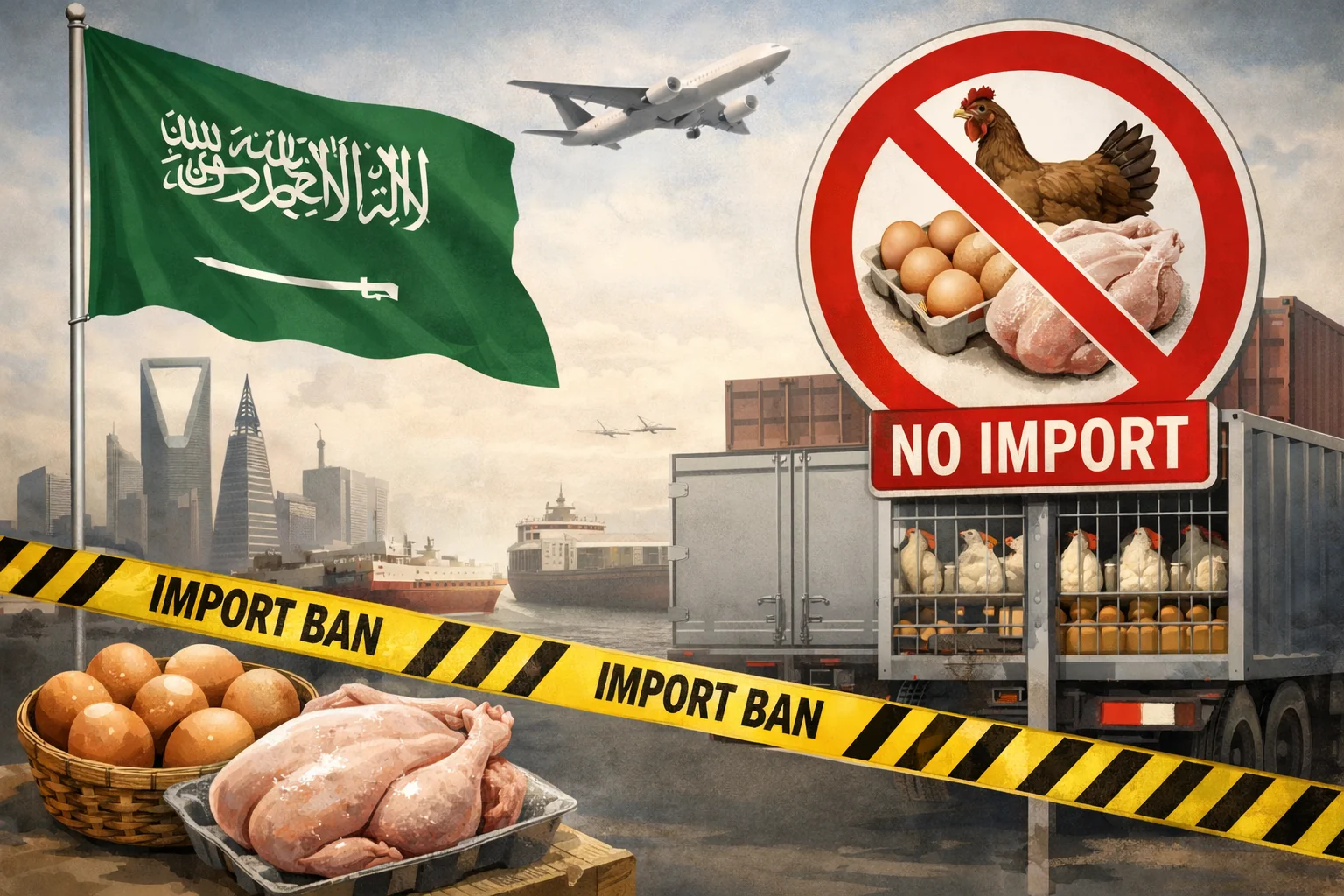
RRI.CO.ID, Riyadh - The Kingdom of Saudi Arabia, through its Saudi Food and Drug Authority (SFDA), has imposed a total ban on poultry and egg imports from 40 countries and a partial ban on imports from 16 countries. The latest ban on imports from Indonesia is stipulated in SFDA policy Number 6057 and will take effect on March 1, 2026.
The Indonesian Trade Attaché in Riyadh, Saudi Arabia, Zulvri Yenni, confirmed that this policy is not related to halal issues but is rather an effort to ensure the quality of goods circulating in the domestic market. "This import ban is not related to halal issues, but more to the issue of fulfilling quality requirements to meet applicable health, regulatory, and standard conditions," Zulvri explained in a written statement on March 3, 2026.
Indonesian halal certificates have been accepted by Saudi Arabia since the signing of a memorandum of understanding between the Indonesian Halal Product Assurance Organizing Agency (BPJPH) and the SFDA on October 19, 2023.
This latest Saudi policy should be seen as a momentum for Indonesia to update its avian influenza-free status. Currently, Indonesia has not yet realized the export of poultry and egg products to Saudi Arabia because it has not obtained avian influenza-free status based on the latest report from the World Organization for Animal Health (WOAH) updated on January 28, 2026. Zulvri stated that achieving this free status would have a positive impact on opening the Saudi Arabian market access for Indonesian poultry and egg products.
Zulvri added that the SFDA will periodically review this import ban list in line with global health situation developments based on WOAH reports concerning animal diseases, especially the highly pathogenic avian influenza outbreak. This measure is a form of Saudi Arabia's commitment to strictly monitoring evolving global epidemiological dynamics.
"This new Saudi policy is a momentum for Indonesia to update its avian influenza-free status in WOAH reports as soon as possible. This is important so that our export market share is not taken by competitor countries, especially from ASEAN such as Thailand and Singapore, which are not on the Saudi Arabian ban list," Zulvri said.
Indonesia is included in the list of countries subject to a total ban along with 39 other countries and Saudi Arabian trading partners, namely Afghanistan, Azerbaijan, Germany, Iran, Bosnia and Herzegovina, Bulgaria, Bangladesh, Taiwan, Djibouti, South Africa, China, Iraq, Ghana, Palestine, Vietnam, Cambodia, Kazakhstan, Cameroon, South Korea, North Korea, Laos, Libya, Myanmar, the United Kingdom, Egypt, Mexico, Mongolia, Nepal, Niger, Nigeria, India, Hong Kong, Japan, Burkina Faso, Sudan, Serbia, Slovenia, Ivory Coast, and Montenegro.
Meanwhile, a partial ban is imposed on certain provinces and cities in 16 countries, namely Australia, the United States, Italy, Belgium, Bhutan, Poland, Togo, Denmark, Romania, Zimbabwe, France, the Philippines, Canada, Malaysia, Austria, and the Democratic Republic of Congo.
Currently, the way for Indonesian poultry and egg products to penetrate the Saudi Arabian market is through specific processing evidenced by a health certificate. According to the SFDA's explanation, poultry meat and related products that have undergone heat treatment or other processing methods sufficient to eliminate the Newcastle disease virus will be exempted from the ban, provided that the treatment fully meets applicable health, regulatory, and standard requirements.
This process must also be supported by a health certificate issued by the competent official authority in the country of origin and recognized by the SFDA. The certificate must state that the measures taken have been adequate to eliminate the Newcastle disease virus.
The WOAH report is an official report published by the World Organization for Animal Health, formerly known as the Office International des Epizooties (OIE). WOAH collects data from its member countries on animal diseases, animal health, antibiotic use in animals, animal welfare, and food safety-related issues. This data is then summarized in various global and regional reports, serving as a reference for several countries when implementing policies on animal import bans.
News Recomendation
Loading latest news.....