



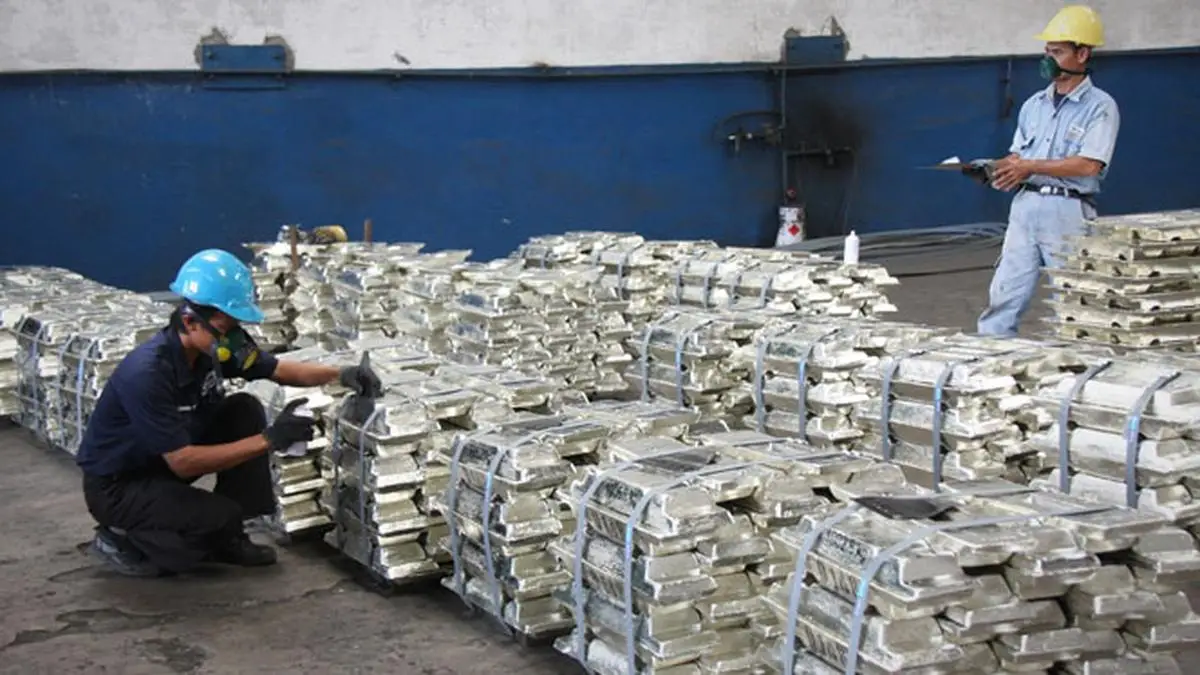
RRI.CO.ID, Jakarta - Minister of Energy and Mineral Resources (ESDM) Bahlil Lahadalia announced that the government is officially evaluating a similar export halt for tin.
Speaking at the Indonesia Economic Outlook in Jakarta on Friday, February 13, 2026, Bahlil framed the move as a critical step in President Prabowo Subianto's mission to transform Indonesia from a raw material exporter into an industrial powerhouse.
Minister Bahlil used the 2018–2019 nickel ore export ban as a gold-standard case study for "downstreaming" (hilirisasi). He noted that nickel exports jumped from USD 3.3 billion before the ban to USD 34 billion by 2024, a tenfold increase in just five years.
“This is what drives equitable economic growth and creates jobs. Last year we banned bauxite exports. And in the coming years, we will study several other commodities, including tin. We can no longer export raw goods. We invite friends to build downstream investment domestically," Minister Bahlil said, as quoted on Ministry's official website.
The push for a tin ban aligns with President Prabowo’s recent designation of 18 downstreaming projects as national priorities for 2026. These projects, which carry a total investment value of IDR 618 trillion, are designed to create a "captive market" within Indonesia by producing goods that replace expensive imports.
To ensure this wealth remains within the country, Minister Bahlil issued a direct challenge to the national banking sector and local investors to finance these strategic projects.
“All these products are meant to give birth to import substitution. This is a domestic captive market. This is the opportunity for banking to provide financing,” Minister Bahlil urged. “Do not fail to finance them, or people will think downstreaming value is only controlled by our friends from abroad.”
The government's downstreaming roadmap extending to 2040 is projected to be a monumental driver for the national economy. The long-term forecast includes a total investment estimated at USD 618 billion, with the mineral and coal subsectors contributing a significant USD 498.4 billion.
Additionally, export values are projected to reach USD 857.9 billion, while the program's contribution to the Gross Domestic Product is expected to add USD 235.9 billion. Ultimately, this industrial transformation is predicted to generate over 3 million new jobs for the Indonesian workforce. ***
News Recomendation
Loading latest news.....