



IES 2026 Affirms Investment-Based Growth Direction
- 05 Feb 2026 06:00 WIB
- Voice of Indonesia
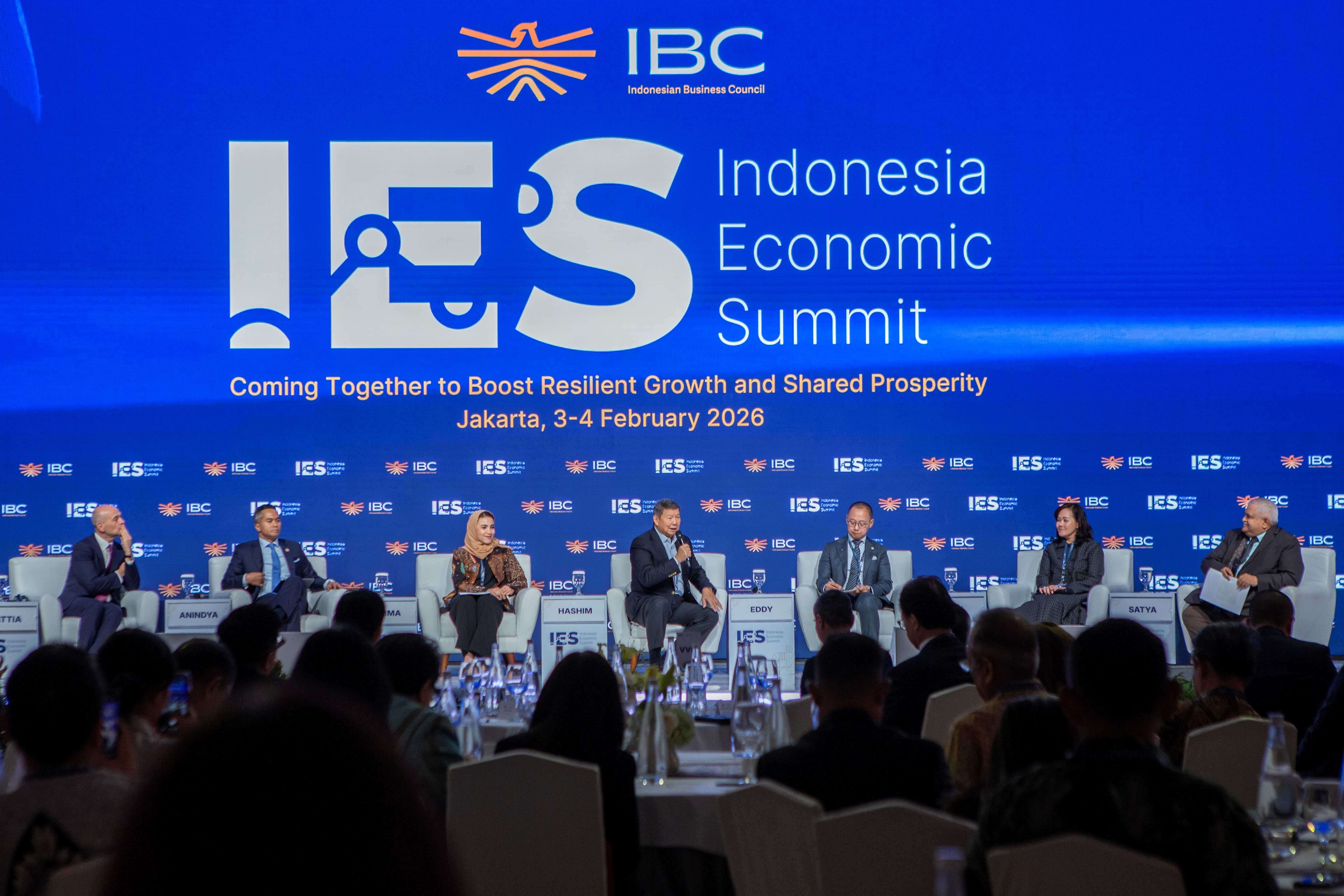
RRI.CO.ID, Jakarta - The Indonesian Business Council (IBC) held the Indonesian Economic Summit (IES) 2026 at the Shangri-La Hotel, Jakarta, on February 3–4, 2026, as a strategic forum attended by delegates and speakers from 53 countries, bringing together government leaders, the business world, global investors, academics, and international partners.
The IES affirmed the direction of Indonesia's long-term economic development, which is based on improving investment quality, strengthening human resources, and accelerating the transition to competitive green growth, while strengthening Indonesia's position as one of the main growth centers and investment destinations in the region.
The focus is on the importance of regulatory certainty, project feasibility, and industrial policy alignment to ensure Indonesia's ability to attract long-term, value-added investment that has a tangible impact on the national economy.
Sustainability, encompassing the management of water resources, energy, and natural systems, has transformed into a core economic issue that underpins productivity, resilience, and long-term growth.
"Indonesia's vision for the future is to become a relevant and competitive global green power. By aligning the decarbonization of downstream industries with the protection of natural systems, Indonesia positions sustainability as a key driver of long-term economic growth. This approach emphasizes that the green transition is not a burden on development, but rather a source of Indonesia's strategic advantage in the global economic order." the Special Envoy of the President of the Republic of Indonesia for Climate and Energy, Hashim Djojohadikusumo, stated.
The commitment to promoting national economic growth and resilience was also emphasized by Arsjad Rasjid, Chair of the Board of Trustees of the Indonesian Business Council, who stated that Indonesia's investment strategy must be based on three main foundations: certainty, capital, and capability.
By strengthening governance and market credibility, while mobilizing the right mix of public and private investment, Indonesia can convert global interest into increased productivity, quality job creation, and sustained long-term competitiveness.
The strategic role of human resources is a determining factor in ensuring economic growth produces inclusive and sustainable benefits. Indonesia's future challenge is not only to maintain growth rates, but also to ensure that they can drive increased productivity and workforce quality.
Creating productive, formal, and value-added jobs requires strong policy coordination across sectors, particularly between workforce skills development, investment policy direction, and technology utilization.
With this approach, Indonesia's economic transformation is expected to strengthen the position of the national workforce in the global value chain while supporting sustainable long-term growth.
The Chief Operating Officer of the Indonesian Business Council, William Sabandar, added that Quality economic growth can only be achieved if investment is consistently directed towards strengthening human resource capacity.
Indonesia needs an ecosystem capable of aligning talent development, industry needs, and the economic transformation agenda, so that growth is reflected not only in numbers, but also in increased productivity, job quality, and competitiveness.
Closing the 2026 Indonesia Economic Summit series, the forum reaffirmed its commitment as a strategic platform for aligning public policy direction with the needs of the business world.
Through open dialogue and based on concrete evidence, IES 2026 strengthens Indonesia's position on the global economic map as a credible, competitive, and sustainable long-term investment destination.
News Recomendation
Loading latest news.....