



Chinese Report Highlights Growing ASEAN-China Economic Relations
- 12 Des 2025 15:47 WIB
- Voice of Indonesia
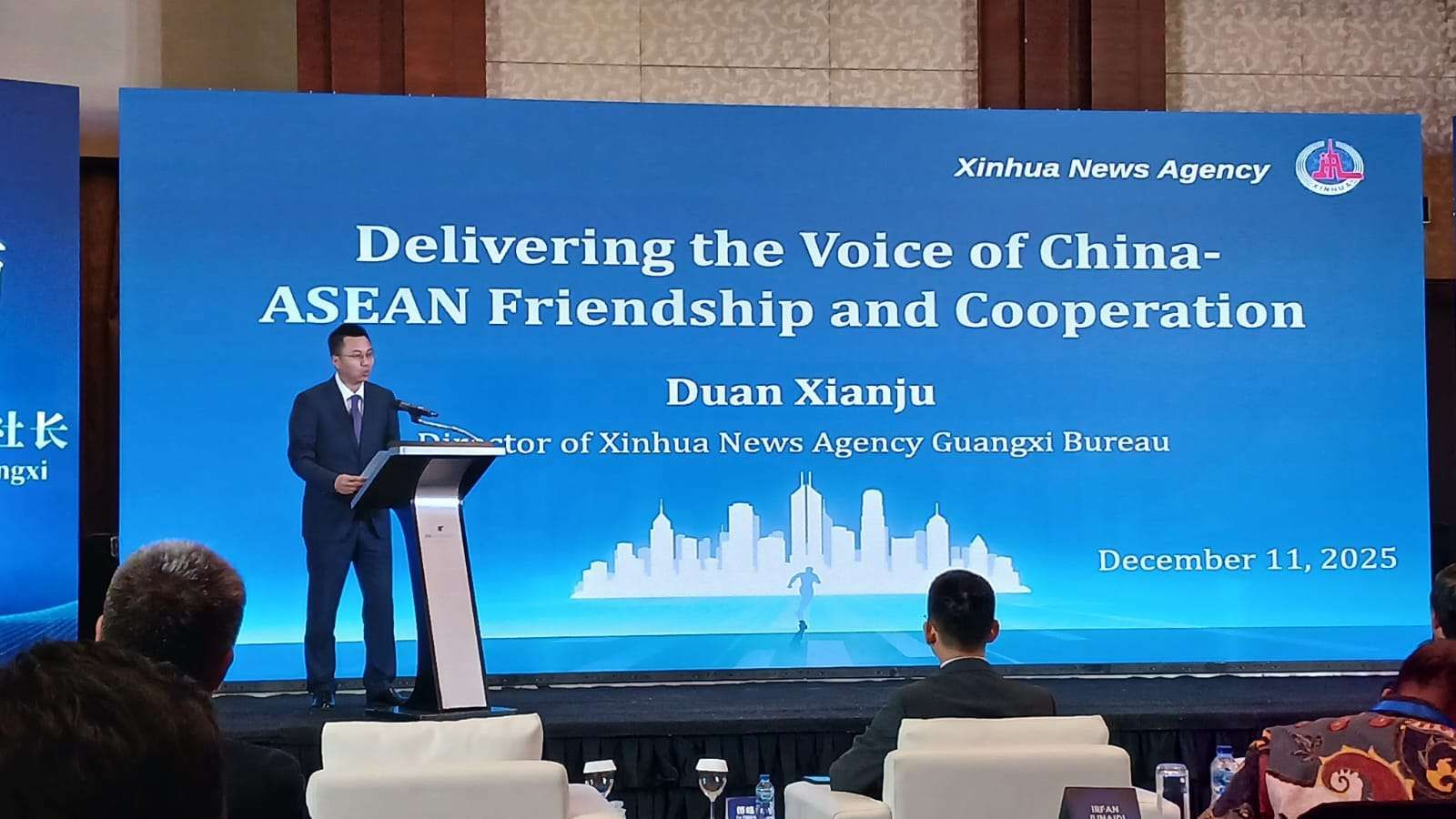
KBRN, Jakarta: Xinhua Institute, a think tank affiliated with China's Xinhua News Agency, launched the Indonesian edition of its report on ASEAN-China relations entitled "RCEP and the Vision of the Maritime Silk Road: New Frontiers for China-ASEAN Cooperation."
The report was launched at the Hong Ting Forum: Advance New Frontiers for China-ASEAN Cooperation, in Jakarta, Thursday (11/12/2025). It highlights the impact of the Regional Comprehensive Economic Partnership (RCEP) and China's Maritime Silk Road Vision on relations between the two regions.
The RCEP is a free trade agreement signed in 2020 among 15 countries: all ASEAN countries except Timor Leste, plus neighbouring countries of Australia, China, Japan, South Korea, and New Zealand. Meanwhile, the Maritime Silk Road was first conceived by the Chinese President, Xi Jinping, in 2013 before the Indonesian parliament, People's Consultative Assembly (MPR).
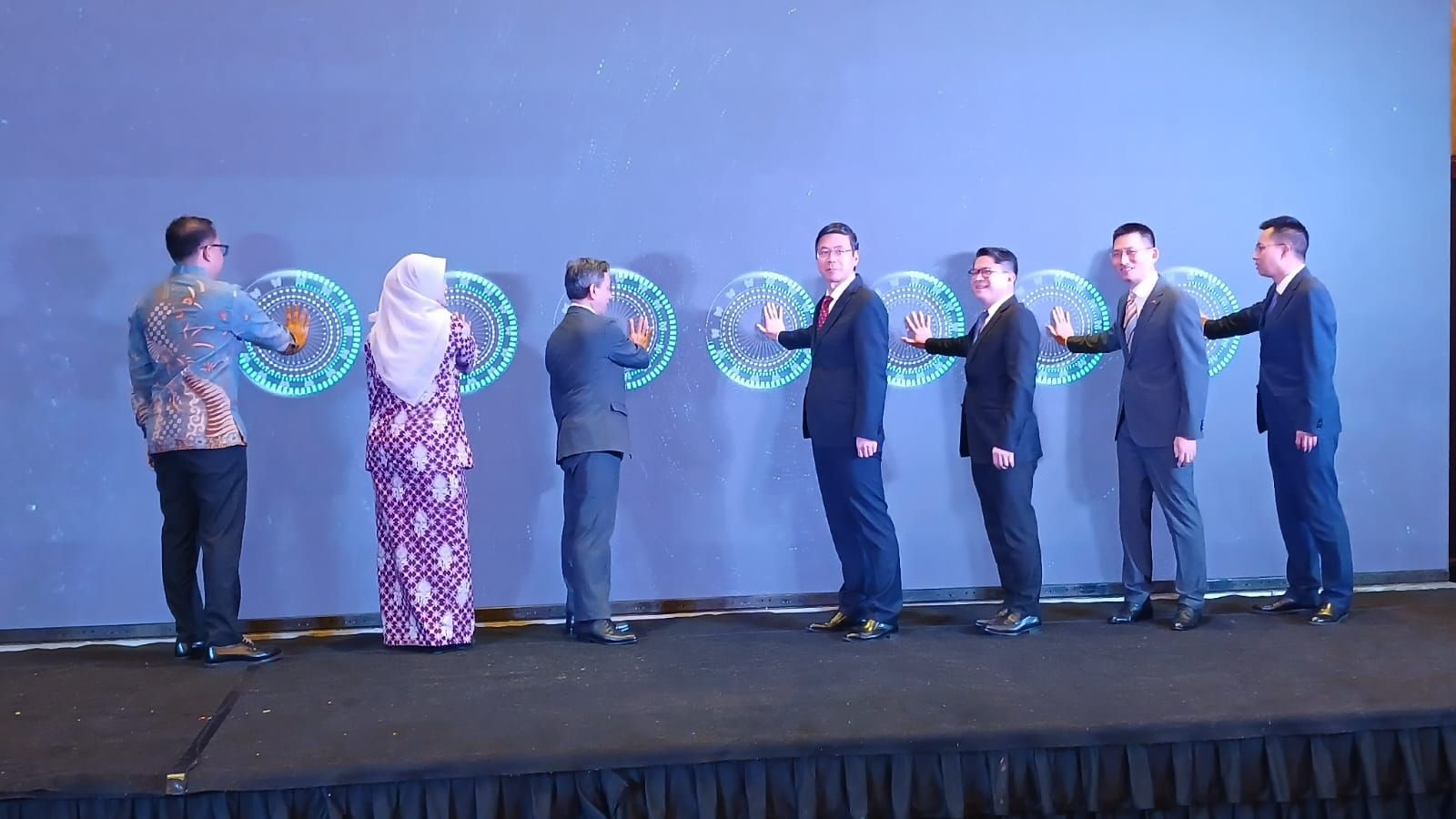
ASEAN Secretariat, ASEAN countries, Chinese Mission to ASEAN, and Xinhua officials symbolically launched the Indonesian language version of the Xinhua Institute report "RCEP and the Vision of the Maritime Silk Road: New Frontiers for China-ASEAN Cooperation" at the Hong Ting Forum: Advance New Frontiers for China-ASEAN Cooperation, in Jakarta on Thursday (11/12/2025). (Photo: RRI VOI/Rama Shidqi Pratama)
Director of Xinhua's Guangxi Bureau, Duan Xianju cited Indonesian coconut exports to China beginning this year as an example. They are exported to China via Fuzhou in large quantities to meet China's domestic needs.
"Just a few days ago, on November 29, also in Fuzhou, China welcomed its first batch of frozen durians from Indonesia," he said.
Duan stated that based on a Chinese market research report, the annual demand for coconuts in the Chinese market is massive, which is around 2.6 billion.
"However, China's domestic supply capacity is only about 10%. This means that the Chinese market has a huge consumption of coconuts, which brings great opportunities for the development of Indonesia's coconut industry," he said.
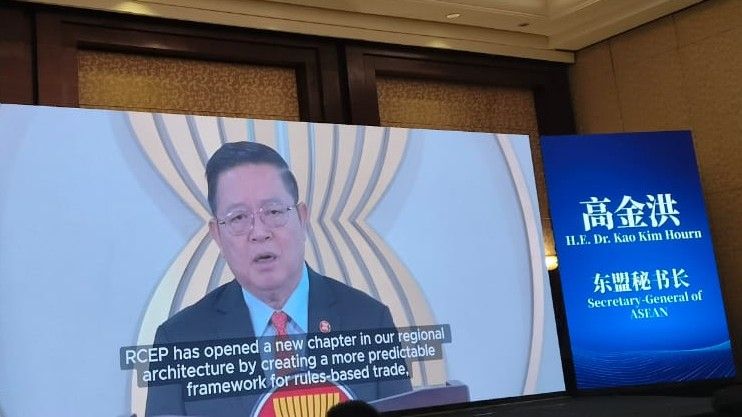
ASEAN Secretary-General Kao Kim Hourn remark video was played at the Hong Ting Forum: Advance New Frontiers for China-ASEAN Cooperation, in Jakarta on Thursday (12/11/2025). (Photo:RRI/Permadi Kencono Wulan)
ASEAN Secretary-General Kao Kim Hourn praised the Xinhua Institute report, saying it offered insights into the role of RCEP in ASEAN and China's economic integration. He also supported events like the Hong Ting Forum and expressed his hope that relations between the two regions would continue to develop based on dialogue and cooperation.
"The future of ASEAN-China cooperation holds real promise. As we navigate a rapid transformation, we must continue building on the foundations of partnership, openness, and mutual benefit that have long guided our engagement," he said in a video remark.
Meanwhile, an academician at the University of Indonesia, Fuad Gani, highlighted the rapid development of ASEAN-China relations over the past decade, as revealed in the report. He said that this has created new layers of complexity that require systematic thinking to learn from experience and respond to emerging challenges.
"From my economic point of view, ASEAN and China cooperation requires a kind of adjustment by establishing a systematic platform for reflection, mutual learning and evidence-based breakthrough. This mechanism could strengthen trust, mitigate misconceptions and boost the value and sustainability of cooperation," he said.
ASEAN and China are two regions with enormous economic potential. ASEAN countries, home to nearly 700 million people including Indonesians, account for 6.5 percent of global GDP. Meanwhile, with over 1.4 billion people, China is one of the world's largest economies.
News Recomendation
Loading latest news.....