



How National Festivals Transform Reyog Ponorogo
- 24 Jul 2026 13:19 WIB
- Voice of Indonesia
Key Points
- A UI doctoral study found national competitions have reshaped Reyog Ponorogo’s choreography, music, and storytelling.
- The research introduces Capital of Sensibility (Modal Rasa) to highlight the unique artistic instincts of traditional village performers.
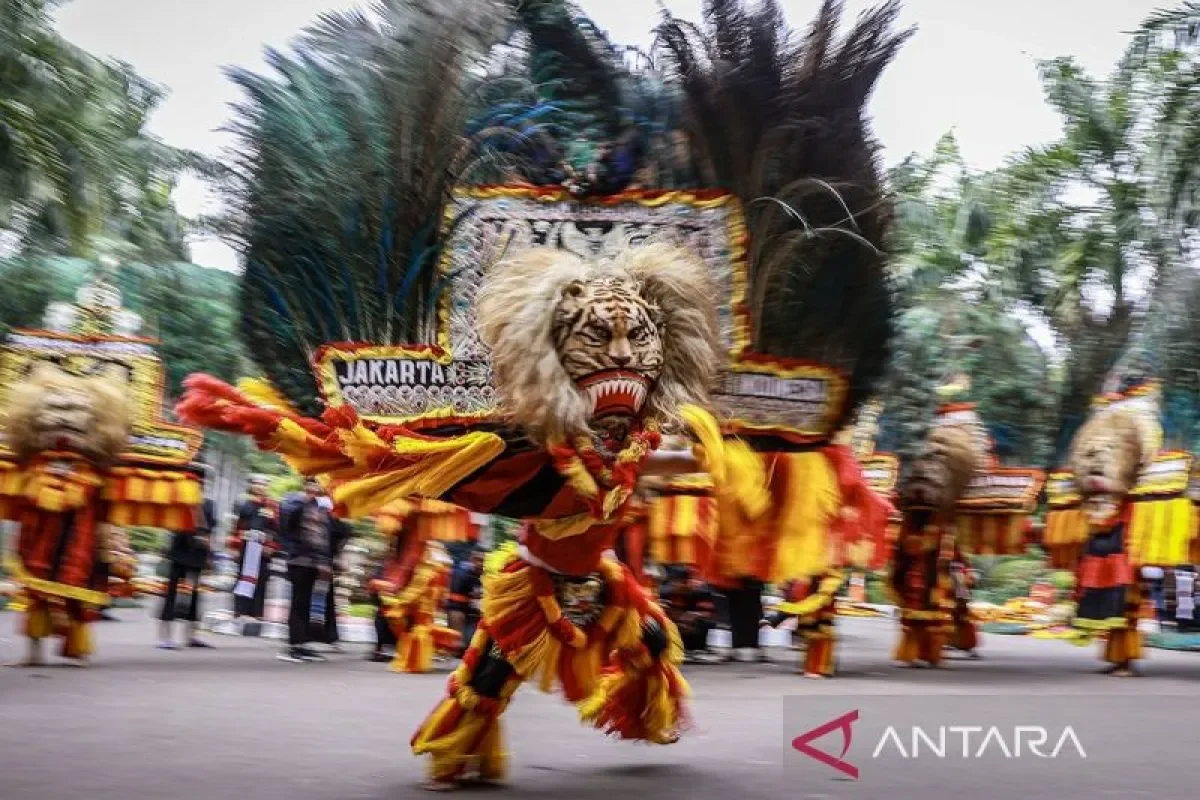
URRI.CO.ID, Jakarta - The transformation of Reyog Ponorogo from a rural agrarian folk tradition into a highly competitive stage performance has been comprehensively unpacked in new doctoral research from Universitas Indonesia (UI).
Defending her dissertation at the Faculty of Humanities (FIB UI) on July 4, Nursilah analyzed how the annual National Reyog Ponorogo Festival (FNRP) has shifted the social spaces and artistic expressions of the traditional art form.
Her study, titled Aesthetic Transformation of Reyog Ponorogo Art in the Creative Process of Three Reyog Groups in the National Reyog Ponorogo Festival Arena, earned her a doctorate in Literature with Very Satisfactory honors.
Through a multiple case study approach, Nursilah investigated three sociologically distinct groups: Gajah Manggolo (a high school group from SMAN 1 Ponorogo), Kawulo Bantarangin (representing the rural agrarian community of Kauman Somoroto), and Bantarangin Jakarta (an urban diaspora group).
Her findings reveal that time limits and strict jury rubrics at national competitions have forced choreographers into performative engineering. Traditional movements are increasingly blended with Western modern dance elements, such as fall and recovery, splits, saltos, and pliés, alongside compressed musical arrangements and cinematic flashback narratives.
The research highlights how financial leverage shapes competitive strategies. While urban groups like Bantarangin Jakarta compensate for their dancers' lack of traditional experience by hiring professional choreographers from Ponorogo, school groups like Gajah Manggolo rely on rigorous practice disciplines to achieve high technical precision.
As an academic contribution, Nursilah introduced the concept of Capital of Sensibility (Modal Rasa) as an extension of Pierre Bourdieu’s cultural capital theory. Modal Rasa refers to the organic, body-memory aesthetic sensitivity (mat-matan) inherently possessed by rural village artists.
However, the study demonstrates that this organic sensitivity remains vulnerable to commercial co-optation. High-capital groups frequently purchase coaching from village artists, causing local sensibilities to gradually succumb to festival standardization.
Addressing the broader societal impact, Nursilah emphasized that Reyog Ponorogo must be understood beyond mere stage entertainment. The dissertation advocates for equitable festival governance to protect grass-roots folk artists, ensuring the ancestral tradition remains culturally authentic while adapting for future generations. ***
News Recomendation
Loading latest news.....