



South Kalimantan Pushes Banjar Mask Art Into Schools
- 01 Jul 2026 14:41 WIB
- Voice of Indonesia
Key Points
- South Kalimantan plans to include Topeng Banjar in local school curricula.
- Academics are calling for more research to preserve the region's traditional mask art.
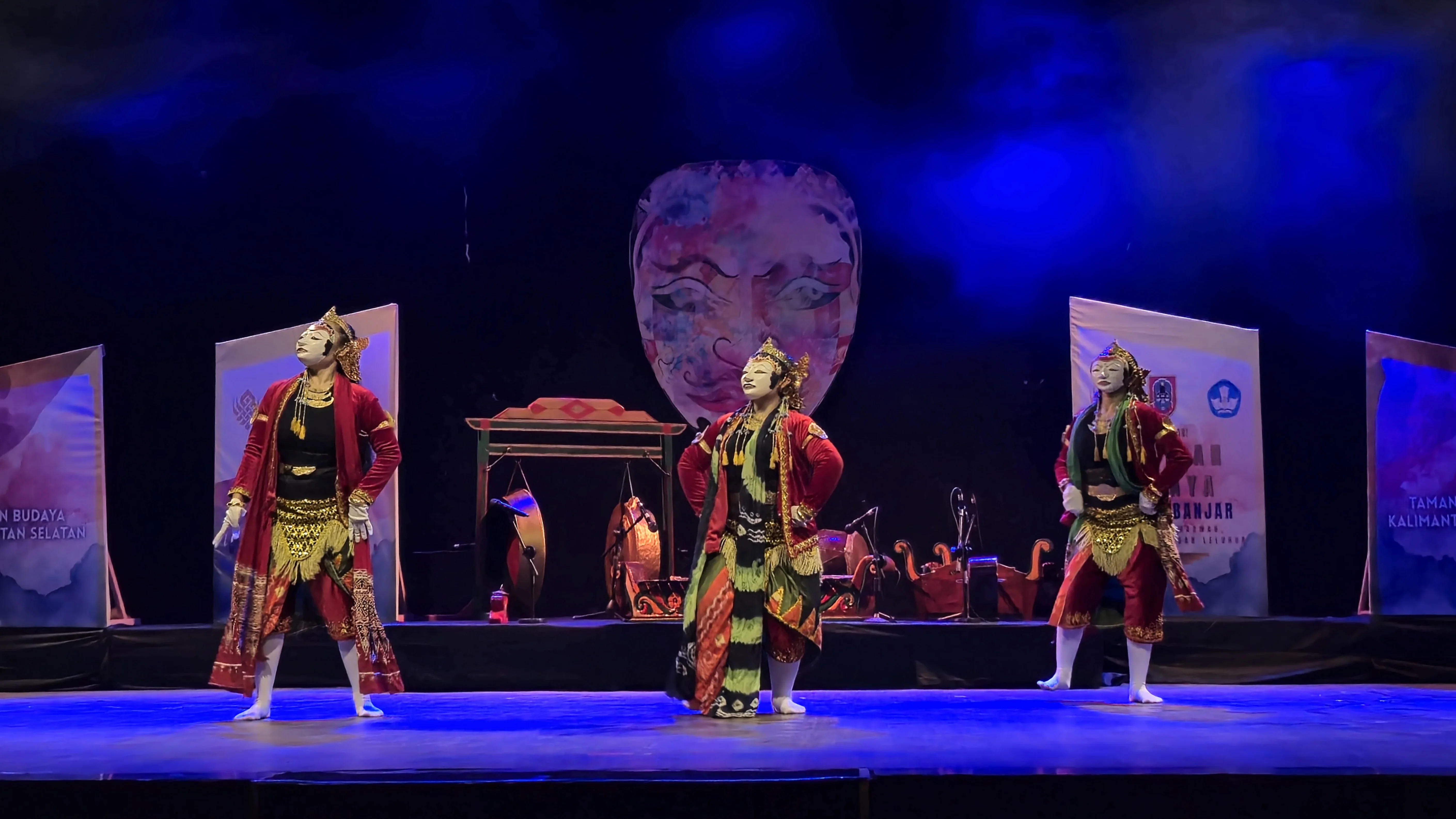
RRI.CO.ID, Banjarmasin - Amid growing concerns over the rapid disappearance of traditional performing arts in the modern era, cultural authorities and academic institutions in South Kalimantan are mobilizing to integrate Topeng Banjar (Banjar mask art) into the formal public education system.
The classical performing art, which heavily developed and historically thrived in the Barikin region of Hulu Sungai Tengah Regency, has increasingly vanished from the public sphere, rarely appearing outside of isolated rural ceremonies. To prevent the complete extinction of this unique South Kalimantan cultural identity, regional leaders are looking to institutionalize its preservation via classroom instruction.
The Regional Technical Implementation Unit (UPTD) of the South Kalimantan Cultural Park is spearheading the bureaucratic push. The agency plans to immediately coordinate with the provincial Education and Culture Agency (Disdikbud) to formally draft Topeng Banjar modules into the mandatory local content curriculum (muatan lokal) for primary and secondary schools across the province.
"We will coordinate with the South Kalimantan Education and Culture Agency. Hopefully, in the future, children will be able to recognize the Banjar masks, our cultural heritage," Rizal Pahmi, Head of the South Kalimantan Cultural Park UPTD, stated to members of the press.
However, modernizing the transmission of this generational heritage requires a sturdy academic foundation. A prominent cultural anthropologist and academic from Universitas Lambung Mangkurat (ULM), Setia Budhi, emphasized that local universities must step up to structuralize the preservation process through systematic scientific documentation, field research, and targeted community service programs.
Setia pointed out that a major structural bottleneck facing the preservation campaign is the critical scarcity of authentic written references on the subject. At present, secondary schools and university researchers are forced to rely on highly limited source material.
"From an academic perspective, we need to increase research, documentation, and community service. This way, Banjar masks can also be studied as a science," Budhi explained.
"So far, I've only found one reference book by Julak Larau or Mukhlis Maman. So, our references are still limited," he added that the lack of academic publications severely limits regional education.
By encouraging faculty members and university students to execute deep-dive field studies and publish peer-reviewed literature, cultural advocates hope to build a robust, authoritative database.
This body of academic work will serve a dual purpose: it will supply accurate text references for classrooms while offering local administration a solid empirical foundation to draft effective, long-term cultural preservation policies, ensuring the youth of South Kalimantan maintain a strong connection to their ancestral roots. (Naura Sofia-EN)
News Recomendation
Loading latest news.....