



Padangaji Preserves Bali’s Heritage Beneath Mount Agung
- 19 Mei 2026 11:39 WIB
- Voice of Indonesia
Key Points
- Desa Adat Padangaji remains a stronghold of traditional Balinese culture, preserving ancestral customs and communal governance.
- The village survived the devastating 1963 eruption of Mount Agung and rebuilt while maintaining its cultural identity.
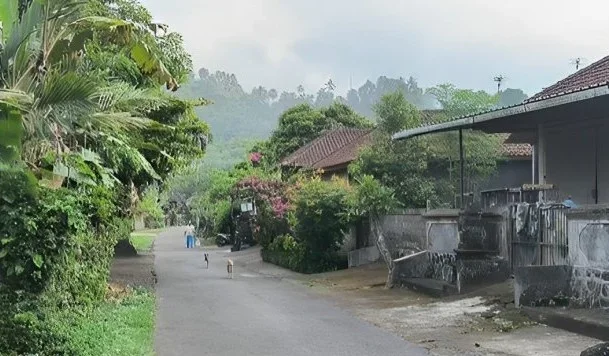
RRI.CO.ID, Denpasar - Tucked away in the scenic, mist-shrouded foothills of Selat Subdistrict, Karangasem Regency, Bali, Padangaji Customary Village stands out as a living bastion of ancestral Balinese heritage. At a time when globalized commercial development increasingly alters the island's landscape, this traditional village has successfully preserved its ancient customs, community-driven governance, and deep spiritual philosophies passed down through countless generations.
Characterized by lush volcanic slopes and clean mountain air, daily life in Padangaji remains tightly anchored to gotong royong (communal mutual aid) and the rhythmic cycles of Balinese Hinduism. The community regularly orchestrates complex, time-honored rituals aimed at venerating their ancestors and maintaining Tri Hita Karana, the foundational Balinese philosophy of sustaining a harmonious equilibrium between humanity, nature, and the spiritual realm.
Spatially positioned directly south of Mount Agung, Indonesia's towering stratovolcano and the most sacred peak in Balinese cosmology, Padangaji Traditional Village shares a profound physical and historical bond with the mountain.
The ultimate test of the village's resilience occurred during the catastrophic 1963 eruption of Mount Agung. The geological event sent scorching pyroclastic flows and torrents of volcanic lahar tearing directly through Padangaji's territory.
Despite enduring widespread displacement and the physical reshaping of their agrarian lands, the community refused to abandon their ancestral soil. Instead, they rebuilt their village upon the volcanic sediment, emerging with their local wisdom, traditions, and cultural identity completely intact.
Today, the village functions primarily on a self-sustaining micro-economy rooted in traditional agriculture and localized trade. This agrarian focus allows the community to meet their daily needs while actively protecting the fertile volcanic terrain from aggressive commercial zoning.
To effectively manage its territorial, civil, and ceremonial responsibilities, Padangaji Traditional Village is systematically partitioned into three distinct administrative and cultural neighborhoods known as Banjars. The first of these is Banjar Padangaji Kangin, which governs the eastern sector of the village.
The heart of the community is overseen by Banjar Padangaji Tengah, which anchors the central sector. Finally, the western sector is managed by Banjar Padangaji Kawan, completing the village's traditional tripartite social and administrative structure.
Each Banjar operates under its own localized customary council, ensuring that communal decisions, agricultural scheduling, temple maintenance, and dispute resolutions are handled collectively, directly mirroring the democratic underpinnings of ancient Balinese tribal assemblies. Through this unbroken tripartite social structure, Padangaji Traditional Village continues to serve as an irreplaceable template for sustainable indigenous living in the modern era. (Naura Sofia/EN)
News Recomendation
Loading latest news.....