



Thousands Join Piodalan Festival at Pura Mandara Giri Semeru Agung
- 01 Jul 2026 07:48 WIB
- Voice of Indonesia
Key Points
- Thousands of Hindu devotees are participating in the Piodalan festival at Pura Mandara Giri Semeru Agung in Lumajang, with ceremonies running from May 29 to July 10.
- The annual celebration promotes interfaith harmony while boosting the local economy through increased tourism and support for small businesses.
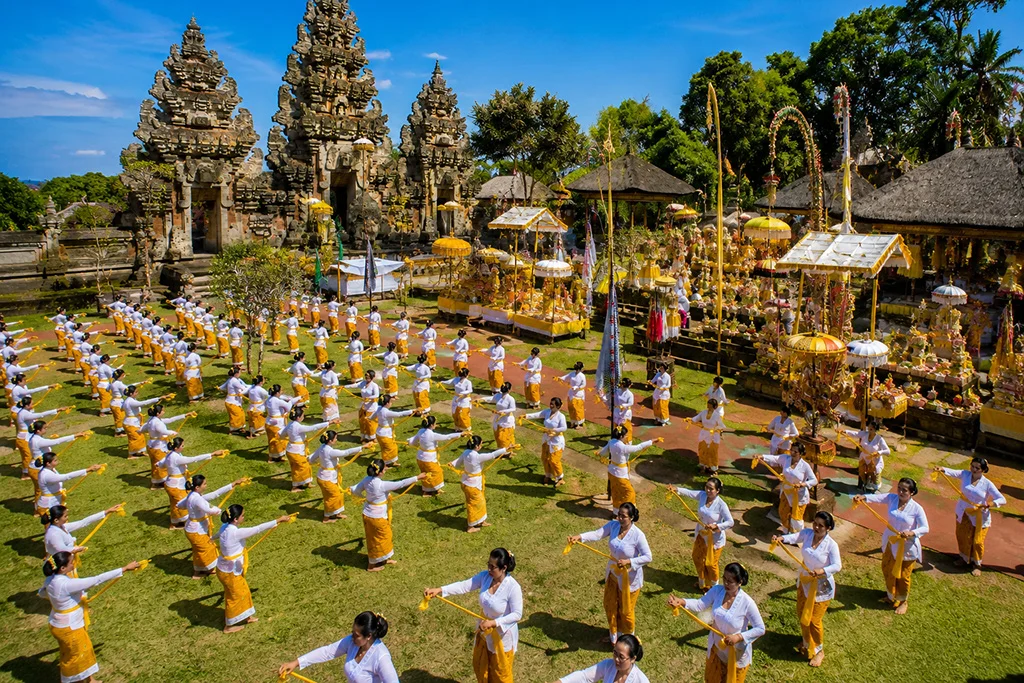
RRI.CO.ID, Lumajang - Thousands of Hindu pilgrims from across Indonesia have gathered at the slopes of Mount Semeru to partake in the extensive Piodalan festival at Pura Mandara Giri Semeru Agung, located in Senduro Village, Lumajang Regency, East Java. Running from May 29 through July 10, 2026, the anniversary ritual has transformed the temple complex into a bustling nexus of spiritual devotion, interfaith tolerance, and localized economic revitalization.
The sprawling temple grounds have been filled daily with devotees dressed in traditional white attire, bearing canang sari (floral offerings) amid the ambient sounds of holy chants, ceremonial bells, and burning incense. Established in 1992, the temple's annual anniversary celebration serves as a vital bridge connecting spiritual duties, cultural preservation, and social harmony within the diverse East Java community.
The multi-stage ritual calendar commenced with the Matur Piuning opening prayers, followed by the Melasti purification procession to water sources. The spiritual momentum will peak during the complex Tawur Panca Wali Krama cleansing ritual before the entire festival concludes on July 10, 2026. Each cyclical stage is designed to symbolize internal purification, ecological equilibrium, and collective gratitude for universal prosperity.
"This is a manifestation of our gratitude to the universe that has bestowed blessings upon us all," said Wira Dharma, Daily Chairperson of the Pura Mandara Giri Semeru Agung management committee, on Monday, June 29, 2026, as quoted by Infopublik.id.
Wira explained that the Piodalan ritual cycles operate across three distinct tiers, celebrated on annual, five-year, and ten-year intervals. Each tier demands specific ceremonial structures to ensure that ancestral Javanese-Balinese Hindu traditions are accurately preserved across generations.
Beyond its deep spiritual dimensions, Wira emphasized that the festival's true success lies in the organic model of interfaith harmony displayed by the surrounding Muslim and Christian communities in Senduro district.
Local non-Hindu residents have actively volunteered to manage security parameters, coordinate traffic logistics, and accommodate incoming travelers. "This is a manifestation of religious diversity coexisting," Wira added.
The prolonged religious gathering has also generated an immediate economic windfall for the sub-district, providing a crucial commercial boost to local micro, small, and medium enterprises (MSMEs). The massive influx of thousands of daily pilgrims has substantially driven up occupancy and sales rates for nearby homestays, small culinary stalls, transport services, flower vendors, and traditional handicraft merchants.
"It also boosts the local economy, which is still low," Wira remarked, pointing out how faith-based tourism acts as an organic tool for rural wealth distribution. ***
News Recomendation
Loading latest news.....