



Ministry Designates Muna Prehistoric Caves as National Cultural Heritage
- 13 Jul 2026 09:17 WIB
- Voice of Indonesia
Key Points
- The Ministry of Culture designated the Liangkabori and Liang Metanduno caves as National Cultural Heritage sites.
- The prehistoric caves contain some of the world's oldest rock art and could reshape research on early human history.
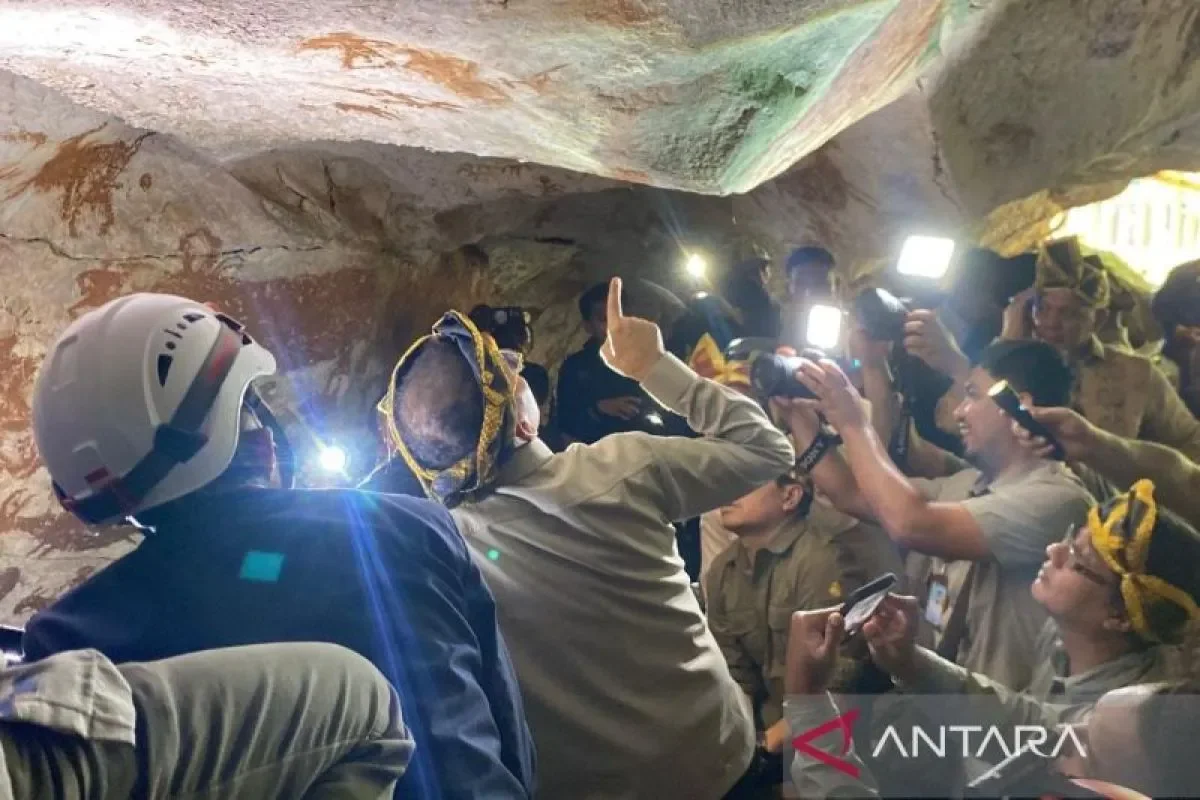
RRI.CO.ID, Muna - The Indonesian Ministry of Culture has officially elevated the prehistoric Liangkabori and Liang Metanduno cave complexes in Muna Regency, Southeast Sulawesi, to National Cultural Heritage Site status, a move that experts say could reshape the global understanding of early human migration.
The designation follows groundbreaking archaeological findings earlier this year that positioned the remote island at the center of global prehistoric research. By granting the sites the nation's highest heritage status, the government aims to safeguard what is now recognized as home to some of the oldest surviving records of human civilization.
Culture Minister Fadli Zon confirmed that the National Cultural Heritage Expert Team successfully wrapped up the final evaluation sessions for the status upgrade last week.
"The assessment session was completed last week. Now, it only needs to be officially announced, which, God willing, will take place in early August as a national cultural heritage site," Fadli Zon said on Sunday, July 12, 2026, as quoted by Antara.
The minister expressed his highest appreciation to the Southeast Sulawesi Provincial Administration, the Muna Regency Administration, the Liangkabori Village authorities, traditional elders, researchers, cultural communities, and local residents who have protected the rock art sites across generations, culminating in the staging of the 4th Liangkabori Festival in 2026.
Through the festival and the official status upgrade, Fadli noted that Indonesia is opening a crucial new chapter in human history, given that the site preserves some of the oldest evidence of human civilization in the world.
The Liang Metanduno site drew intense global archaeological scrutiny following the publication of a joint study by domestic and international universities, the Griffith University of Australia, and the Cultural Preservation Bureau on January 22, 2026.
"The research results have been officially recorded in the 2026 Guinness Book of Records as the world's oldest non-figurative cave painting," the minister said.
Scientific testing using the laser ablation uranium-series method proved that a 14-centimeter by 10-centimeter ancient visual pigment patch inside the cave is at least 67,800 years old. This discovery broke the previous world record held by a 51,200-year-old painting in Leang Karampuang, Maros-Pangkep, South Sulawesi.
Furthermore, the Muna cave art is documented to be 1,100 years older than the minimum age of the ancient hand stencils in Maltravieso, Spain, which are attributed to Neanderthals, and far older than France's legendary cave art in Chauvet (30,000 to 32,000 years old) and Lascaux (17,000 years old).
Fadli argued that this modern human (Homo sapiens) archaeological evidence in Muna, which spans a history of over 2,700 generations, holds the potential to challenge the dominance of the single direction Out of Africa human migration theory.
"For a long time, science has been influenced by colonialism; they always viewed us as relatively younger and saw Europe as the center. With this incredibly strong archaeological evidence, we must be brave enough to challenge those old theories. The human migration narrative could very well be two-way or involve multiple traffic routes, including the potential of an Out of Nusantara or Out of Sulawesi pathway," he explained.
To optimize protection against physical degradation caused by climate change, the Ministry of Culture has committed to establishing the Ancient Painting Information Center in the Muna Islands through its provincial office in Southeast Sulawesi.
Additionally, the ministry has ordered the comprehensive documentation of all prehistoric rock art across Muna, Maros-Pangkep, Kalimantan, and Raja Ampat into an encyclopedic book, alongside the creation of high-scale visual replicas at the Southeast Sulawesi Provincial Museum for public education. ***
News Recomendation
Loading latest news.....