



Ancient Iranian Script Has Deciphered by French Researcher
- 06 Mei 2026 15:17 WIB
- Voice of Indonesia
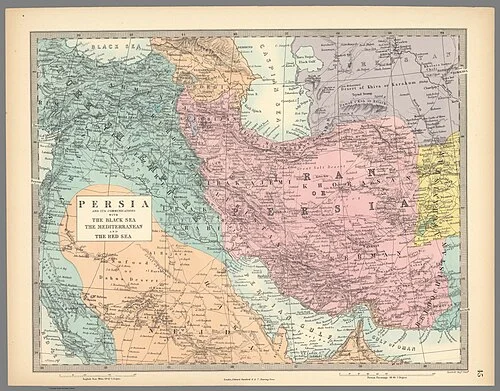
RRI.CO.ID, Jakarta - A French researcher has figured out how to read Linear Elamite, a writing system from Iran that is over 4,000 years old. The script was thought to be impossible to understand for a long time.
Un French archaeologist François, Desset, conveyed this writing is special because it was created in Iran and not borrowed from other places. Linear Elamite comes from the Elamite civilization, which existed in southern Iran thousands of years ago.
This civilization was a rival of ancient Mesopotamia. Desset explains that every other writing system used in Iran’s history, like cuneiform, the Arabic alphabet, or the Greek alphabet, came from outside.
| Baca juga: Rejang Lebong Menhir Needs Urgent Protection |
Linear Elamite is the only one that truly started in Iran. Even modern Persian, which uses Arabic letters, is more related to French than to the Elamite language.
The script was first found in 1903 by French archaeologists digging in Susa, in southwest Iran. It has 77 symbols that look like diamonds, curves, and other shapes. For over 100 years, no one could read it.
One big reason was that there were very few examples of the writing. Desset first saw Linear Elamite tablets himself in 2006 while working on a dig in southern Iran.
For ten years after that, he made no progress and felt stuck. The breakthrough came in 2015 when he was able to study ancient vases owned by the Mahboubian family in London.
These vases had new texts written in Linear Elamite. With ten new examples, he finally found the key to decoding the script. Because of this, some people have called him a modern-day Champollion, the Frenchman who decoded Egyptian hieroglyphs.
To crack the code, Desset looked for names of kings, gods, and places. Just like Champollion used the names Ptolemy and Cleopatra, Desset used the name of a ruler called Shilhaha, who lived around 1950 BC. He noticed that in a group of four symbols, the last two were the same. That matched the repeated sound at the end of “Shilhaha.” This clue helped him unlock the rest of the script.
Today, Desset has 45 Linear Elamite inscriptions to work with, which is twice as many as he had twenty years ago. He works in Belgium with an Egyptologist and an expert on ancient Mesopotamia. Together, they study the world’s three oldest writing systems. His new knowledge may also help him understand an even older script from Iran called Proto-Elamite.
Desset lived in Iran from 2014 to 2020 and cares deeply about its history. With the current conflict in the Middle East, he hopes his work will remind people of Iran’s rich culture.
He believes that sharing this discovery can have a positive impact on Iranian identity when peace returns.
Source : madame Le Figaro
News Recomendation
Loading latest news.....