



Ministry Backs Revitalization of Tumbang Anoi, the Dayak Legacy of Peace
- 16 Apr 2026 06:49 WIB
- Voice of Indonesia
Key Points
- The Ministry of Culture supports revitalizing the Tumbang Anoi Peace Agreement as a symbol of unity.
- Fadli Zon met with Elemen Masyarakat Adat (Emas Dayak) to discuss preservation efforts.
- Tumbang Anoi is an important milestone of customary peace, carrying great values and even recognized internationally.
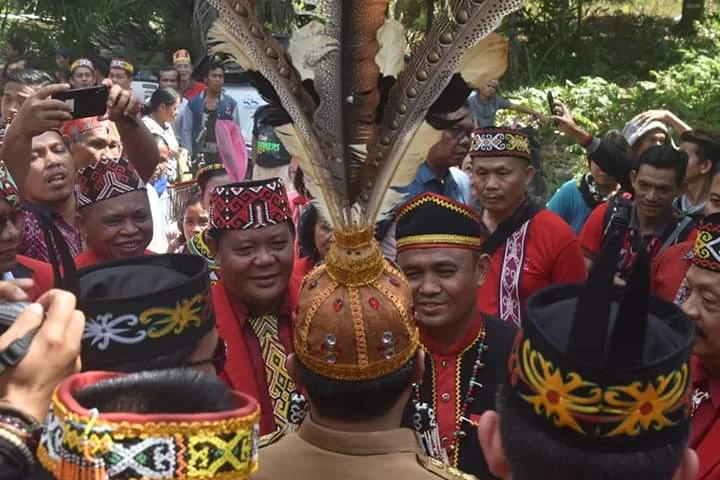
RRI.CO.ID, Jakarta - The Indonesian Ministry of Culture has committed to strengthening the historical and legal narrative of Tumbang Anoi, a landmark event in Central Kalimantan that historically united Dayak tribes through a peace agreement. The commitment followed a meeting on April 14, 2026, between the Minister of Culture and the Elemen Masyarakat Adat (Emas) Dayak, a group dedicated to preserving indigenous interests.
The primary focus of the dialogue was the revitalization of the customary laws formulated and ratified at Tumbang Anoi in 1894. Mandeh, the Chairperson of Emas Dayak, expressed concern over the declining application of these laws in modern Kalimantan.
"We hope that the customary law compiled by our grandfather, Damang Batu, and the tribal representatives of that time can be upheld once again and not pushed aside," Mandeh said firmly, as quoted by the ministry's official website.
The Emas Dayak leadership highlighted that Tumbang Anoi is not just a regional milestone but an internationally recognized symbol of indigenous peace. H.R.M. Soekarna, advisor to Emas Dayak, emphasized that public education is key to this revival. He urged the government to actively introduce the history of Tumbang Anoi to the wider public as a vital part of Indonesia's national cultural treasury.
To build momentum, the group proposed a cultural parade (kirab) to coincide with National Awakening Day on May 20, 2026. This celebration is planned to include the unfurling of a 118-meter Red and White flag, a powerful gesture intended to represent 118 years of national awakening.
The event also aims for mass participation by involving students, universities, and members of the Indonesian Military (TNI) and National Police (Polri) to foster a sense of shared responsibility. Furthermore, the parade will feature a variety of traditional performances, including displays of Dayak and diverse Nusantara arts, as a vibrant celebration of national unity and cultural heritage.
Minister of Culture, Fadli Zon, responded with full support for the initiative, noting the strategic importance of indigenous peace narratives. He suggested that the legal aspects of the Tumbang Anoi customary law could be further coordinated with the Ministry of Law to ensure its values are integrated effectively.
"As the government, we strongly support various efforts that can advance national culture, including the strengthening of historical narratives like Tumbang Anoi," he said.
"The cultural aspects in the implementation of activities submitted by Emas Dayak can involve the Central Kalimantan Cultural Preservation Center (BPK) as a regional unit under the Ministry of Culture for more effective and measurable follow-up," the Minister added.
The meeting, which also included key legal and tradition experts from the ministry, underscores a deepening partnership between the state and indigenous communities. By fostering these collaborations, the Ministry of Culture aims to ensure that the noble values of traditional peace treaties continue to benefit future generations.
The Tumbang Anoi meeting highlights the strategic role of customary law in maintaining regional stability and cultural identity. By integrating these 19th-century peace principles into modern discourse, the government and Emas Dayak are effectively repositioning indigenous history as a relevant tool for contemporary social harmony.
Furthermore, the proposal to link the Dayak cultural parade with National Awakening Day demonstrates a sophisticated approach to inclusive nationalism. It frames specific tribal heritage within the broader context of the Indonesian state, ensuring that local traditions are seen as a foundational pillar of the national identity rather than a separate entity. ***
News Recomendation
Loading latest news.....