



Jabung Temple Revitalization Opens New Chapter in Majapahit Heritage
- 26 Jan 2026 12:01 WIB
- Voice of Indonesia
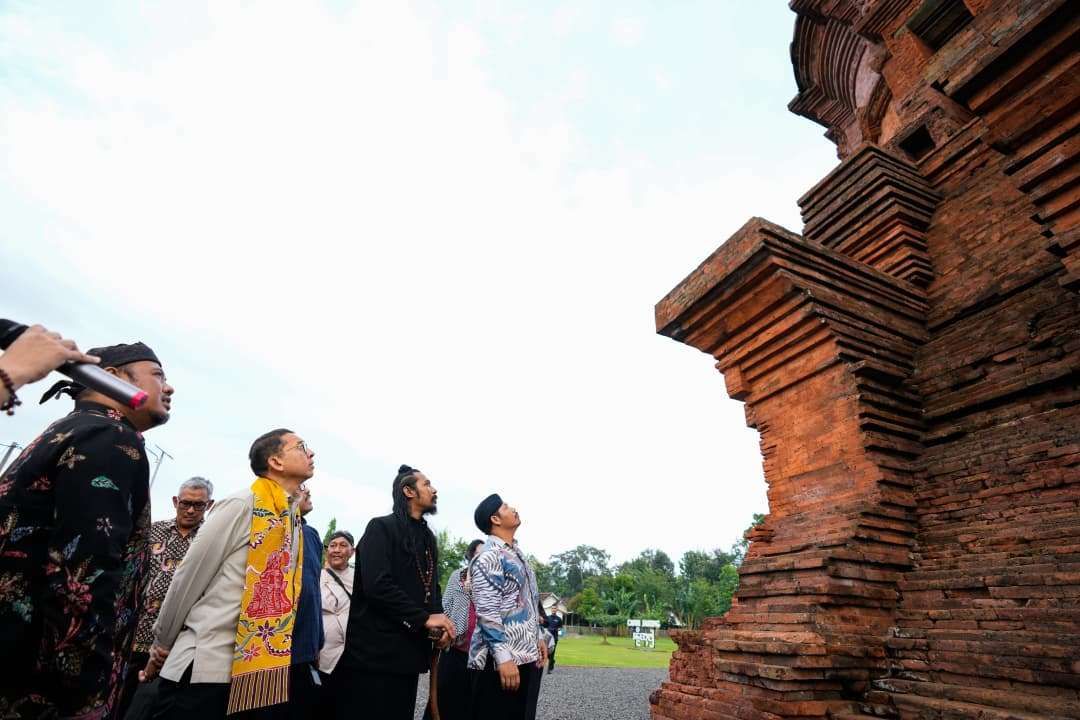
RRI.CO.ID, Probolinggo - The revitalization of Jabung Temple in Probolinggo, East Java, signals a new chapter in the preservation of Majapahit cultural heritage, with a focus on sustainability and the use of public spaces. Covering approximately five hectares, the national heritage site is seen not only as a historical monument but also as a cultural ecosystem with the potential to deliver social and economic benefits to the surrounding community.
During his visit to the site, Indonesian Minister of Culture Fadli Zon emphasized the importance of maintaining Jabung Temple as a living space that remains relevant to contemporary developments. The revitalization, carried out by the Cultural Heritage Preservation Center (BPK) Region XI East Java, is considered a vital first step in connecting historical values with modern needs while safeguarding the temple’s authenticity.
Dating back to the Majapahit Kingdom, Jabung Temple was built in 1276 Saka (1354 AD) and is mentioned in the Nagarakretagama manuscript. Its history is also tied to King Hayam Wuruk, who once stopped in Banger Village, underscoring the site’s significance within the Majapahit cultural landscape.
Minister Fadli Zon highlighted the temple’s distinctive architecture, noting its departure from the andesite stone commonly used in East Java temples. “Jabung Temple is built of brick, reflecting the unique characteristics of Majapahit-era structures,” he said on Sunday, January 25, 2026, as quoted on the ministry’s official website.
He added that the temple embodies an acculturation of Hindu and Buddhist traditions, with its form often interpreted as resembling a Lingga-Yoni.
Looking ahead, the minister stressed the importance of ongoing preservation to protect the site from challenges such as vandalism, environmental factors, and climate change. He pointed out that its coastal location poses specific risks, including exposure to sea winds carrying salt content, which require special management.
Beyond protection, Minister Fadli Zon underscored the need for optimal utilization of the temple area in line with legal mandates. “This means not only safeguarding and developing the site but also making use of it. Jabung Temple has the potential to evolve into a cultural enclave through festivals, artistic performances, and local traditions,” he said.
He further encouraged integrating the site’s development with creative economy initiatives and local tourism, including Probolinggo’s culinary specialties, to create a holistic ecosystem. With this approach, Jabung Temple is expected to grow into a destination for cultural, historical, spiritual, religious, and culinary tourism, offering tangible benefits to the local community.
Head of BPK Region XI East Java, Endah Budi Heryani, noted that restoration efforts began in 2024 and continue with the utilization phase. She emphasized the importance of collaboration with village and district administrations to foster community involvement, ensuring the temple’s sustainability while serving as a source of learning and shared prosperity.
Through integrated management, Jabung Temple is envisioned not only as a preserved historical and archaeological site but also as a cultural space that contributes to social and economic development in Probolinggo Regency. ***
News Recomendation
Loading latest news.....