



Peranakan Batik Mirrors Indonesia’s Multicultural Heritage
- 18 Feb 2026 18:25 WIB
- Voice of Indonesia
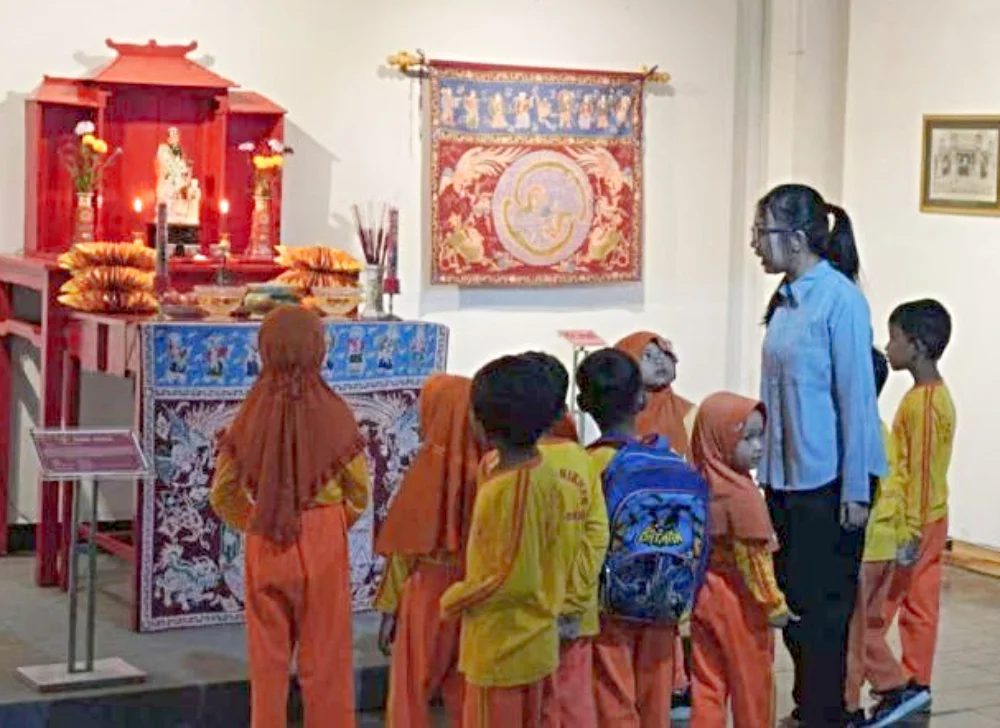
RRI.CO.ID, Pekalongan - The Pekalongan Batik Museum is showcasing Peranakan batik as a vivid reflection of Indonesia’s long history of cultural diversity, highlighting centuries of Chinese influence on the archipelago’s textile traditions.
Chinese cultural influence on Indonesian textiles, particularly Peranakan batik, has endured for hundreds of years, predating the country’s formal independence. Over time, Peranakan batik has become one of the clearest expressions of Indonesia’s multicultural heritage.
The Pekalongan Batik Museum houses around 50 batik pieces featuring motifs influenced by Chinese culture, ranging from long cloths and sarongs to square altar cloths known in Hokkien as tokwi, which are used to cover prayer tables.
“This Peranakan batik exhibition is our way of showing the strong acculturation between various cultures, especially in Pekalongan City, where life is influenced not only by local Javanese culture but also by Chinese and Arab cultures,” Nurhayati Sinaga, head of the Pekalongan Batik Museum, on January 29, 2026, as quoted by Xinhua.
Since last year, the museum has routinely held Peranakan batik exhibitions to coincide with Lunar New Year celebrations. This year’s exhibition, running from February 11 to March 10, again features several antique Peranakan batik collections.
The museum is collaborating with a historic temple in Pekalongan that dates back hundreds of years. In addition to displaying long batik cloths, the exhibition also features a temple prayer table decorated with a square tokwi bearing distinctive Peranakan batik motifs.
William Kwan, a textile researcher who has long studied the history of batik in Indonesia, estimates that Peranakan batik has existed since the 19th century. At the time, he said, it was likely produced as a substitute for imported patterned fabrics from India.
Because most of its wearers were members of the Chinese diaspora along Java’s northern coast, the motifs incorporated ornaments closely associated with Chinese culture, including the fenghuang, or phoenix. Dutch colonial influence also contributed to the development of Peranakan batik, particularly in the style known as batik encim.
“Peranakan batik has become a kind of Indonesian cultural artifact that illustrates the acculturation between Chinese and Indonesian cultures,” Kwan told Xinhua on Wednesday, February 11.
Kwan said three main aspects help identify Peranakan batik: motifs, colors, and wearers. The motifs often feature mythological creatures revered in Chinese culture, such as the phoenix and dragons, as well as floral ornaments like peonies.
In terms of color, Peranakan batik tends to use bright hues, distinguishing it from batik from Yogyakarta and Solo, which typically features brown, black, and white tones. However, Kwan noted that Chinese-influenced motifs and colors were generally adapted to local tastes.
After centuries of existence, Peranakan batik now faces the challenge of regeneration, Kwan said, citing declining interest among younger generations in continuing the batik industry. ***
News Recomendation
Loading latest news.....