



Kotagede: A Silver Legacy, Preserving Tradition in Yogyakarta
- 14 Jan 2025 22:05 WIB
- Voice of Indonesia
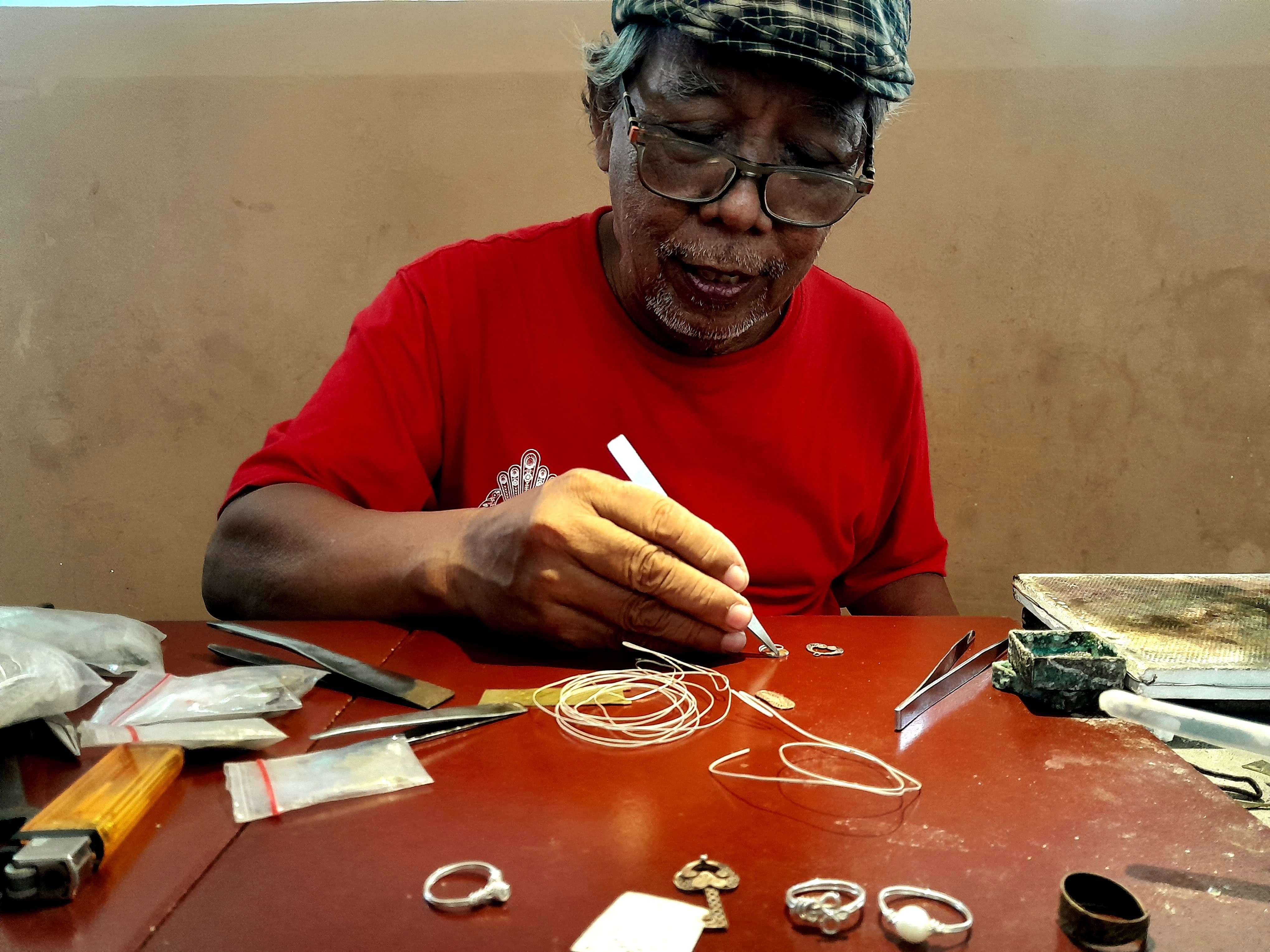
KBRN, Yogyakarta: Indonesian silver craft, with its unique designs and high quality, has proven itself as one of the most exquisite forms of craftsmanship.
The silver craft industry has excellent potential to continue to grow and become one of the important pillars of Indonesia's creative economy.
Silver craftsmanship has been integral to the Mataram Kingdom's culture since the 16th century. With its alluring luster, silver was the royal family's preferred material for adorning their palaces and daily lives.
Kotagede in Yogyakarta is well-known for its exquisite silver craftsmanship. In the past, the Yogyakarta Sultanate often ordered silver household items from this area.
The skills of the silversmiths were honed, and their products diversified, fulfilling not only the needs of the palace but also becoming a sought-after trade commodity overseas.
Despite its former glory, the silver craft industry began to decline in the 1980s and 1990s due to the rising cost of raw materials.
Moreover, the decreasing demand for silver products led younger generations to perceive this trade as unprofitable, causing many traditional silversmiths in Kotagede to abandon their craft.
However, one company, Harto Suharjo (HS) Silver, has consistently maintained the tradition of silver craftsmanship.
By adapting to the changing market and catering to customer demands, HS Silver has not only continued to fulfill orders for household items but has also ventured into producing silver jewelry.
"What sets HS Silver apart is our unique filigree technique, which involves twisting fine silver. This intricate process cannot be replicated by machine, giving our products a truly handcrafted quality. Our silver is 925 grade, meeting international standards for authentic silver recognized worldwide," said Margani Nugraha, the second generation of HS Silver, earlier this week.
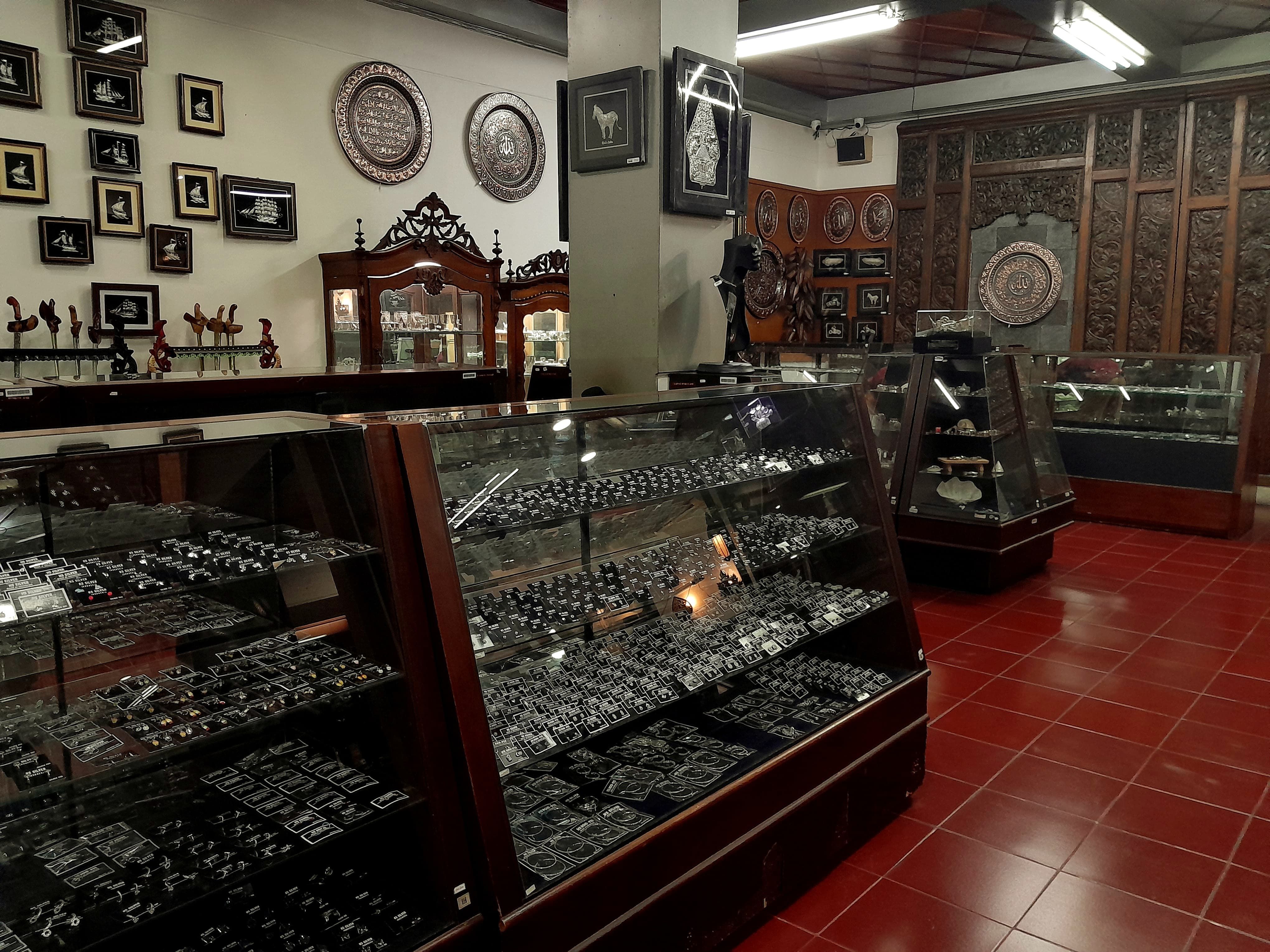
From intricate jewelry to elegant tableware, the collection offers a wide array of silver products to suit various tastes and needs. (Photo: RRI English/Diva Rifdah Rizkia Puspitaningnala)
Additionally, the company has capitalized on customer curiosity about traditional silver-making processes by showcasing skilled artisans, transforming raw silver into beautiful works of art.
"Visitors can see the silver-making process, shop for handmade silver products, and learn how to make silver jewelry," said Margani.
Initially, HS Silver focused on producing silver tableware. The Dutch embassy even placed a large order for a complete silverware set valued at millions of rupiah.
However, as market trends shifted towards jewelry, HS Silver adapted by producing more silver jewelry to meet consumer demand.
"We get our raw silver from PT Antam (state-owned mining company) and various regions in Indonesia, such as West Java, Sumatra, Kalimantan, and Irian Jaya (Glorious Irian)," said Margani.
He explained that their silver product designs are continually adapted to meet the dynamic market trends each year. This ensures that their products stay up-to-date and align with evolving consumer preferences.
/pe1gi1atu9ibgak.jpeg)
The "isen-isen" filling process involved silversmiths meticulously weaving silver wire into a framework. (Photo: RRI English/Diva Rifdah Rizkia Puspitaningnala)
Offering a variety of gold jewelry, including rings, bracelets, necklaces, and more, their silver products range from IDR 100,000 to millions of rupiah, depending on the design complexity.
"Male silversmiths handle the semi-finished materials, soldering, and finishing, while female artisans focus on decorations and detailing," said Nanang Rosiananto (Rosi), Marketing Communication of PT HS Silver.
While the beauty of silver craftsmanship is undeniable, it is also true that silver production inevitably generates waste.
HS Silver is committed to zero waste, a crucial aspect of sustainable tourism that prioritizes community well-being and environmental protection.
"Our silver products produce minimal waste. We add borax residue to water and reuse it to facilitate the melting and soldering. Leftover silver pieces are collected and reprocessed into silver powder for soldering, and we use soap made from soapnuts to wash the silver," explained Rosi.
Most of HS Silver's silversmiths are from Kotagede, contributing to the growth of the local economy.
One of them is Susanto, who has been working for 30 years. Coming from a family of silversmiths, he has had a natural talent for silverwork since childhood.
"I've been working with silver since elementary school. When I first joined HS Silver, I started with carving. That was the first time I made a motorcycle pendant," said Susanto.
Another silversmith, Narti, began her career at HS Silver through an intensive training program. Despite having no experience in silversmithing, Narti has mastered various silver-making techniques through dedication and a strong learning spirit.
"I've been working here for 16 years. From someone who knew nothing, I can now make about 10 silver pieces a day," said Narti.
The future of Indonesian silver craftsmanship lies in the hands of skilled artisans dedicated to preserving tradition while adapting to the market's evolving demands.
With government support, Kotagede's silver craftsmanship in Yogyakarta can attract even more tourists, ultimately improving the local community's standard of living. ***
News Recomendation
Loading latest news.....