



Nagan Raya Partners With Japanese Researchers on Sustainable Oil Palm Management
- 13 Jul 2026 12:53 WIB
- Voice of Indonesia
Key Points
- Nagan Raya is collaborating with Japanese researchers to improve sustainable oil palm management.
- The study aims to support productive plantations while protecting the environment.
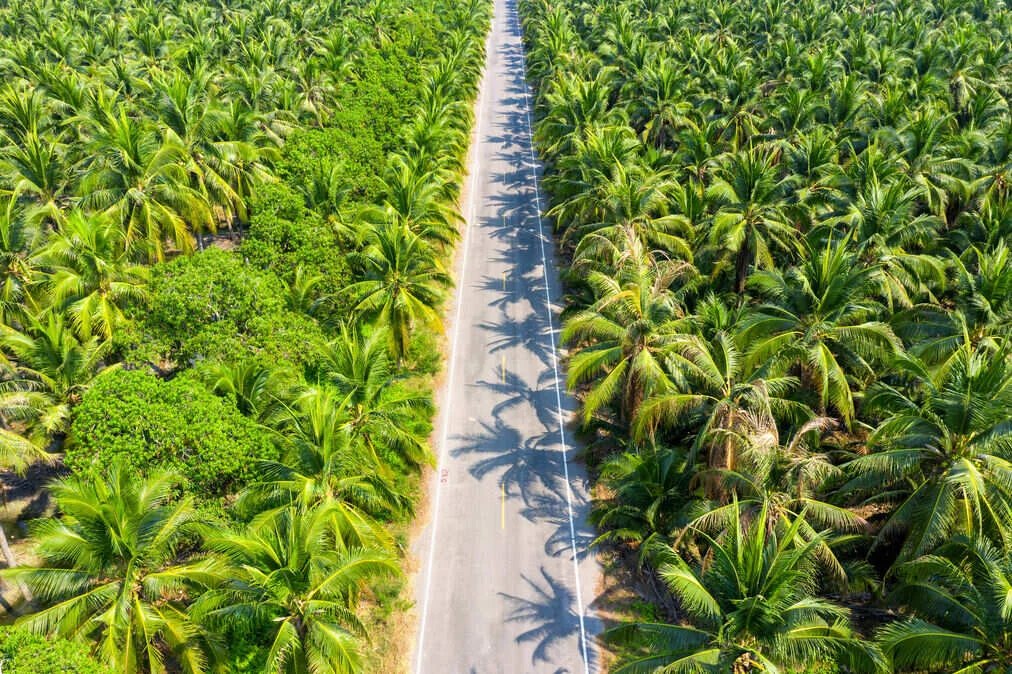
RRI.CO.ID, Nagan Raya - An international research collaboration aimed at developing a sustainable palm oil industry is underway in Aceh, as Japanese agronomists begin a comprehensive field study to help a major production hub balance economic growth with environmental conservation.
The joint initiative focuses on data-driven policy formulating for the oil palm sector in Nagan Raya Regency. By examining localized soil conditions, cultivation methods, and community welfare, the international team intends to create an adaptable framework that aligns Indonesia's lucrative commodity with global environmental standards.
Nagan Raya Regent Teuku Raja Keumangan, popularly known as TRK, announced on Monday, July 13, 2026, that the strategic assessment is moving forward through a multi-institutional partnership.
“This strategic research is also being conducted through close collaboration with domestic partners, namely the Faculty of Agriculture at Syiah Kuala University (USK) in Banda Aceh and the National Research and Innovation Agency (BRIN) of the Republic of Indonesia,” said Raja Keumangan in a statement received in Nagan Raya on July 13, 2026, as cited by Antara.
The visiting delegation includes senior Japanese scholars Yuta Hara, an assistant professor at Tohoku University, and Kenji Nagasaka from the Tohoku Professional University of Agriculture and Forestry. Both are currently specializing in deep-dive sustainability studies regarding estate crops, with a specific focus on Nagan Raya's extensive oil palm plantations.
Keumangan warmly welcomed the scientific team, expressing his high appreciation to Tohoku University and all involved stakeholders for their commitment to advancing the plantation sector through evidence-based, academic approaches.
“The plantation sector, particularly oil palm, remains the primary economic driver for the people of Nagan Raya. Therefore, its development must be well-planned, data-driven (research-based), and committed to environmental sustainability,” the regent added.
He noted that because palm oil remains the primary economic engine for Nagan Raya's population, its future growth must be systematically mapped out using a research-based code that actively safeguards local ecosystems. He hopes the final results will serve as a robust regulatory reference for the local administration.
“To ensure this sector continues to be a source of sustainable economic growth, continuous study is required, taking into account all aspects of future environmental carrying capacity,” Raja Keumangan explained.
Expressing a similar sentiment, Yuta Hara noted that the team aims for the research to translate directly into practical, localized solutions.
“We hope the results of this research will yield scientific recommendations that help foster plantation management that is more productive and sustainable, while directly improving the welfare of the people of Nagan Raya,” Hara said.
Meanwhile, Kenji Nagasaka explained that Nagan Raya was chosen as the primary locus for the international study due to its massive agrarian profile. He concluded that Nagan Raya stands out as one of the regions with the largest oil palm plantation acreages in Aceh Province, making its vast potential the primary reason for their academic focus. ***
News Recomendation
Loading latest news.....