



Government Steps In to Rebuild Historic Bayan Traditional House in North Lombok
- 25 Mei 2026 09:41 WIB
- Voice of Indonesia
Key Points
- The NTB administration and Ministry of Culture are rebuilding the sacred traditional house in Bayan Village after it was destroyed by fire.
- Reconstruction follows Bayan customary law to preserve heritage and support cultural tourism in Rinjani Geopark.
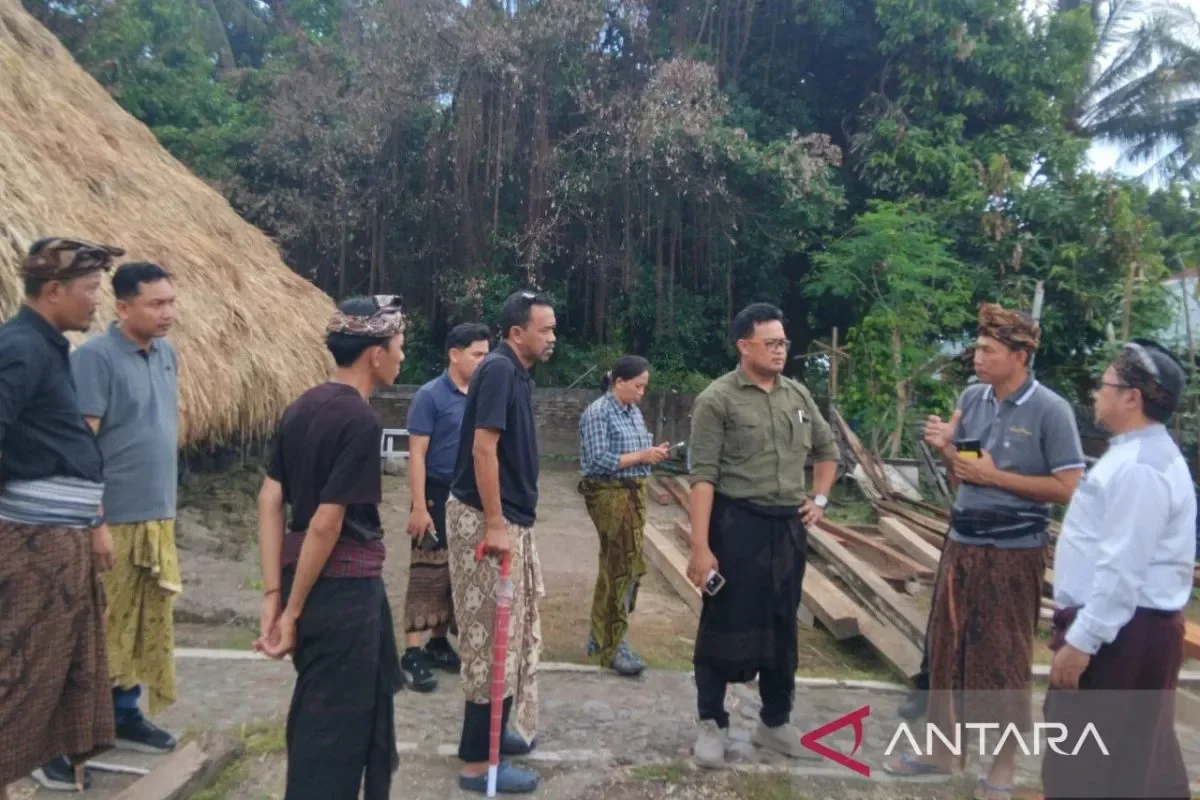
RRI.CO.ID, Mataram - The West Nusa Tenggara (NTB) Provincial Administration, in cooperation with the Ministry of Culture, has launched a joint initiative to reconstruct a sacred traditional house belonging to the indigenous Bayan community in East Bayan Village, North Lombok Regency. The cultural monument was completely destroyed in a devastating fire several months ago.
The catastrophic blaze, which occurred in February 2026, completely consumed the Bale Beleq Timuk Orong, recognized as one of the most vital ancestral landmarks within the Bayan customary area. Local officials stressed that the incident transcended the mere physical loss of a traditional structure, deeply impacting the spiritual and cultural core of an indigenous community that has fiercely guarded its ancestral heritage for hundreds of years.
The joint reconstruction effort underscores the government's long-term commitment to safeguarding regional identity. NTB Culture Agency Head Muhamad Ihwan emphasized that the state views the indigenous population as an irreplaceable element of the province's living history.
"For the NTB Provincial Administration, the Bayan indigenous community is an important part of the province's cultural ecosystem that must be continuously preserved and developed. The Bayan traditional area is seen as strategically positioned as a hub for cultural tourism and cultural economic development within the Rinjani Geopark," Ihwan said on Sunday, May 24, 2026, as quoted by Antara.
NTB Governor Lalu Muhammad Iqbal has placed a high priority on the survival of the Bayan customary complex. The governor has personally inspected the site and maintained direct coordination with the Culture Agency to fast-track the recovery.
According to Ihwan, the ultimate objective of the reconstruction project extends far beyond physical architecture. The initiative aims to solidify Bayan's status as a flourishing epicenter of traditional Lombok culture that continues to thrive and endure amid modern societal shifts.
The project is funded via financial assistance from the Indonesian Ministry of Culture, which is channeled directly through the NTB Culture Agency and the NTB Cultural Preservation Agency (BPK). Beyond covering the material costs of the architectural build, the government aid package explicitly includes funding to support the selamatan, a traditional communal feast and ritual blessing, required when the community eventually reoccupies the completed home.
To formalize the reconstruction plans, a high-level coordination meeting was held between provincial cultural leaders and the prominent traditional custodians of Bayan. The indigenous delegation included custom guardian (pemangku adat) Raden Kertamono, hamlet chief Suryanto, traditional coordinator (Pembekel) Nikrana, and Raden Sawungguling, who serves concurrently as the Head of the Cultural Division at the North Lombok Regency Tourism Agency.
During the discussions, the customary leaders firmly asserted that rebuilding the sacred Bale Beleq cannot be treated like a standard municipal construction project. Every operational phase must strictly align with the ancestral Bayan customary calendar, dictating specific auspicious days for harvesting building materials, breaking ground, and conducting intermediate spiritual rituals.
Consequently, state administrators and tribal leaders are carefully co-authoring a synchronized construction model. The framework is engineered to simultaneously honor ancient customary laws while fulfilling rigid state administrative regulations to ensure full bureaucratic accountability.
Customary Leader Raden Kertamono reiterated that the spiritual value of the structure remains paramount for the future of their descendants.
"The Bayan traditional house is not just a physical structure. It is a center of cultural memory, a place where traditional rituals, community meetings, and a symbol of the continuity of the Bayan tradition take place," Kertamono concluded. ***
News Recomendation
Loading latest news.....