



South Jakarta Mandates Localized Trash Disposal via Teba and Biopore Systems
- 22 Mei 2026 17:31 WIB
- Voice of Indonesia
Key Points
- South Jakarta now requires neighborhoods to process organic waste independently through teba and biopore systems.
- The administration has distributed 2,300 jumbo biopore units to support decentralized household waste management.
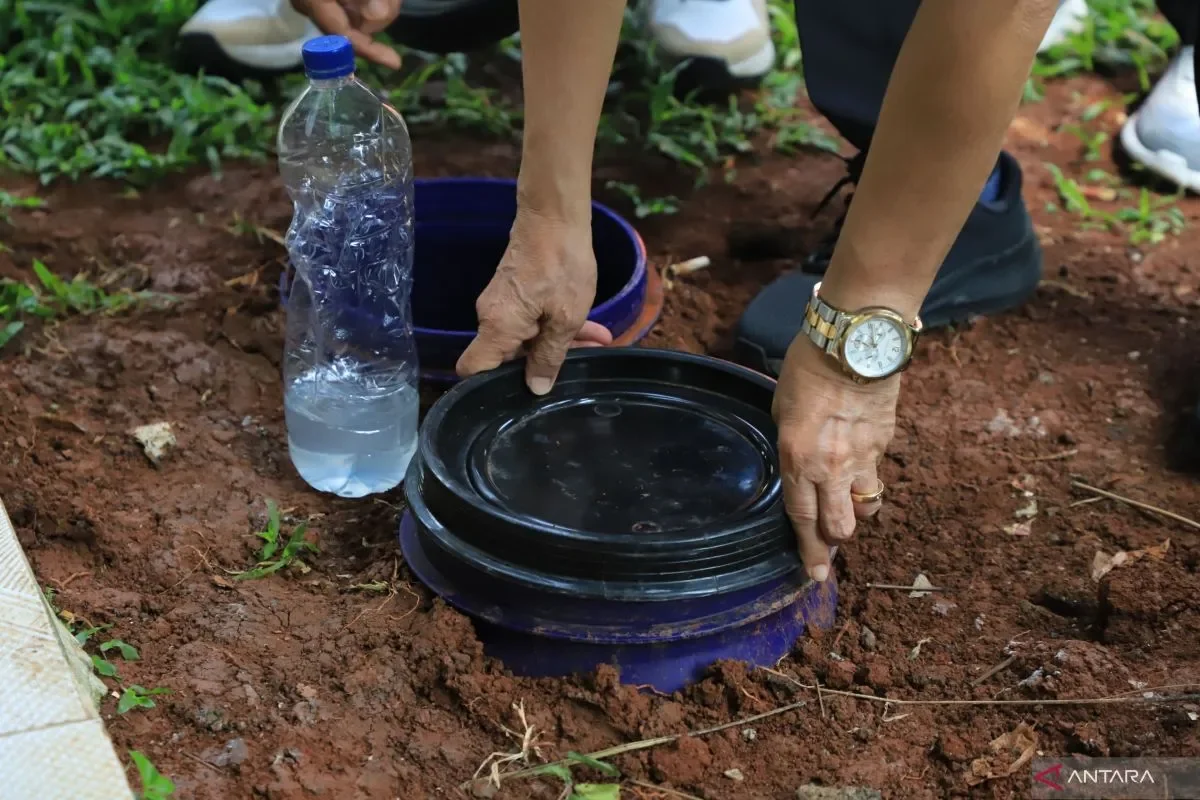
RRI.CO.ID, Jakarta - The South Jakarta Administration has officially mandated that all neighborhoods across the region manage their organic waste independently using teba (waste pits) and biopore systems. The strict policy aims to foster localized waste processing and significantly cut down the massive volume of trash sent daily to the Bantargebang Integrated Waste Treatment Site (TPST).
The enforcement aligns directly with an overarching directive from the DKI Jakarta Provincial Administration, which has made household waste sorting legally mandatory for citizens. According to regional data from the DKI Jakarta Environment Department, the capital's trash volume reached a staggering average of over 7,900 tons per day.
By shifting to decentralized processing, local authorities hope to trigger a gradual mindset change, ensuring that communities proactively sort their waste at the source rather than relying entirely on municipal collection fleets.
South Jakarta Mayor Muhammad Anwar emphasized that the success of this ecological transition hinges on active community execution and direct leadership from neighborhood heads. During a field inspection at a local waste-sorting site in Lebak Bulus on Friday, May 22, 2026, Anwar urged all RT and RW chairpersons to lead by example by immediately installing biopore systems within their own properties.
To alleviate financial and technical barriers for residents, the city administration is backing the mandate with material resources. The South Jakarta Environment Sub-department previously distributed 2,300 jumbo-sized biopore units to residential zones to accelerate neighborhood-level sorting and reduce Bantargebang's heavy reliance on incoming trucks.
During his inspection of the modern teba and biopore infrastructure in Lebak Bulus, Mayor Muhammad Anwar outlined specific technical and strategic mandates to ensure the systems function efficiently without disrupting public health. To ensure odor-controlled installation, Anwar specifically ordered that all sub-surface biopore tubes must be designed with perforated holes so that foul microbial odors from the decomposing waste do not rise to the surface and spread.
Additionally, regarding the upcycling of large containers for teba, the Mayor directed the South Jakarta Environment Sub-department to reclaim old, decommissioned large public trash bins and repurpose them into large-scale teba structures. Finally, in targeting zero organic waste export, Anwar requested that the sub-department tailor the size and capacity of the biopore installations to match the exact volume of trash generated by each specific neighborhood.
The primary goal of this strategy is to ensure that no organic waste leaves residential complexes, leaving only high-value, recyclable inorganic materials to be collected for commercial resale. The primary goal is to ensure that zero organic waste leaves residential complexes, leaving only high-value, recyclable inorganic materials to be collected for commercial resale.
Speaking directly from the sorting site in Lebak Bulus, South Jakarta Mayor Muhammad Anwar highlighted the collaborative approach between the government and citizens required to achieve independent waste management:
"Residents independently created biopores in their homes, and we also provided equipment. I hope the Environment Agency will help build biopore sites, tailored to the amount of waste. The point is, no waste leaves this complex, and only inorganic waste with a market value will be collected," Muhammad Anwar said on Friday, May 22, 2026, as quoted by Antara. ***
News Recomendation
Loading latest news.....