



BPBD East Kalimantan Implements "Pagar Betis" Strategy to Safeguard IKN from Fires
- 07 Apr 2026 20:39 WIB
- Voice of Indonesia
Key Points
- BPBD East Kalimantan has implemented a layered human cordon strategy to protect the Nusantara Capital City (IKN) from forest and land fires
- Five buffer zones—Balikpapan, Penajam Paser Utara, Kutai Kartanegara, Paser, and West Kutai—have committed to assisting in fire suppression within the IKN area.
- BMKG forecasts an extreme dry season for the region starting in mid-June 2026, with the peak of the drought expected in August.
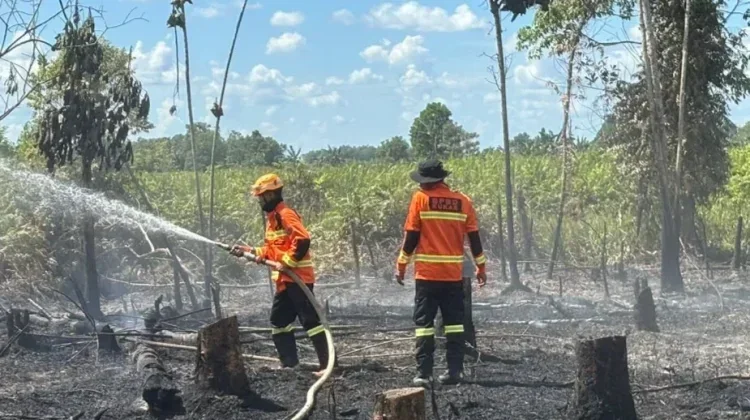
RRI.CO.ID, Samarinda - The East Kalimantan Regional Disaster Mitigation Agency (BPBD) has deployed a "Pagar Betis" (layered human cordon) strategy to anticipate forest and land fires (karhutla) within the Nusantara Capital City (IKN) region. This move comes as a proactive response to the heightened risk of fires during the upcoming dry season.
"Five buffer zones have agreed to assist in fire suppression efforts should any outbreaks occur within the IKN area," said Head of BPBD East Kalimantan, Buyung Budi Purnomo, on Tuesday, April 7, 2026.
This defensive line involves a collaborative agreement between Balikpapan, Penajam Paser Utara, Kutai Kartanegara, Paser, and West Kutai.
According to Buyung, this partnership is a direct follow-up to a cross-institutional coordination meeting held at the BPBD East Kalimantan Operations Room, aimed at fortifying regional readiness against the threat of wildfires.
The precautionary measures follow a forecast from the Meteorology, Climatology, and Geophysics Agency (BMKG) warning of a potential extreme dry season in East Kalimantan. The IKN area is expected to enter the dry spell from mid-June to July 2026, with the peak of the drought anticipated in August.
With rainfall predicted to fall below normal levels, land conditions are expected to become critically dry. Buyung identified Sepaku and West Samboja as high-priority surveillance zones. Additionally, the Bukit Soeharto Great Forest Park (Tahura) remains categorized as highly vulnerable due to dominant dry vegetation and human activity.
To accelerate emergency response, the administration is leveraging the Nusantara Command Center to monitor hotspots in real-time. This satellite-based technology is expected to provide early detection of potential fires across the capital.
"Weather modification through cloud seeding is prepared for implementation should the drought enter a critical phase," noted Buyung.
The government has also established an early warning system that delivers SMS alerts directly to residents' mobile phones. Simultaneously, police personnel have increased patrols to prevent illegal land-clearing through burning.
Authorities have issued a stern appeal to the public to refrain from any burning activities during the prolonged dry period. Residents are urged to immediately report any signs of smoke or hotspots to the 112-emergency service. (Annaila Azzahra/Bambang MBKA)
News Recomendation
Loading latest news.....