



Indonesian Researchers Identify Two New Moth Species Endemic
- 03 Mar 2026 17:39 WIB
- Voice of Indonesia
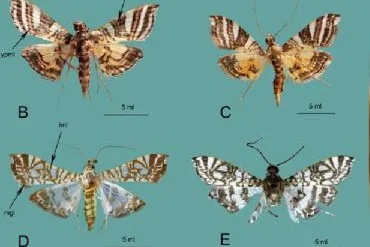
RRI.CO.ID, Cibinong – Researchers from the National Research and Innovation Agency (BRIN) have successfully identified two new endemic moth species from Indonesia belonging to the genera Glyphodella and Chabulina. The new species are named Glyphodella fojaensis Sutrisno & Ubaidillah, 2026, and Chabulina celebesensis Sutrisno & Ubaidillah, 2026.
According to the press release on March 3, 2026, this significant discovery was published in the February 2026 edition of the international journal Raffles Bulletin of Zoology (Volume 74, pages 87–94). The research paper is titled "Description of two new endemic species of the closely related genera, Glyphodella and Chabulina from Indonesia."
The research was conducted by Hari Sutrisno and Rosichon Ubaidillah from BRIN’s Research Center for Biosystematics and Evolution. The findings resulted from field surveys across Papua and Sulawesi between 2002 and 2017, complemented by a study of specimen collections at the Museum Zoologicum Bogoriense (MZB) in Bogor.
According to the publication, Glyphodella fojaensis is the only species of its genus found in Indonesia and is endemic to the Foja Mountains in Papua. Meanwhile, Chabulina celebesensis is endemic to Sulawesi, with distributions recorded across Central, Southeast, and North Sulawesi.
Rosichon Ubaidillah explained that both species possess distinct morphological characteristics, particularly in their wing patterns and genitalia structures, which serve as primary markers for moth identification.
"Glyphodella fojaensis is characterized by circular yellow spots on its forewings and a male genitalia structure that differs from its relatives. On the other hand, Chabulina celebesensis can be recognized by its unique wing line patterns and specific genitalia shape," Rosichon stated, quoted from the press release. He added that these morphological traits highlight unique evolutionary adaptations to their respective habitats.
The researchers used light traps to collect the specimens and conducted detailed microscopic observations. All specimens are now documented and preserved as part of the national collection at the Museum Zoologicum Bogoriense.
The study revealed that Glyphodella fojaensis inhabits primary tropical forests in the Foja Mountains in Papua, while Chabulina celebesensis is found in Sulawesi’s secondary tropical forests. Both species are nocturnal.
This discovery adds to Indonesia’s vast insect biodiversity data, specifically within the Crambidae moth family, further solidifying Indonesia's position as a global biodiversity hotspot. However, researchers warned that these endemic species are highly vulnerable to environmental changes.
Researchers believe that the limited distribution of these endemic species makes them susceptible to threats like deforestation and habitat degradation. Rosichon added that protecting forest ecosystems in Papua and Sulawesi is crucial for their survival.
News Recomendation
Loading latest news.....