



Celebrating Christmas at the Historic GPIB Marga Mulya
- 23 Des 2024 12:48 WIB
- Voice of Indonesia
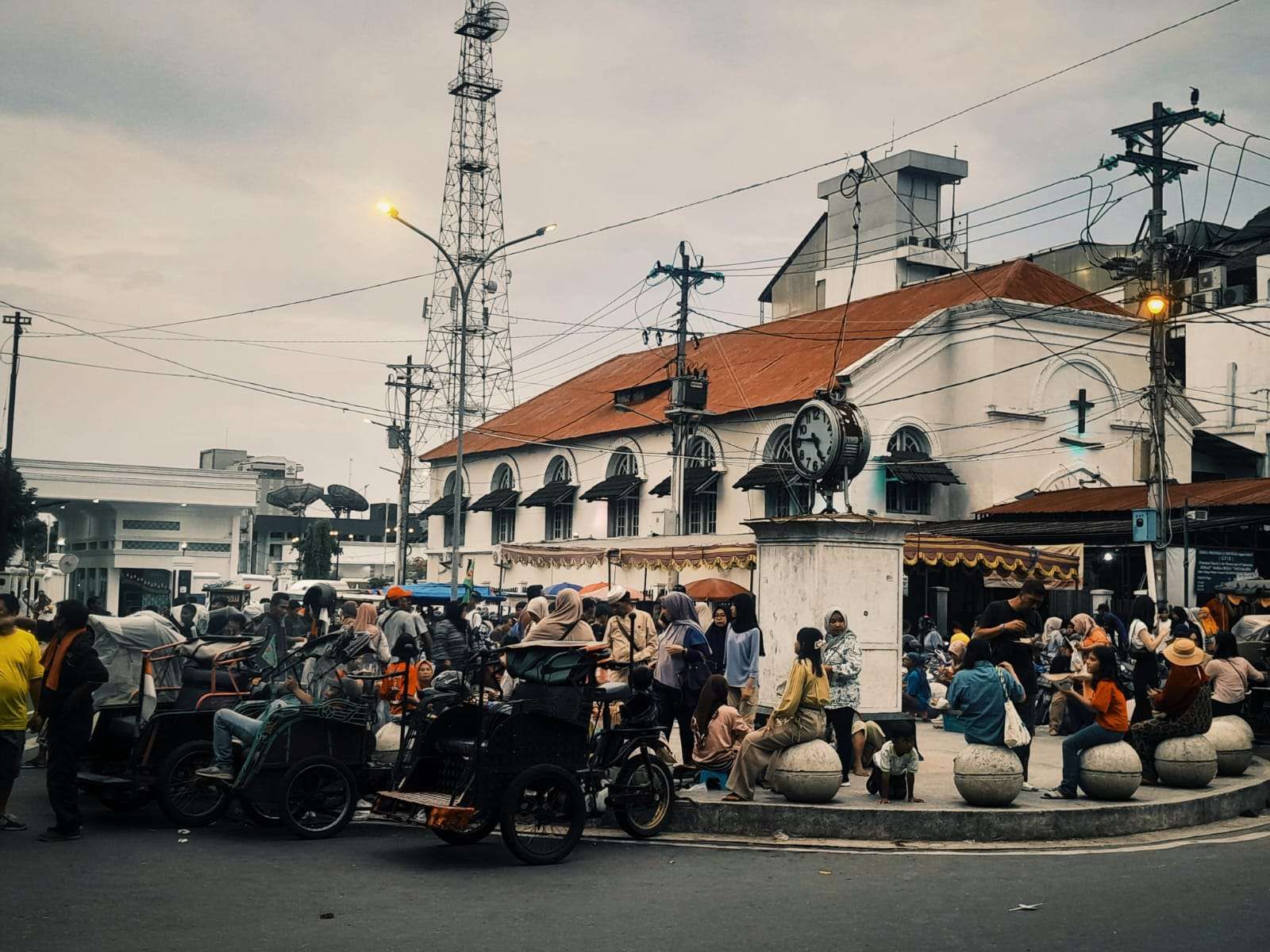
KBRN, Yogyakarta: The Marga Mulya Protestant Church in Western Indonesia (GPIB) Yogyakarta, which stands majestically at the end of Malioboro Street, Yogyakarta City, has installed four advent candles near the altar, a sign that Christmas will soon arrive. To the right of the altar, there is a large Christmas tree, three meters high, ready to welcome Christians who worship Christmas in the 167-year-old church.
Located in Ngupasan Village, Gondomanan Subdistrict, Yogyakarta City, the church building covering an area of 415 meters square has an Indisch-style building. It is characterized by a curved zinc roof, and lucarnes or small windows on the roof, and large windows on the side of the church building.
The term “Indisch” itself comes from “Nederlandsch Indie”, the name of the Dutch colony in Southeast Asia, a combination of Dutch building art with local traditional houses. The choice of 'Marga Mulya' (path to glory) as the name of the church is expected to build closeness with the local community and symbolize a place for those who want to take the path to glory.
During the Dutch colonial era, the church was built as one unit with Fort Vredeburg, standing in front of the church. The fort was built not far from Yogyakarta Palace and was intended to control the palace.
“The church was built to serve the Dutch people who live here,” said Juniar Hendrik William Lumankun (Ari) as the Head of the Office of the Assembly of the GPIB Marga Mulya Yogyakarta.
The congregation's archives show that in 1830, they did not yet have its own church building. The church building committee then raised funds from the congregations, the King of Yogyakarta Palace Sri Sultan Hamengkubuwono V (1822-1855), and the Residents of Yogyakarta to build a church.
On 11, October 1857 the church was inaugurated under the name “de Protestantsche Kerk in Nederlandsch-Indië”. Therefore, the tectonic earthquake that shook Yogyakarta on 10 June 1867 caused the church building to be badly damaged and then was rebuilt again.
Ari said after Indonesian independence, all buildings owned by the Dutch were taken over by the new government of Indonesia. Then the GPIB which was established on 31 October 1948 took over the church of “de Protestantsche Kerk in Nederlandsch-Indië”.
“This church building is a Dutch heritage and has become a cultural heritage,” Juniar said.
The building is divided into three main rooms that stretch from east to west: the porch as the vestibule, the nave as the main worship space, and the pastoral space in the west. There is also a 135 m² mezzanine space with zinc seating and an organ adds to the beauty of the church's interior.
On the west wall of the nave, there is the sentence “Ik Ben Het Brood Des Levens” (I am the bread of life) “Die In My Gelooft Heeft Het Eeuwige Leven” (Those who believe in Me gain eternal life), and “Hoort Naar Myne Stem” (Listen to My voice).
During Christmas, the church has an interesting Christmas tradition. The church regularly holds evening prayer services every Saturday during the four weeks of Advent.
“Every Saturday since November 30, we have a “night prayer fellowship” activity so we do prayer fellowship using various prayer methods, some use imagination, some use prayer bits, on the last advent night on December 21, the prayer uses the coloring method,” explained congregation Pastor Boydo Rajiv Evan Duvano Hutagalung.
Advent is a special time for Christians to reflect on the meaning of the birth of Jesus Christ and wait for His return. Each week of Advent, the congregation is invited to focus on certain themes symbolized by four different colored candles.
“The first week, a purple candle symbolizes hope, the second week, a purple candle that means peace, the third week, a pink candle is lit to symbolize the atmosphere of joy, and a light purple candle is lit in the fourth week, symbolizing love. At the peak of the celebration on Christmas Eve, white candle in the middle is lit,” he added.
Every year, the design of the church decorations is different. The church decoration team used 'tampah' (woven bamboo round shape for winnowing rice) with a change of flowers every week. The symbolic twinkling lights on GPIB Marga Mulya's 3-meter-high Christmas tree can only be lit on Christmas Eve as a sign that the joy of Christmas has arrived.
“The special thing on Christmas Eve is, when the lights are turned off, the pastor takes and lights a Christmas candle, then the candles are distributed to the congregation, and they will share the candles that illuminate us all, and finally the lights on Christmas tree is turned on while singing the holy night song,” said Pastor Boydo. ***
News Recomendation
Loading latest news.....