



BRIN Refines NEO-2 and NEI-1 Satellite Programs, Targeting Launches Through 2029
- 15 Sep 2026 17:48 WIB
- Voice of Indonesia
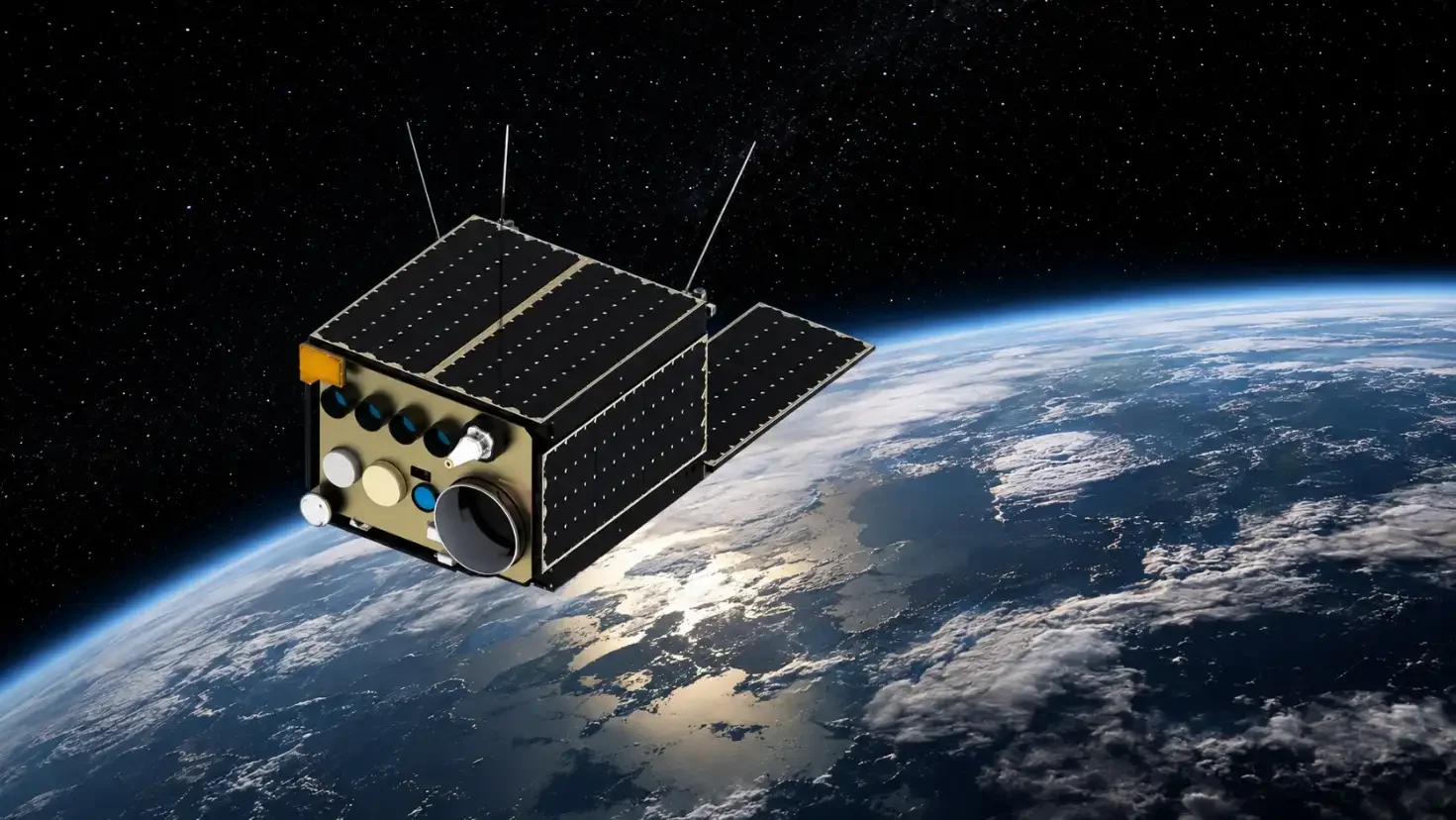
RRI.CO.ID, Jakarta - The National Research and Innovation Agency (BRIN) is finalizing plans for several national satellite programs, including NEO-2 and NEI-1, as part of a roadmap to strengthen Indonesia's space technology capabilities. Various development scenarios extending to 2029 are being considered, taking into account technological readiness, partnerships, funding support, and launch opportunities.
In the near term, Satellite Technology Research Center (PTRS) remains focused on completing the NEO-1 satellite, which has entered the final stages of development. The research team is working to finalize technical tasks with the aim of completing the satellite by the end of 2026.
To support the launch of NEO-1, Head of BRIN’s Satellite Technology Research Center (PTRS), Wahyudi Hasbi, said that BRIN is exploring collaboration with the Indian Space Research Organisation (ISRO), with a 2027 launch being one of the scenarios under discussion. He stated that the team was currently working to ensure the NEO-1 satellite could orbit at an altitude of 505 kilometers, in accordance with the initial design, and that he hoped the launch and the Launch and Early Orbit Phase (LEOP) for NEO-1 could be carried out in 2027 as planned.
Alongside the completion of NEO-1, PRTS is also refining development plans for NEO-2, an Earth observation satellite capable of high-resolution imaging (approximately one meter). Determining the payload is a crucial aspect of its development.
One option being evaluated for NEO-2 is placing the satellite in an equatorial orbit; this opens up new research opportunities regarding the use of multispectral and hyperspectral sensors and potentially allows for more frequent observation of Indonesian territory. The characteristics of this orbit also create research prospects concerning the impact of illumination variations on remote sensing data.
Regarding launch opportunities for NEO-2, options under consideration include utilizing launch vehicles provided by private-sector partners and establishing collaborations that provide launch capacity for satellites weighing up to approximately 150 kilograms. One scenario currently being assessed targets the completion of advanced design phases through to assembly, integration, and testing (AIT) for NEO-2 by 2028. Provided that technical readiness, funding support, partnerships, and launch opportunities are secured, 2029 is being considered as a potential launch date.
In addition to NEO-2, PRTS is also developing studies for NEI-1 as part of the Nusantara Equatorial IoT program. This program focuses on developing Internet of Things (IoT)-based communication satellite technology, with the potential for phased development into a satellite constellation system.
Wahyudi emphasized that the development of NEO-2 and NEI-1 will proceed in stages, contingent upon technical readiness, funding, and partnership support. This process also requires synchronization with other strategic initiatives within BRIN, such as the development of the national spaceport and research into national rocket technology.
One of the ideas discussed was the use of national rocket vehicles to carry various payloads in the future, whether in the form of experiments, BRIN satellites, or satellites developed by universities in Indonesia, as part of a gradual learning process in building national launch technology capabilities.
News Recomendation
Memuat berita terbaru.....