



Indonesian Students Create Smart Vests to Handle Autistic Children's Tantrums
- 07 Sep 2026 13:57 WIB
- Voice of Indonesia
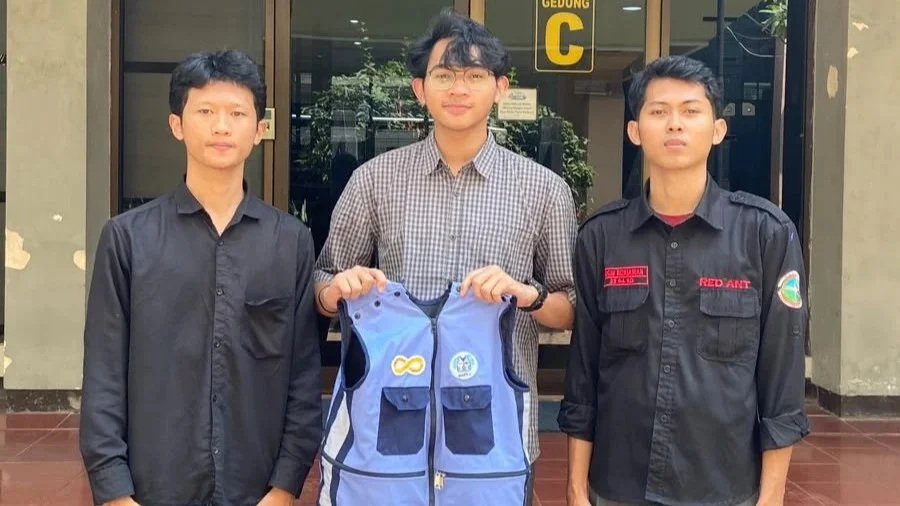
RRI.CO.ID, Malang – Five students from Universitas Brawijaya (UB), a public university in Malang, East Java, have developed wearable technology designed to help manage tantrums in children with Autism Spectrum Disorder (ASD). Called ADAPT-V, the smart vest can detect signs of physiological stress and automatically provide controlled pressure.
ADAPT-V was developed based on Deep Pressure Therapy (DPT), which applies controlled pressure to a child’s body. The technology is designed to help minimize the risk of tantrums while providing a comforting sensation for children with ASD.
"Children with ASD often have difficulty processing sensory stimuli, which can lead to behaviors such as crying, screaming, kicking, and even aggressive actions that may endanger themselves or those around them. Through ADAPT-V, we apply the deep pressure therapy method by providing controlled pressure to the body to create a comforting sensation similar to a warm hug, which has been shown to have a relaxing effect," a team member of Psychology Studies, Muhammad Nafis Khilmi, said as quoted by ub.ac.id on Saturday.
According to the university, similar therapy can previously be administered using manual devices such as the snug vest, but conventional vests require therapists or parents to provide full supervision and manually adjust the pressure. To overcome these limitations, ADAPT-V integrates machine learning technology, allowing the system to operate automatically and in real time.
The development team leader, Zakky Yahya from Electrical Engineering, explained that ADAPT-V uses two types of sensors to detect heart rate and map the child’s movement patterns. Data from both sensors is then analyzed using a Support Vector Machine (SVM) algorithm to detect the child’s tantrum phase.
"To overcome the limitations of manual vests, ADAPT-V is designed to operate automatically and in real time," he said.
When a tantrum phase is detected, a microcontroller automatically activates a micro air pump (DC) to inflate the air chambers inside the vest. Besides automatically detecting the child’s condition, ADAPT-V features a system that regulates the vest's air pressure.
Team member Sugih Rizkiawan from Electrical Engineering, explained that the system uses a Proportional Integral Derivative (PID) algorithm connected to a pressure sensor. The algorithm aims to keep the air pressure applied to the child’s body stable within predetermined safe limits.
"When the system detects that the child’s emotional state has returned to a calm condition, the solenoid valve will gradually open to deflate the vest automatically," Sugih said.
ADAPT-V does not rely solely on automation within the vest but is also integrated into an Internet of Things (IoT)-based digital ecosystem. Data on the child’s activity and the vest’s response are transmitted directly via Wi-Fi to a smartphone application, allowing parents and therapists to monitor the child’s condition remotely in real time.
Technical supervisor Nurussa’adah emphasized that product reliability and safety are the main priorities in its testing process. Testing covers sensor accuracy, the emotion-classification algorithm response, and the stability of the air-pressure system.
"We also involve direct evaluations by therapists at inclusive educational institutions to ensure the device’s comfort, medical safety, and ease of operation when it is applied directly to children," she said.
News Recomendation
Memuat berita terbaru.....