



Legislature Advances Bill on Land Rights and Agrarian Reform
- 21 Sep 2026 20:05 WIB
- Voice of Indonesia
Poin Utama
- The Agrarian Reform Regulation Bill advances the agrarian restructuring agenda, with Baleg DPR RI approving it on September 21, 2026, for submission to the House Plenary Session.
- The bill regulates agrarian reform under the state’s control to ensure people’s rights to land and agrarian resources are fulfilled, restored, and recognized, prioritizing designated agrarian reform beneficiaries.
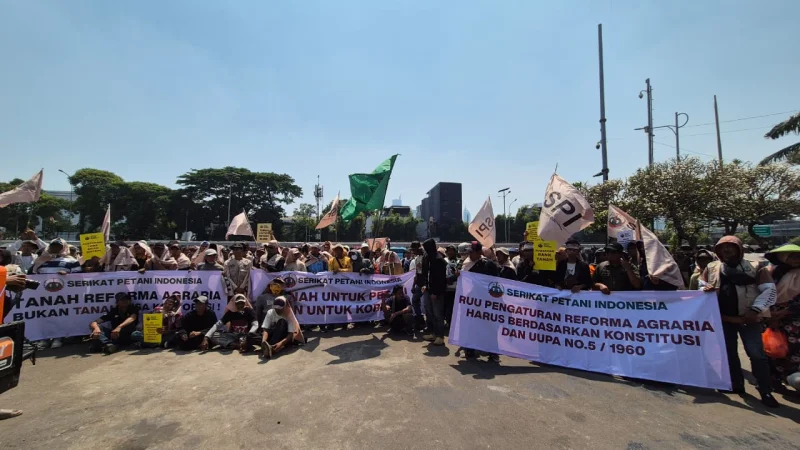
RRI.CO.ID, Jakarta – The Agrarian Reform Regulation Bill has reached a pivotal stage in the agrarian restructuring agenda.
The House of Representatives’ Legislation Body (Baleg DPR RI) approved the bill for submission to the DPR Plenary Session for further deliberation toward its enactment on Monday, September 21, 2026.
Deputy Speaker of the House, Sufmi Dasco, made the decision after all members of the Legislation Body agreed and representatives from all political party factions delivered their views.
“We seek the meeting’s approval to proceed with the bill on agrarian reform regulation in accordance with statutory regulations,” Dasco said, as meeting participants at the parliamentary complex in Jakarta approved the motion, as quoted by Antara.
The bill regulates the fulfillment, restoration, and recognition of people’s rights to land and other agrarian resources, and establishes mechanisms for resolving agrarian conflicts.
Chair of the Working Committee (Panja), Ahmad Iman Sukri, said the bill consists of 14 chapters and 53 articles. He noted that deliberations showed a shared perspective between the government and the DPR on the importance of accelerating agrarian reform to resolve agrarian conflicts.
The bill stipulates that agrarian reform is carried out under the state’s control to ensure that people’s rights to land and agrarian resources are fulfilled, restored, and recognized, with priority given to designated agrarian reform beneficiaries.
It also defines the scope of agrarian reform, covering land originating from conflict and non-conflict situations, and identifies priority beneficiary groups such as farmers, cultivators, farm laborers, fishers, indigenous communities, women, and the impoverished.
In addition to regulating land distribution and utilization, the bill establishes an institutional framework to ensure agrarian reform is implemented systematically.
The institution responsible for agrarian reform will operate under the President’s authority and report directly to him. Its mandate includes planning, implementation, oversight, and conflict resolution.
To strengthen oversight, the bill requires the establishment of a supervisory board to ensure transparency, participation, accountability, and effectiveness in agrarian reform implementation.
Conflict resolution is another key component of the bill. The mechanisms outlined aim to ensure effective, transparent, and equitable resolution by prioritizing deliberation, restoring social relations, providing legal certainty, and restituting community rights.
“The Working Committee meeting involved constructive debate, ultimately resulting in an agreed regulatory framework expected to provide solutions to issues and conflicts surrounding agrarian reform implementation,” Iman Sukri said.
Baleg’s approval marks an important step before the bill is discussed in the DPR Plenary Session. If it progresses, the regulation will govern land reform management and the institutions responsible for resolving agrarian conflicts. ***
News Recomendation
Memuat berita terbaru.....