



Asset Forfeiture Bill Discussions Move Toward Broader Scope
- 02 Sep 2026 22:40 WIB
- Voice of Indonesia
Poin Utama
- Commission III is working to pass the comprehensive, progressive Asset Confiscation Bill to recover state and public losses.
- The fundamental principle of the Asset Forfeiture Bill is to ensure that criminals cannot enjoy profits gained from unlawful acts,
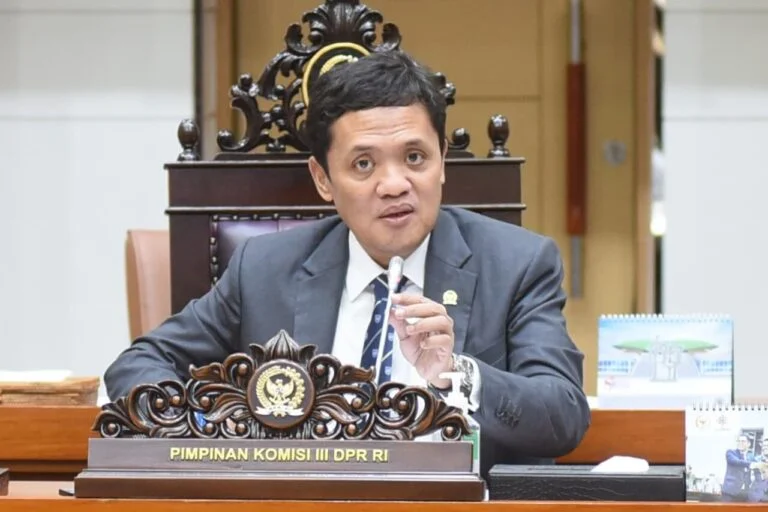
RRI.CO.ID, Jakarta - Deliberations on Indonesia’s Asset Forfeiture Bill are moving toward a broader scope, with lawmakers considering the inclusion of criminal offenses beyond corruption. Commission III of the Indonesian House of Representatives (DPR RI) said the proposed framework could cover crimes that cause substantial economic and social losses to the state and the public.
Commission III Speaker Habiburokhman said the commission is committed to developing a comprehensive, progressive, and proportional legal framework for recovering assets linked to criminal activity and addressing losses suffered by victims.
"Commission III of the DPR RI is committed to ensuring the Asset Forfeiture Bill serves as a comprehensive, progressive, and proportional legal framework to recover state losses and comprehensively address public losses," Habiburokhman said in Jakarta on Wednesday, September 2, 2026, as quoted by Antara.
He said the commission had received proposals to include several offenses under a non-conviction-based asset forfeiture scheme. These include narcotics offenses, terrorism, investment fraud, environmental crimes, tax offenses, and violations in the insurance sector.
"The spectrum of damage caused by these crimes is clearly just as destructive," he said.
Habiburokhman pointed to asset forfeiture regimes in other countries as potential references for Indonesia. The United States, for example, applies civil forfeiture to assets linked to offenses including narcotics trafficking, money laundering, smuggling, and securities fraud.
In the United Kingdom, the Proceeds of Crime Act 2002 (POCA), supported by Unexplained Wealth Orders (UWOs), allows authorities to pursue assets linked to serious crimes, tax evasion, and organized fraud without a prior criminal conviction.
Australia's Proceeds of Crime Act 2002 similarly covers assets associated with organized crime, illicit drug trafficking, customs offenses, and major financial crimes.
Habiburokhman said these international practices could inform Indonesia's approach, while stressing that any expanded powers must remain proportional and respect legal protections.
He said forfeiture could, for example, be used in narcotics and terrorism cases to disrupt funding channels and seize assets supporting drug trafficking or terrorist networks. Such measures could make it harder for criminal organizations to sustain their operations and recruit new members.
For investment and insurance fraud, the mechanism could help accelerate compensation for victims, particularly when perpetrators conceal or transfer their assets.
"The fundamental principle of the Asset Forfeiture Bill is to ensure that criminals cannot enjoy profits gained from unlawful acts," Habiburokhman said.
At the same time, he stressed that stronger forfeiture powers must be matched by integrity among law enforcement officials. Authorities responsible for implementing the law must remain free from corruption and must not use asset forfeiture provisions as a means of criminalization.
The ongoing deliberations therefore seek to establish asset forfeiture as a broader instrument for disrupting the financial benefits of crime and recovering losses suffered by both the state and victims. ***
News Recomendation
Memuat berita terbaru.....