



Indonesia Battles 202,000 Hectares of Forest Fires Amid Strong El Niño
- 25 Agt 2026 22:40 WIB
- Voice of Indonesia
Poin Utama
- Forest and land fires burned 202,000 hectares from January–July 2026, with six provinces at high risk.
- West and Central Kalimantan face the most hotspots, while Riau and South Sumatra also report escalating fire activity.
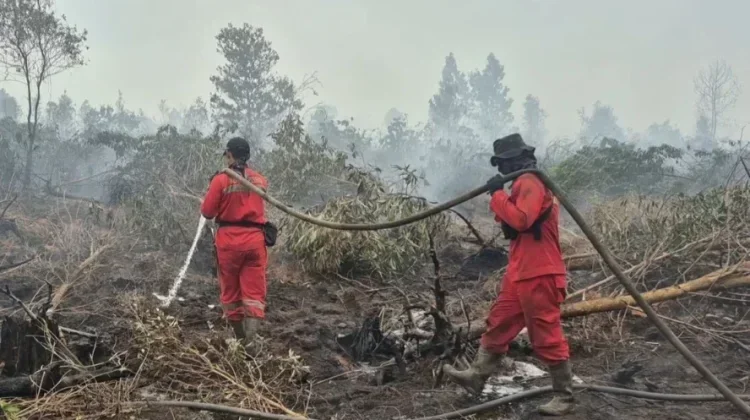
RRI.CO.ID, Jakarta – The Ministry of Forestry reported that forest and land fires (karhutla) have scorched 202,000 hectares between January and July 2026. Director of Forest Fire Control Thomas Nifinluri said that firefighting operations have now entered their 53rd day across several high-risk regions.
Thomas noted six provinces requiring integrated response efforts: Riau, Jambi, South Sumatra, West Kalimantan, Central Kalimantan, and South Kalimantan.
“The areas needing the fastest response are West Kalimantan, followed by Central Kalimantan. We’re also seeing escalation in South Sumatra and currently in Riau,” Thomas said during a dialogue with Pro3 RRI on Tuesday, August 25, 2026.
Thomas detailed that West Kalimantan is facing 17 active fire spots, Central Kalimantan about 16, Riau seven, and South Sumatra 11. These hotspots have become the focus of joint firefighting teams working to contain the blazes.
The situation is particularly concerning, he added, because many of these provinces contain extensive peatland ecosystems. “Nationally, peat hydrological zones cover 13.4 million hectares, most of which are concentrated in these six provinces,” he explained.
Thomas attributed the worsening conditions to an early, prolonged, and more intense El Niño. “Based on BMKG forecasts, the ENSO El Niño index has already reached 2.15, which falls into the strong category,” he said.
This has led to lower humidity and declining groundwater levels in peat areas, leaving abundant biomass fuel that makes the land highly flammable.
Beyond weather factors, Thomas stressed that human negligence and deliberate burning also contribute to the fires. “Once a small ignition occurs, it can spread quickly with the help of wind and dry air,” he warned.
He emphasized that rapid response is critical, as dry conditions accelerate fire expansion. Cross-sector coordination, he said, is essential to prevent further spread and minimize environmental damage. (Misni Parjiati)
News Recomendation
Memuat berita terbaru.....