



Indonesia Studies China's Experience to Develop Transmigration Areas
- 11 Agt 2026 12:26 WIB
- Voice of Indonesia
Poin Utama
- The Ministry of Transmigration is studying China's development experience to strengthen the development of transmigration areas in Indonesia.
- Academics must be involved to make sure the development of transmigration areas is based on solid research. Research findings will help the government decide on the best development direction for each area.
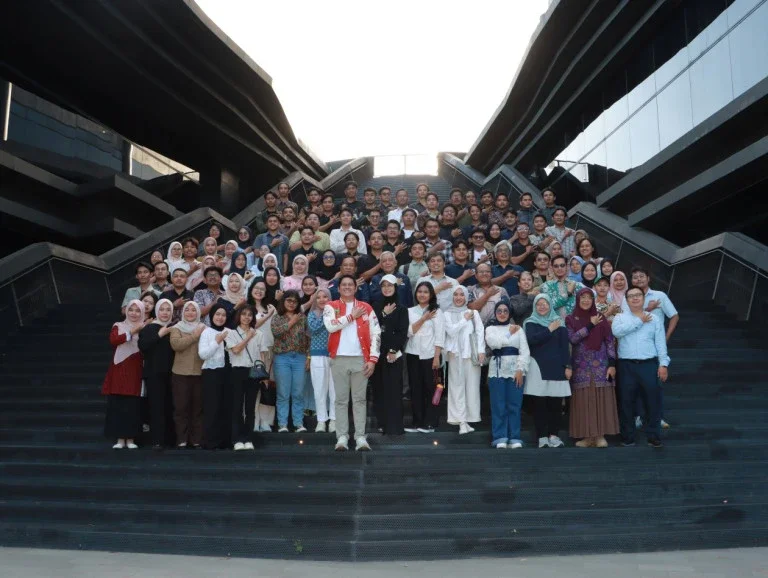
RRI.CO.ID, Jakarta – The Ministry of Transmigration is studying China's development experience to strengthen the development of transmigration areas in Indonesia. The study covers human resources, regional development, the economy, and industry, and is tailored to the potential and characteristics of each area.
Deputy Minister of Transmigration Viva Yoga Mauladi stated that China's experience could enrich the range of development models available for transmigration areas. However, the government will not directly adopt China's development model, as the economic, social, and cultural conditions of each area differ.
"We want the development models from the People's Republic of China to inspire us and serve as a point of comparison, adapted to the economic, social, and cultural conditions of the communities in transmigration areas," Deputy Minister Viva said during the "Seminar on China's Development Model" in Jakarta on Tuesday, August 11, 2026. as quoted by Antara.
Relevant aspects of China's experience to be studied include human resources and regional development, creating economic models based on a region's flagship products, and industrial development.
The study aims to identify development patterns suited to the specific characteristics of each transmigration area. Through this approach, transmigration areas are expected to evolve from residential settlements into new centers of economic growth.
Viva emphasized that the paradigm of transmigration has shifted from simple population relocation to becoming an integral part of the regional development agenda. Development efforts now encompass strengthening the local economy, improving human resource quality, empowering communities, and fostering integrated regional development.
"We want to develop transmigration areas using a knowledge-based approach," he stated.
To support this approach, the Ministry of Transmigration is engaging universities through the 2026 Patriot Expedition Team (TEP). This team is being deployed to various transmigration areas to conduct research, assessments, and provide assistance grounded in science and technology.
In 2026, a total of 1,476 TEP participants will be stationed across 53 transmigration areas. The group comprises 39 professors, 10 postdoctoral researchers, 158 PhD holders, 49 master's degree holders, 214 applied master's students, and 937 bachelor's degree holders from various universities.
He stated that the involvement of academics is essential to ensure that the development of transmigration areas rests on a solid analytical foundation. Research findings are expected to assist the government in determining development directions based on the economic potential, human resources, and specific characteristics of each area.
This science-based approach also aims to drive regional economic growth and accelerate the emergence of innovations tailored to the needs of transmigration areas.
In this context, China's experience serves as a point of comparison to broaden the range of policy options for regional development. Viva emphasized that the experiences of other countries cannot be adopted wholesale but must be adapted to Indonesia's specific conditions.
The "Seminar on China's Development Model," held on August 11–12, 2026, was organized by the Indonesian Ministry of Transmigration in collaboration with the Embassy of the People's Republic of China in Indonesia and Peking University, through the Institute of South-South Cooperation and Development (ISSCAD).
The forum discussed China's experiences in national development, economic reform, governance, and development cooperation among developing nations.
Chair of the Management Board of Peking University's National School of Development, Prof. Lei Xiaoyan, stated that this collaboration could expand the exchange of development experiences between Indonesia and China.
Lei noted that Peking University possesses experience in research and regional support within China, including in poverty alleviation efforts. This experience is considered a valuable resource for mutual learning in the development of transmigration areas.
"We have a wealth of experience to share, not only in today's seminar but also in potential future collaborations," she said.
She added that the partnership is reciprocal; in addition to sharing China's development experiences, Peking University seeks to learn from Indonesia's experiences and explore further opportunities for cooperation with the Ministry of Transmigration. ***
https://www.antaranews.com/berita/5688724/wamentrans-china-dapat-jadi-referensi-pengembangan-transmigrasi-ri ?utm_source=antaranews&utm_medium=desktop&utm_campaign=editor_picks
News Recomendation
Memuat berita terbaru.....