



Behind the Mic at VOI (Part 2): When the Microphone Goes into the Field
- 10 Sep 2026 15:13 WIB
- Voice of Indonesia
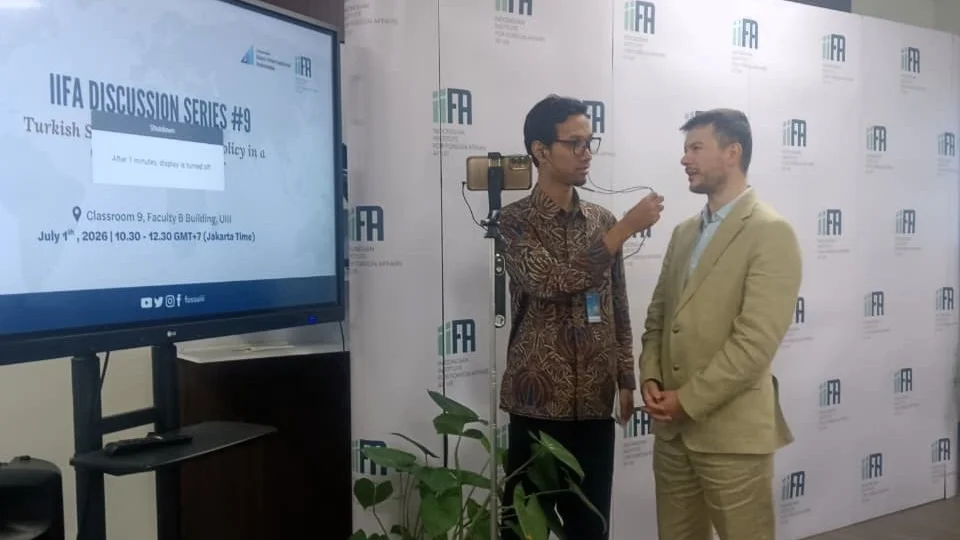
RRI.CO.ID, Jakarta – The moment the studio doors open, the work of the journalists at RRI Voice of Indonesia (VOI), Indonesia’s international media service operated by Radio Republik Indonesia (RRI), enters an entirely different world. The microphone is no longer in a quiet studio, but moves to disaster sites, international forums, state events, and gatherings of Indonesians living far from home.
In the field, there is no pause button when circumstances suddenly change. Reporters must move quickly, find sources, assess the situation, and keep a cool head, because what they see and experience sometimes follows them home long after the assignment is over.
Nuke experienced it while covering COP26 in Glasgow, Scotland, in 2021. At the time, the world was only gradually emerging from the COVID-19 pandemic, so for nearly two weeks she had to take a test every morning before she could join the Indonesian delegation activities.
Yet the thousands-of-kilometers journey to Glasgow was not the most difficult experience in Nuke's memory. Instead, an assignment closer to home left the deepest impression when she went to the scene alone the day after a tsunami struck Banten in 2017, without any other crew members in company.
What Nuke saw before her was no longer the kind of disaster footage normally viewed on a television screen, but a painfully close reality. "It was more traumatic for me personally. There were still many bodies, and the smell was mixed with that of seawater," she said, acknowledging that she needed time to recover mentally after the assignment ended.
While Nuke confronted the devastation caused by a disaster, Ihsan – who joined VOI in 2015 and now serves as head of the Japanese broadcast desk – once had to grapple with time pressure during a meeting event. On one occasion, he was assigned to pursue a source on his own when the diplomats unexpectedly exited through a different door than he had anticipated.
"The diplomats came out through another door, while I was alone without my broadcast partner. I had to think quickly. If I were too slow, I would lose the source," Ihsan recalled. The experience taught him that in the field, seconds can determine whether a news story is successfully obtained or slips away entirely.
Stevanus, or Steve, experienced similar tension while delivering a live report from the Indonesia-Africa Forum. While he was on air and still connected to the studio, organizers suddenly asked all media personnel to move because the Indonesian Minister of Foreign Affairs was about to hold a meeting.
"While I was on air, the organizers suddenly asked all the media to move because the Foreign Minister wanted to meet. I had to explain the situation to the studio quickly," Steve said. He followed developments at the venue, adjusted his report accordingly, and returned to his original material after the memorandum of understanding had been signed.
Not all stories from the field, however, are marked by panic and pressure. Sekarsari Utami, who has been part of VOI for 16 years, instead recalls a warm experience when she became a moderator for an election outreach dialogue for members of the Indonesian diaspora and migrant workers in Hong Kong, China.
At Victoria Park, she witnessed how the Indonesian national anthem, Indonesia Raya, seemed to erase the thousands of kilometers separating them from home. “What gave me goosebumps was hearing Indonesia Raya being sung at Victoria Park. I saw the Indonesian migrant women there who continued to develop themselves,” Sekarsari said, who became even more emotional when Indonesian songs began to play.
“When they sang dangdut songs, they even cried and said, ‘This is my language’. That made me incredibly proud to be Indonesian,” she said. For Sekarsari, that was when she realized the language, songs, and voices carried by VOI are not merely broadcast material, but can connect people longing for home.
These diverse experiences have made fieldwork a classroom where learning never truly ends. Andy Romdoni, VOI’s Coverage Coordinator, who previously served as a reporter at the Presidential Palace from 2017 to 2021, put it simply: “Journalistic experience is never something you can get enough of after just one assignment. Every day we learn, and every day we encounter something new.” (Bidadari Nanzira Sakti)
(EDITOR'S NOTE: This is the second part of the article series "Behind the Mic at VOI" by RRI Voice of Indonesia. Click on the tag "Behind the Mic at VOI" below to read all articles)
News Recomendation
Loading latest news.....