



Constitutional Court Removes Vague Clause on Obstruction of Corruption Justice
- 03 Mar 2026 15:05 WIB
- Voice of Indonesia
RRI.CO.ID, Jakarta – The Constitutional Court of Indonesia removed an ambiguous phrase in Act Number 31 of 1999 on the Eradication of Corruption Crimes related to obstruction of justice. Therefore, the activities of lawyers, journalists, or anti-corruption activists in Indonesia cannot be considered an obstruction of justice.
"According to the Court, the norm in Article 21 of the Corruption Law, insofar as it relates to the phrase “directly or indirectly,” is contrary to the 1945 Constitution of the Republic of Indonesia and therefore has no binding legal force," Constitutional Justice Arsul Sani said at the Court in Jakarta on Monday, 2 March 2026, while reading the ruling.
The ruling stemmed from a petition filed last week by a lawyer, Hermawanto, who challenged Article 21 of the law before the Constitutional Court. The article stipulates a prison sentence of 3–12 years or a fine of at least Rp150 million (about US$8,800 as of March 2026) for "any person who deliberately, directly or indirectly, prevents, obstructs, or thwarts the investigation, prosecution, and court examination of suspects, defendants, or witnesses in corruption cases".
Quoting the Court’s statement on Monday, the Constitutional Court stated that the phrase "directly or indirectly" used to punish someone for obstructing a corruption investigation could be applied flexibly to target anyone who is not aligned with law enforcement authorities. This could threaten activities by lawyers, journalists, writers, or activists on the anti-corruption agenda.
.webp)
"When it is linked to the petitioner’s profession as a lawyer, who in carrying out his duties provides legal defense to clients and deals with law enforcement officers—particularly in non-litigation advocacy by publishing through print or electronic media, or by holding public discussions, seminars, and other activities—this could potentially fall into indirect obstruction of justice," Justice Sani said while reading the ruling.
"Similarly, for example, journalistic activities that conduct investigations into an ongoing case to provide information to the public, or the writing of academic opinions in print or electronic media carried out within legal boundaries, could also potentially be categorized as indirect obstruction of justice," he conveyed.
Therefore, the Court held that Article 21 no longer needs to be aligned with the spirit of Article 25 of the United Nations Convention Against Corruption on obstruction of justice. Moreover, it said developments in national criminal law on the offense of obstruction of justice, or acts of hindering legal processes, do not include the disputed phrase.
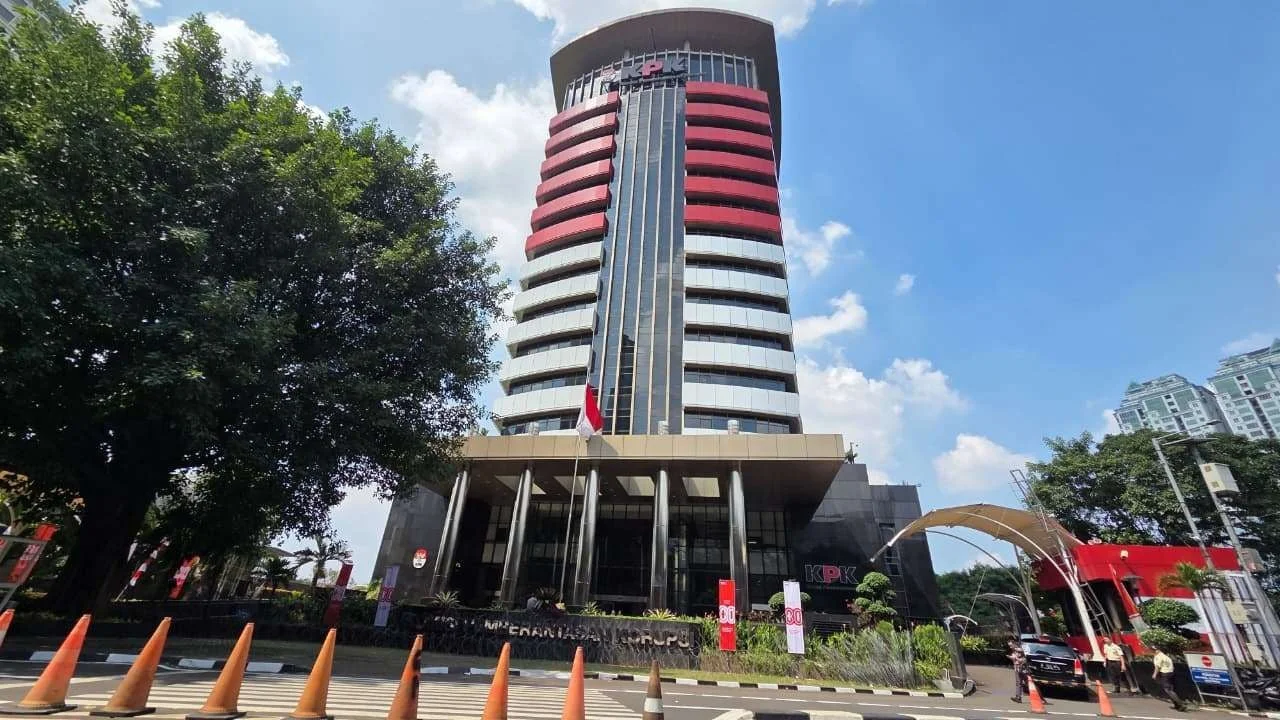
Act Number 31 of 1999 was passed by the Indonesian House of Representatives on 16 August 1999, amid the Reformasi movement, which sought to address shortcomings in President Suharto's New Order system. It became the foundation for the establishment of the Corruption Eradication Commission (KPK), an anti-corruption agency known for handling major corruption cases in Indonesia.
News Recomendation
Memuat berita terbaru.....