



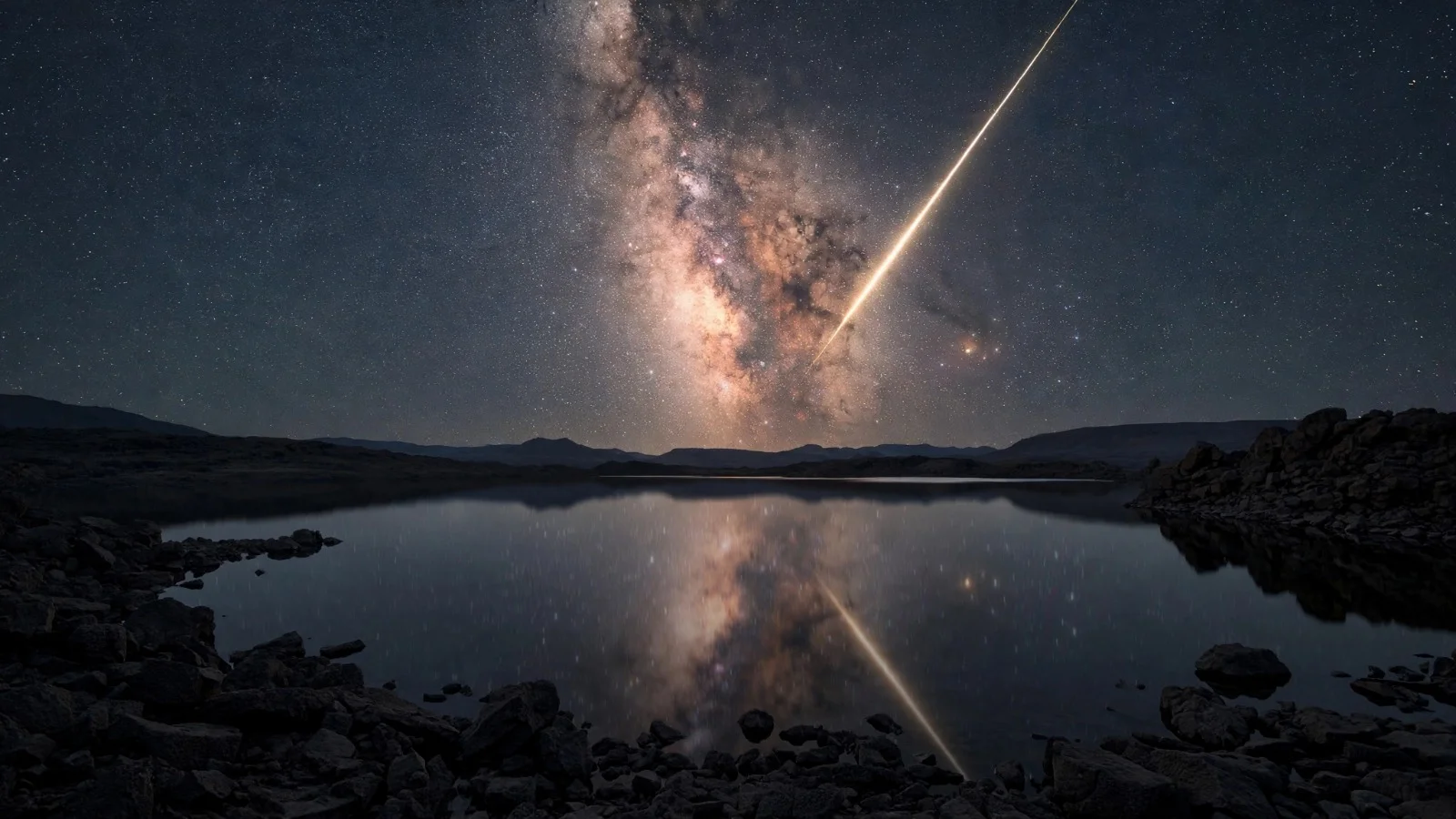
RRI.CO.ID Jakarta - October 2026 offers a spectacular line up for stargazers, featuring two meteor showers, an fearful orange hunter's moon, and one of the year's final chances to see the luminous core of the Milky Way. While meteor showers and the Milky Way are best enjoyed under dark skies away from city lights, many of this month's highlights, including brilliant planet sightings, remain visible even for urban observers if you know when and where to look.
The month begins with Saturn at opposition on October 4, when the ringed giant reaches its closest point to Earth and appears at its biggest and brightest. Look toward the south-southeast around 11 p.m. for the best view. You will need a small telescope or high-powered binoculars to resolve its iconic rings — a vast, highly reflective disk of ice and rock stretching 170,000 miles wide — and Saturn will remain prominent throughout the night.
On the morning of October 5, early risers will be rewarded with a beautiful conjunction as the crescent moon meets orange-hued Mars above the eastern horizon. Jupiter will appear diagonally below them, creating a striking planetary triangle. Just beneath the moon lies the Beehive Cluster, a smudge of around 1,000 stars located 600 light-years away that blossoms into view with binoculars.
Two meteor showers punctuate October. First, the Draconids peak overnight on October 8-9, coinciding perfectly with a thin waning crescent moon that leaves skies dark enough to catch even faint meteors. Expect about 10 meteors per hour, best seen an hour or two after sunset. The dark sky on October 10, a new moon night, then offers one of the last chances this year to see and photograph the glittery core of the Milky Way, which becomes visible as soon as night falls but disappears behind the sun from November to February.
| Baca juga: 9 Night Sky Events to See in June |
On October 12, Mercury reaches its greatest eastern elongation, its farthest distance from the sun and thus the easiest time to spot the elusive swift planet. Look low over the western horizon just after sunset, near a crescent moon. While the view is ideal from the Southern Hemisphere, observers in the U.S. with a clear western horizon can still catch it. Later, the Orionids peak overnight on October 21-22, producing up to 20 bright, fast meteors per hour with vivid trains originating from Orion, best viewed in the predawn hours after the waxing gibbous moon has set.
October's full hunter's moon, named for the traditional season of winter food preparation, reaches peak luminosity just after midnight on October 26 but is most dramatic at moonrise around sunset. Rising large over the eastern horizon, it may glow with an eerie orange tint. The month closes with a rare lunar occultation of the Pleiades on October 27, visible across North America. From about 6 p.m. ET until just before midnight, the bright moon will slide over the pale-blue Seven Sisters, with the closest approach around 9:30 p.m. ET.
From Saturn's rings to vanishing star clusters, October is a reminder to stay up and look up. Whether you escape to a dark-sky preserve for meteors and the Milky Way or simply step onto a city balcony to catch the hunter's moon, this month delivers a complete tour of the autumn cosmos.
Source : Nat Geo
News Recomendation
Memuat berita terbaru.....