



Indonesian Scientists Turn Crab Shell Waste into Battery Separators
- 09 Sep 2026 15:14 WIB
- Voice of Indonesia
Poin Utama
- BRIN and ITB scientists turned crab shells into lithium-ion battery separators.
- The bio-based membrane showed higher porosity and conductivity than commercial separators.
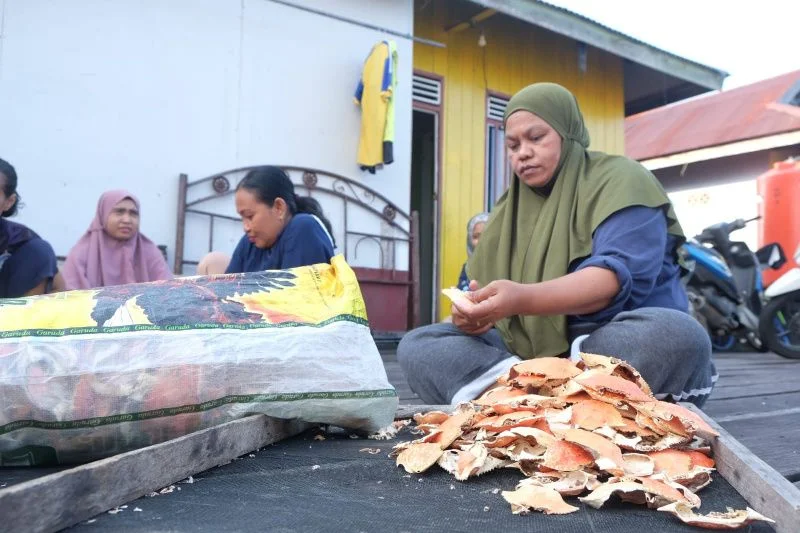
RRI.CO.ID, Jakarta - Amid mounting industrial waste and a global push for sustainable green energy solutions, Indonesian scientists have unlocked a dual-purpose breakthrough by turning fishery discards into advanced technology. Researchers from the National Research and Innovation Agency (BRIN) and the Bandung Institute of Technology (ITB) have successfully converted discarded crab shells into high-performance lithium-ion battery separators, offering a promising eco-friendly alternative for the energy storage sector.
Indonesia stands as a major global player in jellyfish and crab harvesting, contributing a staggering 109,000 tons out of the 278,000 tons of global blue swimming crab production recorded by the Food and Agriculture Organization (FAO) in 2022. While this booming canning sector drives economic activity, it simultaneously generates massive volumes of discarded shell waste that are routinely abandoned without secondary use.
Recognizing this environmental challenge, BRIN Clean Technology and Environment Research Center scientist Muhamad Nasir and his research team spearheaded an initiative to repurpose the biological byproduct.
"Crab shell waste from the canning industry is usually just thrown away. We isolate chitin from the crab shells, and then convert it into chitin nanofibers through ultrasonication and electrospinning processes," said Nasir while speaking at the Forum e-Asia Joint Research Program 15th Joint Review Meeting & Annual Board Meeting 2026 on Tuesday, September 8, as quoted on BRIN's official website.
Natural crab shells consist of 20 to 30 percent chitin, alongside 40 to 50 percent calcium carbonate and 25 percent protein. The scientific transformation sequence begins by isolating the chitin through a two-step chemical process: demineralization via hydrochloric acid to remove calcium carbonate, followed by deproteination using sodium hydroxide to eliminate proteins.
"The isolated chitin is then converted into chitin nanofibers measuring approximately 62 nanometers through an ultrasonication process. Next, the chitin nanofibers are composited with PVA through an electrospinning process, which is a nanofiber production technique aided by high electrical voltage, to produce a separator membrane," Nasir explained.
Rigorous laboratory evaluations highlighted that the chitin-derived membrane outperforms conventional commercial components across multiple metrics. The bio-based separator boasts an 86 percent porosity level, substantially higher than the 53 percent found in commercial Celgard2400 separators, alongside a superior electrolyte uptake capacity of 388 percent compared to the standard 113 percent.
Furthermore, ionic conductivity tests revealed a measurement of 1.41 mS/cm, eclipsing the 0.19 mS/cm recorded by commercial alternatives. Thermal stability tests further confirmed that the membrane shrinks by a mere 1.4 percent at 90 degrees Celsius over one hour.
"The advantage of this natural separator is a shrinkage of less than 2 percent while maintaining stable battery performance," he said, emphasizing that the material limits shrinkage while preserving steady functionality.
When assembled and tested within Li/LiFePO₄ battery cells, the separator sustained a stable discharge capacity of 142 mAh/g across 120 charge-discharge cycles, outperforming traditional market variants. This groundbreaking research, which also extends to cellulose acetate-based membranes, was officially published in the international journal Langmuir in 2025 under the title Electrospun Poly(vinyl Alcohol)/Chitin Nanofiber Membrane as a Sustainable Lithium-Ion Battery Separator.
"In addition to using chitin from crab shells, we also developed battery separators from cellulose acetate material which showed even better performance. By using crab shell waste, we provide added value to marine waste while creating sustainable and environmentally friendly products," Nasir concluded. ***
News Recomendation
Memuat berita terbaru.....