



Mempawah Hulu, New Habitat for Sinyulong Crocodile in West Kalimantan
- 29 Agt 2026 20:25 WIB
- Voice of Indonesia
Poin Utama
- Three endangered sinyulong crocodile (Tomistoma schlegelii) hatchlings were rescued in Mempawah Hulu, West Kalimantan.
- The discovery confirms that the Mempawah Hulu River system is an active nesting and breeding ground for sinyulong crocodiles.
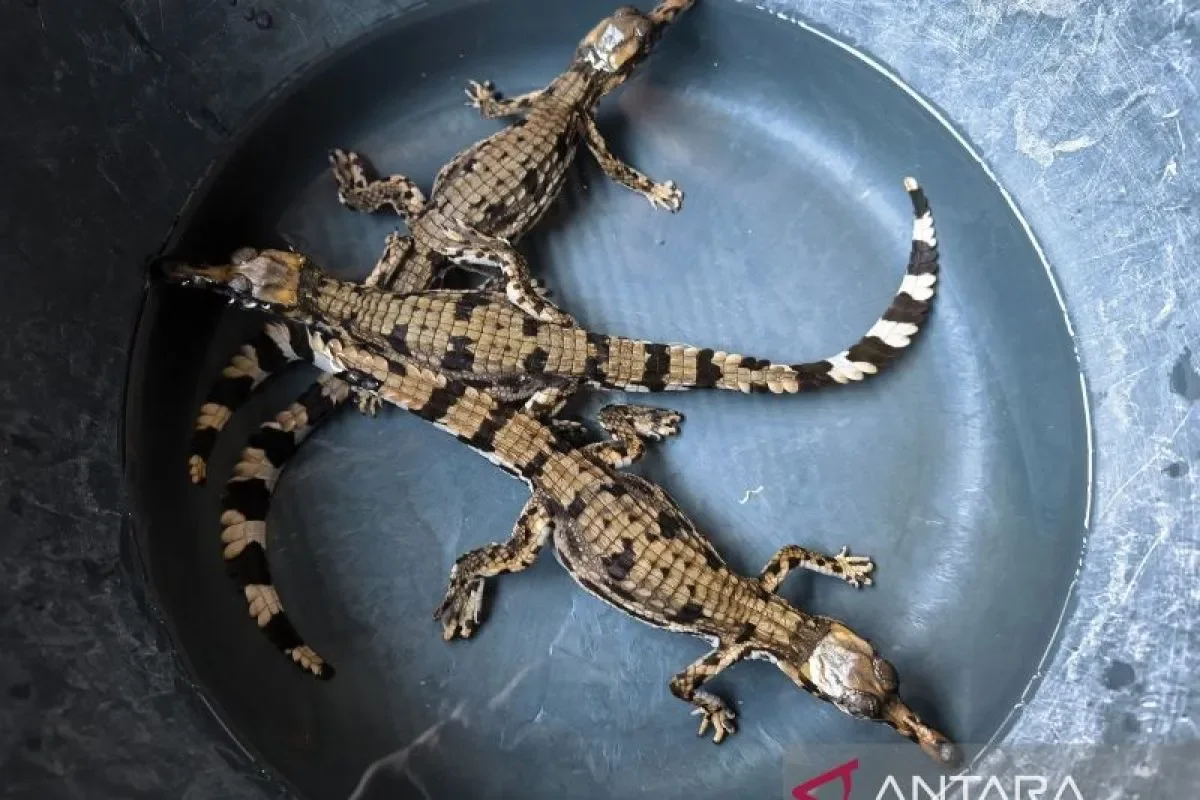
RRI.CO.ID, Pontianak - Known for generations as baringayong among the Dayak Kanayatn and Ahe communities, the sinyulong crocodile (Tomistoma schlegelii) has now confirmed Mempawah Hulu as an active breeding ground in West Kalimantan. The rescue of three hatchlings of the endangered species underscores the urgent need for public education that integrates local knowledge with modern conservation awareness.
“The three fully protected animals, known as baringayong by the Dayak Kanayatn/Ahe communities, are each about 33 centimetres long and are currently undergoing temporary rehabilitation at the Pontianak Marine Management Center,” said the Pontianak Marine Management Center Head, Sy. Iwan Taruna Alkadrie, in Pontianak on Saturday, 39 August 2026.
He said the discovery was significant because it confirmed the presence of sinyulong crocodiles along the Mempawah Hulu River system. “The presence of newly hatched young indicates that the Mempawah Hulu River ecosystem remains a nesting site and active breeding ground for this fully protected species,” said Iwan, as quoted by Antara.
The hatchlings were evacuated after the Pontianak Marine Management Center received a public report on 20 August 2026 that young crocodiles had hatched from eggs at a fisherman’s home and were suspected of being intended for trade.
The Pontianak Marine Management Center’s Rapid Response Team, accompanied by an expert practitioner, immediately visited the site to verify the report and gather information. Officers then examined the animals’ condition while applying animal-welfare standards.
Initial examinations, conducted through an online consultation with a veterinary specialist, Dr Rio from North Sumatra, found that the three hatchlings were generally in fairly good condition. However, their sex could not yet be determined because of their small size.
The hatchlings still retained yolk sacs in their abdominal area. This condition requires monitoring to prevent absorption problems that could lead to infection. “Throughout the incubation rehabilitation process, we will monitor their development,” said Iwan.
The team subsequently verified locations suspected to be nesting sites in Anjungan and Toho sub-districts. The two areas lie within a connected river landscape and, according to local residents, have long served as habitat for sinyulong crocodiles.
Iwan said the discovery was highly significant for conservation efforts. The presence of sinyulong crocodiles in Mempawah adds new information on the species’ distribution in West Kalimantan, where it had previously been more commonly identified in Kapuas Hulu and Ketapang.
He urged the public not to capture, trade, or harm sinyulong crocodiles, and to promptly report the presence of nests or individual animals to authorities. “Senyulong does not attack; it defends itself,” said Iwan.
The sinyulong crocodile is listed as endangered on the International Union for Conservation of Nature (IUCN) Red List and is included in CITES Appendix I. In Indonesia, it is classified as a fully protected fish species under regulations of the Ministry of Marine Affairs and Fisheries.
Iwan added that, with the addition of the three sinyulong hatchlings, the Pontianak Marine Management Centre is now rehabilitating four young crocodiles, including one saltwater crocodile hatchling measuring approximately 38 centimetres. ***
News Recomendation
Memuat berita terbaru.....