



UGM Expert Raises Welfare Concerns Over Chained Sumatran Elephant
- 17 Sep 2026 11:36 WIB
- Voice of Indonesia
Key Points
- A UGM expert says prolonged chaining and restricted movement can undermine the welfare of captive elephants.
- Experts recommend supervised movement, experienced mahouts, proper enclosures and stronger welfare standards for captive elephants.
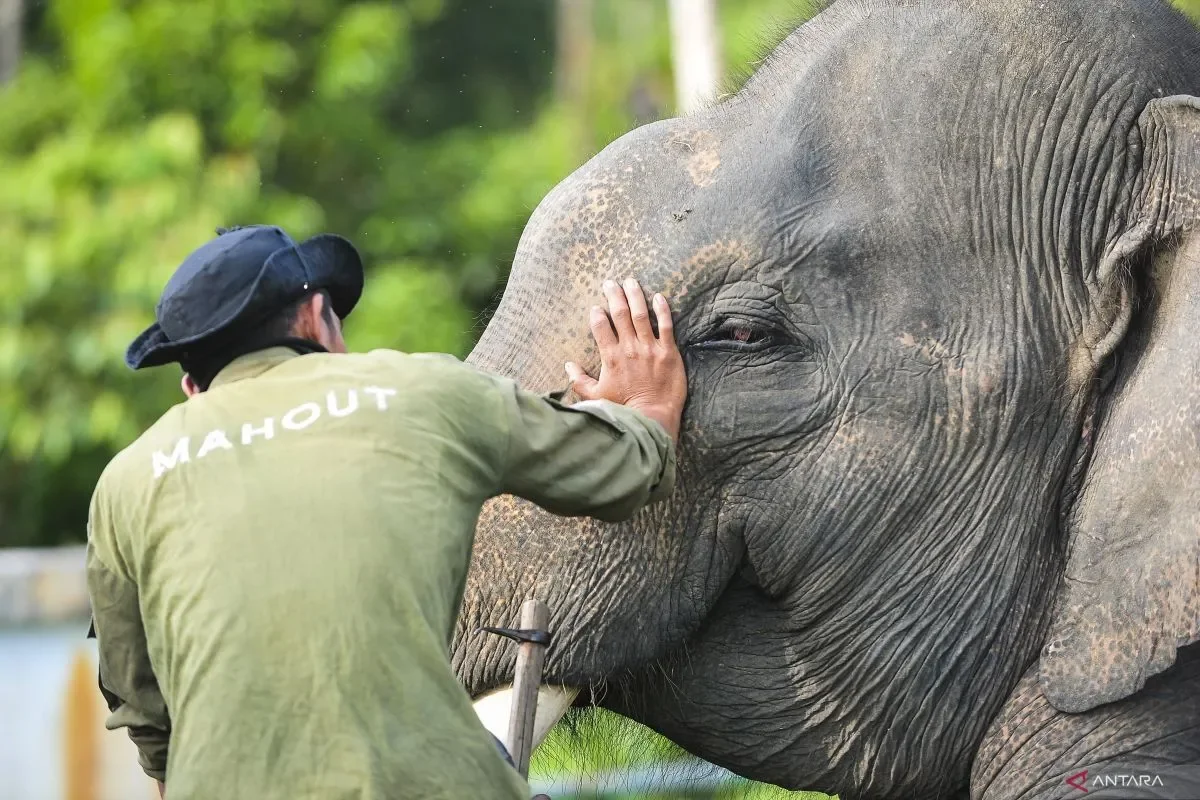
RRI.CO.ID, Yogyakarta - Prolonged chaining and severely restricted movement should not be used as long-term measures for managing captive elephants, a wildlife researcher and professor from Universitas Gadjah Mada (UGM) warned following public outcry over a Sumatran elephant (Elephas maximus sumatranus) in West Sumatra.
The male elephant, named Zidan, housed at the Kinantan Cultural and Zoological Park (TMSBK) in Bukittinggi, has reportedly been chained with minimal mobility for approximately three years. Zidan has been part of TMSBK for 25 years, having joined in 2001 from the Sebanga Elephant Training Center (PLG) in Riau at the age of nine.
“Zidan the elephant has reportedly become aggressive since 2022 due to a period of musth (an irregular rise in hormone levels), making him difficult to train and repeatedly injuring his mahouts, other staff, as well as another female elephant in the collection named Lia,” said Head of Bukittinggi Tourism Agency Rofie Hendria in Bukittinggi on Sunday, September 13, 2026, as reported by Antara.
Rofie ensured that Zidan continues to receive proper feeding and healthcare as needed. Handling is also carried out with consideration for the animal’s behavioral condition as well as the safety of staff and visitors
Wildlife Researcher from UGM's Faculty of Veterinary Medicine Wisnu Nurcahyo said that short chaining should not be done continuously. "There must be times when the elephant is released and allowed to walk under controlled supervision," said UGM’s Wisnu Nurcahyo on Thursday, September 17, as quoted on UGM's official website.
He emphasized that animal welfare extends far beyond providing adequate food and medical treatment. Proper care requires an environment that fulfills five core welfare criteria: adequate nutrition and water, a suitable environment, physical health free from injury, opportunities to express natural behaviors, such as walking, bathing, and wallowing, and a positive mental state.
Addressing the cause of aggression, Wisnu noted that male elephants often experience heightened aggression during musth, a period of increased testosterone levels that can last several months depending on age, health, and social status. However, he stressed that hormonal surges are rarely the sole trigger. Pain from physical injuries, chronic boredom, uncomfortable surroundings, and stress caused by prolonged chaining can significantly exacerbate aggressive behavior.
To improve management, he highlighted the crucial role of experienced elephant handlers. Mahouts must deeply understand individual elephant temperaments, and facility managers should consider bringing in senior handlers if current staff struggle to manage a specific animal.
Wisnu also stressed that evaluating conservation facilities must extend beyond visitor and staff safety to include proper enclosure design, medical monitoring, and emergency protocols. Any decisions regarding relocation must ensure that the target facility possesses sufficient space and suitable natural conditions to meet the animal's needs.
"The best place for an elephant is truly its natural habitat," he concluded. ***
News Recomendation
Loading latest news.....