



South Jakarta Scales Up Eco-Enzyme Production to Curb Organic Waste
- 18 Jun 2026 19:11 WIB
- Voice of Indonesia
Poin Utama
- South Jakarta Administration is expanding eco-enzyme production to reduce organic waste and improve river health.
- Eco-enzyme is produced by fermenting fruit scraps, molasses, and water for approximately three months.
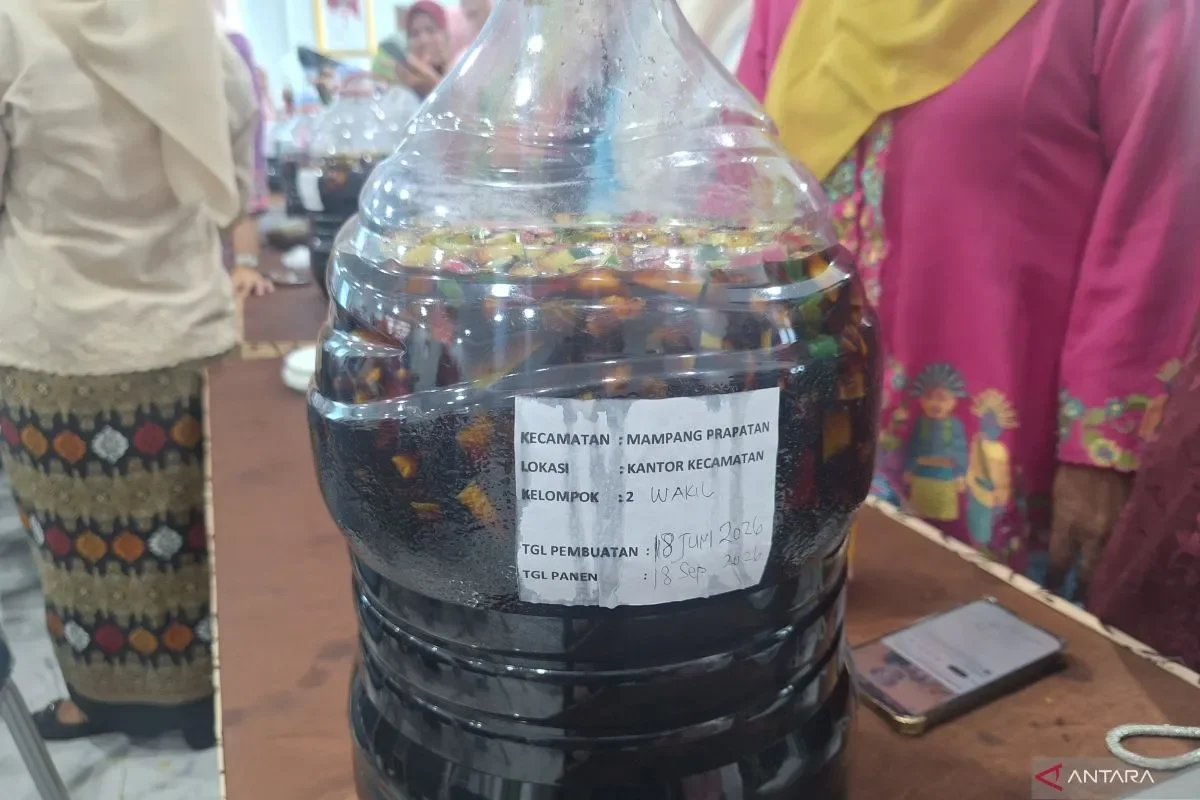
RRI.CO.ID, Jakarta - To curb organic waste and improve river health, South Jakarta Administration is scaling up production of eco‑enzyme fertilizer made from fruit scraps and molasses, turning a common household nuisance into a practical environmental solution.
“Here we are taught how to make eco‑enzyme produced from leftover fruit mixed with molasses,” said South Jakarta’s Eco‑Enzyme Ambassador, Nurul Azizah Syafrin, during an eco‑enzyme workshop held as part of the 2026 National River Cleanliness Movement at the Mampang Prapatan Subdistrict office on Thursday, June 18, 2026.
The hands‑on activity, attended by about 160 participants organized by the Sedulur Bunda Milenial community, students, and other groups, produced a total of 16 gallons of eco‑enzyme. Azizah described a simple, low‑cost production method: household organic waste is placed in a container, mixed with water and molasses, and left to ferment for roughly three months.
“Later, the result will be very useful for household activities, such as floor cleaner and for cleaning rivers so they do not smell,” she said, as quoted by Antara.
The South Jakarta Administration and Sedulur Bunda Milenial plan to promote eco‑enzyme production from the neighborhood level down to the neighborhood unit (RT) and community unit (RW) levels. This initiative aims to encourage more residents to actively participate in protecting family health and the environment.
“My hope is that people will encourage eco‑enzyme production by using waste like molasses from sugar waste and leftover fruit. Since fruit waste is found every day, this method can help reduce organic waste disposal and keep the surrounding environment clean,” added Azizah.
South Jakarta’s Assistant for Economy and Development, Iwan K. Santoso, described the grassroots campaign as a mass movement with tangible public benefits. He linked the initiative to the Jakarta governor’s directive on sorting and reducing waste at its source and urged residents to follow guidance and outreach from local chiefs.
“Regarding the governor’s instruction on sorting and reducing waste from its source, we hope residents follow the advice, suggestions, education and socialization provided by the village heads and subdistrict heads. Currently, in South Jakarta, the village heads and subdistrict heads are also actively creating ‘teba’ or jumbo biopores,” said Iwan.
Iwan warned of tighter limits on landfill capacity ahead, by August the city will only be able to send about one‑third of its normal waste volume to Bantargebang, and then only residual waste. He called for broad community support to intensify source‑level sorting and waste reduction.
“Therefore, we request help and support from all residents to massively sort and reduce waste from its source,” he urged.
By combining community workshops, neighborhood campaigns, and municipal support for biopores and eco‑enzyme production, South Jakarta aims to reduce organic waste flows and lower landfill pressure. This comprehensive approach also seeks to improve local water quality while engaging residents in practical, low‑tech environmental stewardship. ***
News Recomendation
Memuat berita terbaru.....